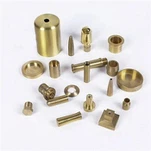
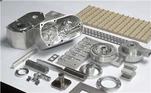
Precision parts processing requirements are a set of specifications and conditions that must be met to ensure the production of mechanical components with high accuracy and quality. These requirements are critical for parts that need to fit precisely, operate reliably, and meet the performance standards of their intended application. Here's an introduction to the precision parts processing requirements in English:
Tolerances: Precision parts often have tight tolerances for dimensions, which means the allowable variation in size is very small. These tolerances are specified in microns or even smaller units for high-precision applications.
Surface Finish: The finish of the part's surface is important for both aesthetics and performance. A smooth surface can reduce friction and wear, and is often required for parts that move against each other.
Material Specification: The choice of material is crucial and must meet the requirements for strength, durability, and resistance to specific operating conditions such as temperature, pressure, and chemical exposure.
Geometric Features: Precision parts may have complex geometric features like threads, gears, or intricate contours that require specialized machining techniques to produce.
Consistency: Each part produced should be consistent with the others, which is essential for assembly and interchangeability in mass-produced products.
Surface Hardness: Depending on the application, parts may need to have specific surface hardness levels achieved through processes like heat treatment or case hardening.
Coatings and Treatments: Some precision parts may require coatings for corrosion resistance, wear protection, or aesthetic purposes. These treatments must be applied without affecting the part's dimensional accuracy.
Quality Control: Rigorous quality control processes are necessary to inspect and verify that each part meets the required specifications. This often involves the use of precision measuring instruments and statistical process control.
Design for Manufacturability (DFM): The design of precision parts should take into account the capabilities and limitations of the manufacturing processes to ensure that the parts can be produced efficiently and accurately.
Cleanliness: The manufacturing environment and the parts themselves must be kept clean to prevent contamination that could affect the performance or damage the parts.
Documentation: Detailed documentation of the manufacturing process, including machining parameters, tooling used, and inspection results, is essential for traceability and process control.
Reliability: The parts must be reliable and durable enough to perform their function without failure under the expected operating conditions.
Lead Time: There may be strict requirements for the production timeline, especially for critical components where delays can impact the overall project schedule.
Sustainability: Modern manufacturing also considers the environmental impact of the production process, aiming to minimize waste, energy consumption, and emissions.
Regulatory Compliance: Depending on the industry, precision parts may need to meet specific regulatory standards related to safety, health, and the environment.
Meeting these precision parts processing requirements is essential for industries such as aerospace, automotive, medical devices, electronics, and industrial machinery, where the performance and reliability of components are critical.