

Plastic CNC Machining Parts
What Is Plastic CNC Machining Parts?
Plastic CNC machining parts are components made of plastic that have been manufactured using computer numerical control (CNC) technology. This involves using a machine that is programmed with precise specifications and cutting tools to shape plastic materials into specific designs and shapes. These parts are widely used in various industries such as automotive, aerospace, medical, and consumer products. Examples of plastic CNC machining parts include gears, bearings, housings, and brackets. CNC machining allows for accuracy, consistency, and repeatability, which makes it an efficient and effective way to produce high-quality plastic parts.
Precision
Plastic CNC machining provides excellent accuracy and repeatability. The computer-controlled machines can produce parts with tight tolerances and high surface finishes, which makes them ideal for creating complex geometries.
Versatility
Plastic CNC machines can work with a variety of plastic materials, including engineering plastics, such as ABS, acrylic and polycarbonate, which are known for their durability and chemical resistance.
Speed
Plastic CNC machining can produce parts faster than many other manufacturing methods, such as injection molding or 3D printing. This is particularly true for low volume production runs, where it may not be cost-effective to create molds or print parts with expensive equipment.
Cost-effective
Plastic CNC machining offers a cost-effective solution for producing low to medium volume plastic parts. The process does not require expensive molds or tooling, which can significantly reduce tooling costs and lead times.
Design flexibility
Plastic CNC machining allows for a high degree of design flexibility. The machines can produce parts with complex shapes, curved surfaces, and intricate details, making it possible to create custom components that meet specific project requirements.
Waste reduction
Plastic CNC machining generates less waste than other manufacturing methods, such as injection molding. The process requires minimal setup time, so there is no need for a high volume of parts to be produced to offset the production costs.
-
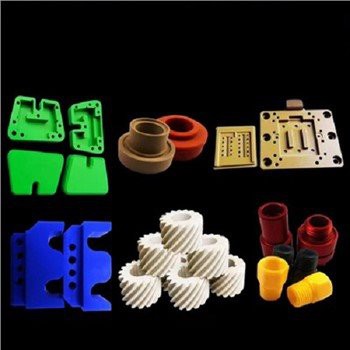 Delrin (Acetal/POM) CNC Machining PartsPlastic resins used for CNC milling and turning must be rigid enough to hold their shape whileAdd to Inquiry


- Tel: +8618021543605
- Fax: +86-25-58659205
- Email: cnmorong@yeah.net
- Email: sales@mrmachining.com
- Add: 28#, Taixi Rd, Pukou, Nanjing, Jiangsu, China
Why Choose Us
High quality
We take pride in the craftsmanship of our products and ensure that each one meets our strict standards for quality.
Professional team
The members of the team are highly skilled and proficient in their respective roles and possess the necessary education, training, and experience to excel in their jobs.
Delivery speed
Cost, quality and delivery speed are the three KPI of enterprise performance and business competition.
Quick response
We'll respond to all of your inquiries within a day. "Quality first, Customer supreme" is our motto.
Types of Plastic CNC Machining Parts
Plastic gears
Gears are one of the most commonly produced parts using plastic CNC machining. These mechanical components are used to transmit power and motion between two rotating shafts. Plastic gears are often used in applications where weight, noise, and cost are important factors.
Plastic bearings
Bearings are essential components used to reduce friction between two moving parts. They provide support and smooth rotation to rotating shafts. Plastic bearings are often used in applications that require chemical resistance as well as low friction and wear.
Plastic bushings
Similar to bearings, plastic bushings are cylindrical components that are used to reduce friction between two parts that are in contact. They are used in applications where a sliding rather than a rotating motion is required.
Plastic housings and enclosures
These parts are used to protect electronic and mechanical components from harsh environments and to provide a means for mounting and securing these components. Plastic housings and enclosures are often designed to be lightweight, durable, and resistant to environmental factors like heat, moisture, and chemicals.
Plastic connectors
Connectors are used to join two or more components together in an electrical or mechanical system. Plastic connectors are often used in applications where weight, low cost, and ease of installation are important.
Plastic knobs and handles
These small parts are often used as controls for various mechanical and electrical systems. They are designed to be comfortable to use and durable enough to withstand repeated use.
Application of Plastic CNC Machining Parts


Automotive industry
The automotive industry uses plastic CNC machining parts in various components, including engine parts, interiors, and exteriors. Plastic parts are lightweight, durable, and corrosion-resistant, making them ideal for use in automotive applications.
Aerospace industry
The aerospace industry relies heavily on plastic CNC machining parts due to their high strength-to-weight ratio. These parts are used in aircraft interiors, exteriors, and engines.
Medical industry
Plastic CNC machining parts are widely used in the medical industry for prosthetics, surgical instruments, and medical device components. The precision and accuracy of these parts are critical to ensure the safety and effectiveness of medical devices.
Electronics industry
The electronics industry uses plastic CNC machining parts in various components, including enclosures, housings, and connectors. These components require high precision and accuracy to ensure proper operation and protection of electronic devices.
Industrial equipment
Many industrial equipment manufacturers use plastic CNC machining parts in their machinery components. Plastic parts are lightweight, durable, and resistant to corrosion, making them ideal for industrial applic
Gather all the necessary tools
Before you begin the installation process, you need to make sure you have all the tools you need. You will need a wrench or pliers, a screwdriver, and any additional hardware that came with the plastic CNC machining parts.
Check your work space
Next, make sure your work area is clean and free of debris. You should also make sure you have enough space to work comfortably and safely.
Inspect theplastic CNC machining parts
Before you begin the installation process, make sure to inspect the plastic CNC machining parts. Check for any damage or defects, and make sure that the parts match the specifications of your project. If you find any defects or problems, contact the manufacturer or supplier immediately.
Prepare the installation area
Once you have inspected the parts, you need to prepare the installation area. You should make sure that the area is clean and free of any obstacles that might interfere with the installation process.
Secure the plastic CNC machining parts
To install the plastic CNC machining parts, you need to secure them to the appropriate mounting points. This may require the use of screws, bolts, or other hardware. Make sure to use the appropriate tools and fasteners to ensure that the parts are securely mounted.
Test the plastic CNC machining parts
After you have installed the plastic CNC machining parts, you should test them to make sure that they are functioning properly. This may require testing different functions or operating the parts under load.
Clean up your work area
Once you have completed the installation process and tested the parts, you should clean up your work area. Remove any debris or leftover parts, and dispose of them appropriately.
Components of Plastic CNC Machining Parts
Raw materials
The first component of plastic CNC machining parts is the raw material used to produce the part. There are a wide variety of plastics that can be used, and the choice of plastic will depend on the specific application and requirements of the part. Some commonly used plastics include ABS, Acrylic, Delrin, HDPE, Nylon, PC, PET, PTFE, PVC, and Ultem.
CNC machining equipment
The second component of plastic CNC machining parts is the CNC machining equipment used to shape and form the plastic material. This equipment consists of computer-controlled mills, lathes, and routers that can precisely cut and shape the plastic material according to the desired specifications.
Design specs
The third component of plastic CNC machining parts is the design specs that are used to guide the CNC machining process. These specs include 3D models, blueprints, and CAD drawings that outline the exact shape and dimensions of the final product.
Tooling
The fourth component of plastic CNC machining parts is the tooling used during the machining process. This includes cutting tools, drill bits, milling machines, and lathes that are all designed to work with plastic materials.
Finishing and assembly
The final component of plastic CNC machining parts is the finishing and assembly stage. This involves processes like polishing, painting, or coating the part to achieve the desired appearance, and then assembling the part with other components if necessary. Proper finishing and assembly will ensure the final product meets all functional and aesthetic requirements.

Plastic CNC machining parts can be made from a variety of plastic materials that are suitable for machining. Common plastic materials used for CNC machining include ABS, PVC, polycarbonate, acrylic, nylon, Delrin, and PEEK. ABS (Acrylonitrile Butadiene Styrene) is a widely-used thermoplastic material that is known for its excellent impact resistance and good stability over a wide range of temperatures. ABS is commonly used for making prototypes, automotive parts, housings, and electronic enclosures. PVC (Polyvinyl Chloride) is a flexible and lightweight thermoplastic that is resistant to chemicals, oil, and UV light, making it suitable for crafting conduit pipes for electrical installations, tubing, inflatable products, and medical equipment. PVC is commonly used for making electrical components, tubing, and medical equipment. Polycarbonate is a strong, lightweight, and transparent thermoplastic that has excellent impact resistance and dimensional stability, making it ideal for making safety glasses, automotive parts, electrical components, and bulletproof glass. Polycarbonate is commonly used for making safety glasses, automotive parts, and electrical components. Acrylic is a clear and durable thermoplastic that is known for its optical clarity, scratch resistance, and weatherability; hence it's ideal for making display cases, lighting fixtures, and architectural panels. Acrylic is commonly used for making display cases, lighting fixtures, and architectural panels. Nylon is a strong and flexible thermoplastic that has high heat resistance and good wear resistance, making it suitable for making gears, bearings, and other mechanical parts. Nylon is commonly used for making gears, bearings, and other mechanical parts. Delrin is a high-performance thermoplastic that has excellent dimensional stability, low friction, and high stiffness, making it ideal for making machine parts, gears, and bearings. Delrin is commonly used for making machine parts, gears, and bearings. PEEK (Polyether Ether Ketone) is a high-performance thermoplastic that has excellent mechanical properties, chemical resistance, and temperature resistance, making it ideal for making aerospace components, medical implants, and oil and gas industry parts. PEEK is commonly used for making aerospace components, medical implants, and oil and gas industry parts.
Regular cleaning
Sometimes, dirt and debris can accumulate on the surface of CNC machining parts, which can affect its performance. Hence, it is essential to clean CNC machining parts regularly. You can use a mild detergent and water to clean the parts. Make sure to dry the parts thoroughly after cleaning to prevent water damage.
Lubrication
Proper lubrication is crucial for the smooth functioning of CNC machining parts. Lubricants help reduce friction, wear, and tear on the parts. You can use a spray lubricant or an oil-based lubricant to lubricate the parts, depending on their material and application.
Check for wear and tear
Regular inspection is necessary to detect any wear or damage to the CNC machining parts. You should check CNC parts for any signs of wear and tear, such as cracks, scratches, or chipping. If you notice any damage, replace the parts immediately to avoid any further damage or failure.
Store properly
It is essential to store CNC machining parts properly to maintain their quality. Store the parts in a dry and cool place where they are free from dust, moisture, and direct sunlight. Proper storage can prevent the parts from rusting or corroding.
Follow manufacturer's instructions
Always follow the manufacturer's instructions on maintaining the CNC machining parts. Make sure to follow the recommended maintenance schedule and use the recommended lubricants and cleaning products.
What is the working principle of an Plastic CNC Machining Parts
Design
The first step in the plastic CNC machining process is to create a design for the part or component using computer-aided design (CAD) software. This software allows the designer to create a three-dimensional virtual model of the part or component, which can be manipulated and modified until it meets the desired specifications.
Programming
Once the design is complete, the next step is to create a program for the CNC machine. This program contains step-by-step instructions for the machine to follow, including information about the cutting tools to be used, the cutting paths to be followed, and the speed and feed rates for the machining process. The program is usually created using computer-aided manufacturing (CAM) software, which can automatically generate the necessary code based on the 3D CAD model.
Setup
With the program in hand, the machinist can begin the setup process. This involves selecting the appropriate cutting tools, securing the workpiece to the machine bed, and positioning the machine in the correct orientation. The machinist must also make sure that the machine is properly calibrated and that the cutting tools are in good condition.
Machining
Once everything is set up, the machine can begin the actual machining process. The cutting tools move along the pre-determined paths specified in the program, removing material from the workpiece in order to create the final product. The machine operator must monitor the process closely to ensure that everything is running smoothly, making adjustments as necessary to ensure that the finished part or component meets the desired specifications.
Our Factory
Nanjing Morong Machinery Technology is located in Nanjing City, Jiangsu Province, China. We are one of the leading professional manufacturers and exporters of custom precision CNC machining parts, integrating design, prototyping, mass production, assembly, sale and service under one roof.

FAQ
Q: What is Plastic CNC Machining?
Q: What types of plastics can be used for CNC machining?
Q: What are the benefits of Plastic CNC Machining?
Q: What are the disadvantages of Plastic CNC Machining?
Q: What is the difference between CNC Machining and Injection Molding?
Q: What applications are suitable for Plastic CNC Machining?
Q: How long does it take to CNC machine a plastic part?
Q: What is the minimum order quantity for Plastic CNC Machined parts?
Q: What tolerances can be achieved with Plastic CNC Machining?
Q: What surface finishes are available for Plastic CNC Machining?
Q: What file formats can be used for Plastic CNC Machining?
Q: What is the maximum size of plastic parts that can be CNC machined?
Q: What post-processing operations are required for Plastic CNC Machined parts?
Q: What is the cost of Plastic CNC Machining?
Q: What is the typical lead time for Plastic CNC Machining?
Q: What is the accuracy of Plastic CNC Machining?
Q: What is the maximum number of parts that can be CNC machined at once?
Q: What is the difference between CNC turning and CNC milling?
Q: Can CNC Machining be used for mass production?
Q: What is spindle speed in CNC Machining?
As one of the most professional plastic cnc machining parts enterprises in China, we're featured by quality products and good service. Please rest assured to buy customized plastic cnc machining parts at competitive price from our factory. Contact us for more details.
mechanical components, Delrin Acetal POM CNC Machining Parts