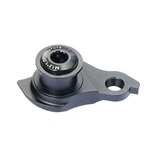
Mechanical parts processing is indeed a significant component of the advanced manufacturing industry. Advanced manufacturing refers to the integration of cutting-edge technologies and innovative processes to improve the efficiency, quality, and capabilities of traditional manufacturing. Here's an introduction to how mechanical parts processing fits into the advanced manufacturing industry in English:
Integration of Technology: Mechanical parts processing often involves the use of sophisticated computer-aided design (CAD) software for designing parts and computer-aided manufacturing (CAM) software for translating the designs into machine instructions.
Precision Engineering: Advanced manufacturing emphasizes precision, which is a hallmark of mechanical parts processing. High levels of precision are achieved through the use of Computer Numerical Control (CNC) machines and other automated equipment.
Materials Innovation: The use of advanced materials, such as high-strength alloys, composites, and engineered plastics, is common in mechanical parts processing. These materials offer superior properties compared to traditional ones.
Automation: Advanced manufacturing industries are characterized by a high degree of automation. Mechanical parts processing benefits from automated production lines, robotic systems, and other forms of automation that enhance productivity and consistency.
Lean Manufacturing: The principles of lean manufacturing are often applied to reduce waste, improve efficiency, and lower costs in mechanical parts processing.
Quality Control: Advanced manufacturing places a strong emphasis on quality, using statistical process control, Six Sigma methodologies, and rigorous inspection techniques to ensure the parts meet stringent specifications.
Sustainability: There is a growing focus on sustainability within the advanced manufacturing industry, which includes efforts to reduce the environmental impact of mechanical parts processing through energy-efficient processes and recycling of materials.
Customization: Advanced manufacturing allows for greater customization of mechanical parts to meet the specific needs of customers, facilitated by flexible production systems and digital technologies.
Rapid Prototyping: Technologies such as 3D printing enable rapid prototyping, which allows for the quick creation and testing of mechanical parts, speeding up the product development process.
Supply Chain Integration: Advanced manufacturing often involves the seamless integration of the supply chain, with real-time tracking and data exchange to improve the efficiency of mechanical parts processing.
Skills and Training: The advanced manufacturing industry requires a skilled workforce, with training in areas such as mechatronics, robotics, and computer programming, to operate the complex machinery used in mechanical parts processing.
Research and Development: Continuous investment in R&D is a key aspect of the advanced manufacturing industry, driving innovation in mechanical parts processing techniques and technologies.
In conclusion, mechanical parts processing is a core aspect of the advanced manufacturing industry, benefiting from and contributing to the industry's focus on innovation, efficiency, quality, and technology integration. It plays a critical role in the production of a wide range of mechanical components that are essential for various applications and industries.