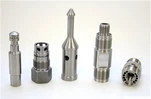
Hardware parts processing that incorporates personalized customization is increasingly important in a market where customers demand products that are tailored to their specific needs and preferences. Personalized customization can range from simple modifications to complex, one-off designs. Here's what needs to be considered for effective personalized hardware parts processing:
Customer Requirements: The first step is to understand the customer's specific needs. This involves detailed communication to gather information about the desired function, size, material, finish, and any other unique specifications.
Design and Engineering: Customized parts often require bespoke design work. Using computer-aided design (CAD) software, engineers can create detailed designs that meet the customer's specifications and are then able to simulate and analyze the part's performance.
Material Selection: The choice of material can significantly affect the final product. Different materials have different properties, such as strength, weight, and corrosion resistance, which may be critical depending on the part's application.
Prototyping: Before full-scale production, it's often necessary to create a prototype. This allows for testing and validation of the design to ensure it meets the customer's requirements and to make any necessary adjustments.
Manufacturing Processes: The manufacturing process must be chosen based on the design and material. Techniques such as 3D printing, CNC machining, or traditional forging may be used, depending on the part's complexity and the material's properties.
Quality Control: Rigorous quality control is essential to ensure that the customized parts meet the high standards expected. This includes inspection at various stages of production to check for defects and adherence to specifications.
Surface Finishing: Personalized parts may require specific surface treatments, such as polishing, anodizing, or powder coating, to achieve the desired appearance and durability.
Assembly: If the customized hardware part is part of a larger assembly, special care must be taken to ensure that it fits and functions correctly with the other components.
Packaging: Even the packaging can be customized to protect the unique part during shipping and to reflect the customer's brand or preferences.
Documentation: Providing detailed documentation, including part specifications, material certifications, and maintenance instructions, is important for personalized parts, especially for industrial or commercial applications.
Lead Time: Customization can extend the lead time for production. Clear communication about timelines and potential delays is crucial to manage customer expectations.
Costing: Customized parts often come with higher costs due to the specialized design and manufacturing processes involved. Transparent and detailed costing is important to ensure the customer understands the value they are receiving.
Scalability: While customization is about individuality, it's also important to consider whether the part can be scaled up for larger production runs if needed in the future.
After-Sales Service: Offering support and service after the part has been delivered is a key aspect of customer satisfaction, especially with customized products where specific knowledge may be required.
Regulatory Compliance: Ensure that the customized parts comply with any relevant industry standards or regulations, which can be more critical in industries like aerospace or medical devices.
By focusing on these aspects, hardware parts processors can successfully deliver personalized products that meet the unique needs of their customers while maintaining high standards of quality and service.