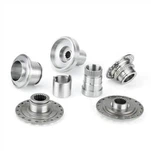
Precision Sheet Metal Processing Technology
Precision sheet metal processing is a critical aspect of modern manufacturing, where high-precision components are required for various industries such as aerospace, automotive, electronics, and medical equipment. This technology encompasses a range of processes that are used to shape, cut, and finish metal sheets into precise parts and products.
Key Processes in Precision Sheet Metal Processing:
Cutting: Utilizing laser cutting, water jet cutting, or plasma cutting to accurately cut metal sheets into desired shapes and sizes. These methods offer high precision and minimal material wastage.
Bending: Bending processes such as press braking and CNC bending are used to form the metal sheets into complex shapes. Precision bending ensures that parts meet exact specifications.
Stamping: This is a process where a press or stamping machine is used to shape the metal by applying pressure. It is commonly used for mass production of parts with consistent dimensions.
Shearing: Shearing is a cutting process that uses a shearing machine to cut metal sheets into straight or curved shapes with high accuracy.
Punching: Holes and slots can be precisely punched into metal sheets using CNC punching machines, which offer high-speed and accurate hole placement.
Welding and Joining: Various welding techniques such as TIG, MIG, and laser welding are employed to join metal parts with precision. These methods ensure strong and clean welds.
Finishing: The finishing process includes deburring, polishing, and painting to give the metal parts a smooth and professional appearance.
Inspection and Quality Control: Each step of the process is followed by rigorous inspection and quality control measures to ensure that the parts meet the required precision standards.
Advantages of Precision Sheet Metal Processing:
High Accuracy: The ability to produce parts with very tight tolerances.
Complex Geometries: Capable of creating intricate and complex shapes.
Material Efficiency: Minimizes waste by using precise cutting techniques.
Consistency: Ensures uniformity in parts produced, which is crucial for assembly and functionality.
Customization: Offers the flexibility to customize parts to meet specific design requirements.
Applications:
Precision sheet metal processing is used in a wide range of applications, including but not limited to:
Aerospace: Components for aircraft and spacecraft.
Automotive: Parts for engines, exhaust systems, and body panels.
Electronics: Housings and components for electronic devices.
Medical: Instruments and devices for medical applications.
Architecture: Decorative and functional elements in building design.
Conclusion:
Precision sheet metal processing technology is an essential component of the manufacturing sector, enabling the production of high-quality, precision-engineered parts that are vital for the operation and performance of various industries. With continuous advancements in technology and equipment, the capabilities of precision sheet metal processing are continually expanding, offering new possibilities for innovation and efficiency in manufacturing.