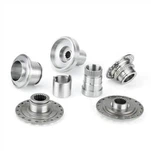
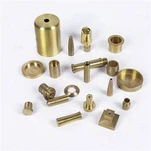
Introduction to CNC Machining of Custom Parts
CNC machining is a subtractive manufacturing process used to create custom parts by precisely removing material from a workpiece. It is widely used in the production of complex and precise components across industries such as automotive, aerospace, medical, and consumer electronics.
Key Features of CNC Machining:
Precision: CNC machines are programmed to achieve high levels of accuracy, often to the thousandth of an inch, making them ideal for custom parts that require tight tolerances.
Complexity: They can handle complex geometries and intricate designs that would be difficult or impossible to achieve through manual machining.
Efficiency: Once programmed, CNC machines can run unattended, improving efficiency and reducing labor costs.
Reproducibility: The ability to produce identical parts in large quantities with consistent quality is a significant advantage for manufacturing custom parts.
Material Variety: CNC machines can work with a wide range of materials, including metals, plastics, and alloys.
Process Steps in CNC Machining:
Design: The part is designed using CAD (Computer-Aided Design) software, creating a detailed 3D model.
CAM Programming: The CAD model is then converted into a toolpath using CAM (Computer-Aided Manufacturing) software, which generates the instructions for the CNC machine.
Setup: The workpiece is secured in the CNC machine, and the appropriate tools are selected based on the material and design of the part.
Machining: The CNC machine follows the programmed toolpath to remove material from the workpiece, gradually forming the custom part.
Inspection: After machining, the part is inspected to ensure it meets the design specifications and tolerances.
Finishing: Additional operations such as deburring, polishing, or heat treatment may be performed to refine the part's finish and properties.
Advantages of CNC Machining for Custom Parts:
Short Lead Times: Rapid prototyping and production make it suitable for quick turnaround projects.
Design Flexibility: Allows for the creation of parts with complex shapes and features.
Cost-Effective for Small Batches: Reduces the cost of producing small quantities of custom parts.
High-Quality Surface Finishes: Provides smooth and precise surfaces that may not require further finishing.
Applications of CNC Machining:
Prototyping: Creating prototypes for product development and testing.
Medical Devices: Manufacturing precise components for medical instruments and implants.
Aerospace Components: Producing parts with high strength and accuracy for aircraft and spacecraft.
Automotive Industry: Fabricating custom parts for engines, transmissions, and other vehicle systems.
Conclusion:
CNC machining is a versatile and efficient method for producing custom parts with a high degree of precision and complexity. As technology continues to advance, CNC machining remains a cornerstone of modern manufacturing, enabling the creation of innovative and specialized components that drive progress across various sectors.