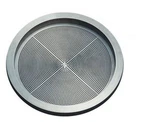
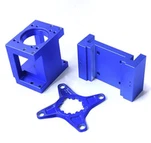
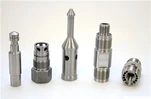
CNC Precision Mechanical Parts Machining with High-Carbon Steel
Key Points in the Machining Process
Tool Selection
Given the high hardness of high-carbon steel, it is essential to select appropriate tool materials. Carbide tools are a commonly used choice due to their high hardness, wear resistance, and thermal resistance, which can withstand the high cutting forces and temperatures generated during high-carbon steel machining. For example, carbide tools with a higher cobalt content exhibit better cutting performance when machining high-carbon steel. Additionally, coated tools are also a good option. Tools with TiAlN coatings can significantly enhance wear resistance and oxidation resistance, thereby extending tool life.
Optimization of Cutting Parameters
Reasonable cutting parameters are crucial for CNC machining of high-carbon steel. The cutting speed should not be too high to avoid excessive tool wear due to elevated temperatures. Generally, the cutting speed can be controlled within a relatively lower range based on the tool material and specific part requirements. The feed rate should also be moderate; an excessive feed rate may lead to high cutting forces, affecting machining accuracy and surface quality, while an insufficient feed rate will reduce machining efficiency. The depth of cut should be reasonably allocated based on the part's material allowance and the tool's load capacity. Typically, a larger depth of cut can be used during rough machining to improve efficiency, while a smaller depth of cut should be applied during finish machining to ensure accuracy.
Cooling and Lubrication
Effective cooling and lubrication are essential due to the significant amount of heat generated during high-carbon steel machining. The selection of cutting fluid should take into account its cooling, lubricating, and rust-preventive properties. Water-soluble cutting fluids offer good cooling performance and can quickly reduce the temperature in the machining area, while oil-based cutting fluids provide better lubrication to reduce friction between the tool and the workpiece. In actual machining, the appropriate cutting fluid and cooling method (such as internal or external cooling) should be chosen based on specific conditions to ensure smooth machining.
Quality Control and Inspection
After completing the CNC precision machining of high-carbon steel mechanical parts, strict quality control and inspection are key to ensuring part quality. High-precision measuring instruments, such as coordinate measuring machines (CMMs) and profilometers, should be used to inspect the dimensional accuracy, shape accuracy, and surface roughness of the parts. For areas with high dimensional accuracy requirements, it is essential to ensure that they fall within the specified tolerances. For complex-shaped parts, the contours should be checked against the design requirements. Surface quality should also meet the specified roughness standards.
If quality issues are detected in the parts, it is important to promptly analyze the causes, such as tool wear, improper cutting parameters, or decreased machine accuracy, and take corresponding corrective actions. For example, if dimensional deviations are caused by tool wear, the tool should be replaced, and the machining parameters should be readjusted. If the issue is related to machine accuracy, the equipment should be inspected and adjusted to ensure the quality of subsequent machining processes.