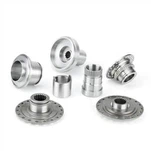
Analysis of the Applicability of High-Carbon Steel in Precision Mechanical Parts Machining
Advantages
Meeting Specific Wear-Resistance Requirements: For precision mechanical parts with extremely high wear-resistance requirements, such as precision molds and precision transmission components, the high hardness and good wear resistance of high-carbon steel make it one of the viable material options. For example, in the manufacturing of injection molds, high-carbon steel, after heat treatment processes like quenching and tempering, can withstand the erosion and friction of plastic melt for extended periods. This ensures the dimensional accuracy and surface quality of the mold, thereby producing high-precision plastic products.
Machinability Facilitates Shaping: The relatively good machinability of high-carbon steel allows it to be processed into complex shapes and precise dimensions through various cutting processes, such as turning, milling, and grinding, during precision machining. Skilled machinists, in combination with advanced machining equipment, can fully leverage the machinability advantages of high-carbon steel to achieve the shaping of precision parts.
Challenges Faced
Heat Treatment Deformation Issues: As previously mentioned, high-carbon steel has a greater tendency to deform during heat treatment. Precision mechanical parts have extremely high dimensional accuracy requirements, and even minor deformations caused by heat treatment can lead to dimensional deviations that fail to meet design specifications. For example, in the manufacturing of precision gears, deformation after heat treatment may reduce the tooth profile accuracy of the gears, affecting the smoothness and accuracy of gear transmission. To address this issue, it is necessary to optimize the heat treatment process by employing advanced quenching and tempering techniques, such as分级quenching and isothermal quenching, and to use appropriate tooling and fixtures to minimize deformation. Additionally, during the machining process, an appropriate machining allowance should be reserved to correct dimensions through subsequent machining after heat treatment.
Low Toughness Risks: High-carbon steel has relatively low toughness, which poses a risk of brittle fracture when precision mechanical parts are subjected to impact or vibratory loads. For some precision parts operating in complex conditions, such as certain precision transmission components in aircraft engines, such brittle fractures could potentially lead to severe safety accidents. To enhance the toughness of high-carbon steel, appropriate alloying treatments can be applied, such as adding alloy elements like chromium, nickel, and molybdenum to improve its microstructure and increase toughness. Moreover, during part design, the stress conditions should be fully considered, and the structure should be optimized to avoid stress concentrations and reduce the likelihood of brittle fracture.
Conclusion
High-carbon steel has certain applicability in precision mechanical parts machining, but it is not suitable for all types of precision mechanical parts. In the machining of precision parts with high wear-resistance requirements, relatively simple shapes, and less stringent toughness demands, high-carbon steel can leverage its advantages. However, when it comes to the machining of complex precision mechanical parts with extremely high requirements for dimensional accuracy, toughness, and stability, the limitations of high-carbon steel are more pronounced. In practical applications, it is necessary to comprehensively consider the specific usage requirements of the parts, the feasibility of machining processes, and cost factors. The pros and cons of high-carbon steel should be weighed to select the most appropriate material, ensuring that the machining quality and performance of precision mechanical parts meet design requirements. Meanwhile, with the continuous development of material science and machining technology, the modification of high-carbon steel and the optimization of machining processes are expected to further expand its application scope in the field of precision mechanical parts machining.