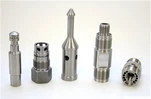
Mechanized machining refers to the use of machines to perform the various processes involved in the creation of mechanical parts. This is distinct from manual machining, where a machinist directly controls the cutting tools. Mechanized machining has evolved significantly with the advent of computer numerical control (CNC) and other advanced technologies, leading to changes in business models within the manufacturing industry. Here's an overview of mechanized machining and its impact on business models:
What is Mechanized Machining?
Definition: Mechanized machining is an automated process where machines are programmed to cut, shape, and finish workpieces according to predefined designs.
Equipment: It involves the use of various types of machine tools such as lathes, milling machines, drills, and more, which are often computer-controlled.
Precision: Mechanized machining allows for high precision and repeatability, which is crucial for mass production and complex parts.
Impact on Business Models
Mass Customization: Mechanized machining has enabled businesses to offer mass customization, where products can be tailored to individual customer needs without significant increases in cost.
Just-In-Time (JIT) Manufacturing: The efficiency of mechanized machining supports JIT production, reducing inventory costs and improving response times to market changes.
Contract Manufacturing: Many businesses have shifted to a contract manufacturing model, where they outsource the actual production to specialized mechanized machining facilities.
Vertical Integration: Some companies maintain vertical integration, investing in advanced mechanized machining capabilities to keep control over their manufacturing processes and intellectual property.
Service-Oriented Business: Many manufacturers have transitioned to a service-oriented business model, offering not just parts but also value-added services such as design support, assembly, and after-sales service.
Collaborative Robotics (Cobots): The integration of cobots in mechanized machining allows for more flexibility and can be adapted to small batch production alongside automation.
Key Changes in Business Models Due to Mechanized Machining
Faster Time to Market: Mechanized machining speeds up the production process, allowing businesses to bring new products to market more quickly.
Cost Reduction: Automation reduces labor costs and minimizes material waste, leading to lower overall production costs.
Quality Improvement: The precision and consistency of mechanized machining lead to higher quality products, enhancing brand reputation and customer satisfaction.
Scalability: Mechanized machining allows for easier scaling of production, meeting fluctuating demand without significant additional investment in labor.
Supply Chain Optimization: Businesses can optimize their supply chains by using mechanized machining to produce parts only as needed, reducing the need for large stockpiles of inventory.
Focus on Core Competencies: Companies can focus on their core competencies, such as design and marketing, while outsourcing the manufacturing to specialized mechanized machining providers.
Future Trends
Smart Manufacturing: The integration of Industry 4.0 technologies, including the Internet of Things (IoT), artificial intelligence (AI), and machine learning, to create smart factories.
Additive Manufacturing: The rise of 3D printing and other additive manufacturing techniques, which complement traditional mechanized machining by enabling the production of complex geometries and on-demand parts.
Sustainability: Mechanized machining is being adapted to support more sustainable practices, such as using renewable energy sources and reducing waste.
Customization and Personalization: Continued emphasis on providing customized and personalized products to meet the diverse needs of consumers.
Globalization: Mechanized machining enables businesses to compete on a global scale by producing high-quality products at competitive prices.
In summary, mechanized machining has significantly transformed business models within the manufacturing sector, enabling greater efficiency, precision, and flexibility. As technology continues to advance, these business models will continue to evolve, driving innovation and competitiveness in the global market.