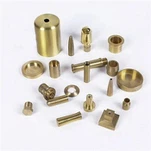
Custom Stainless Steel Flange Manufacturing (不锈钢法兰定制加工)
What Are Stainless Steel Flanges?
Stainless steel flanges are mechanical connectors used to join pipes, valves, pumps, and other equipment to form a piping system. They are typically bolted together with a gasket between two flange faces to ensure a leak-tight seal. Thanks to their excellent corrosion resistance, high strength, and durability, stainless steel flanges are widely used in industries such as petrochemical, marine engineering, food and pharmaceutical processing, water treatment, and power generation.
Common Stainless Steel Grades
| Grade | Features | Typical Applications |
|---|
| 304 / 304L | Good corrosion resistance, cost-effective | General piping, food industry |
| 316 / 316L | Superior chloride (seawater) resistance, low carbon prevents sensitization | Marine, chemical, pharmaceutical |
| 321 / 347 | Stabilized with Ti/Nb, heat-resistant | High-temperature service |
| 2205 (Duplex) | High strength + excellent corrosion resistance | Offshore, chemical processing |
| 310S | Excellent high-temperature oxidation resistance | Furnaces, heat treatment equipment |
Main Flange Types (法兰类型)
Weld Neck Flange (WN) – long tapered hub for high-pressure, high-temperature pipelines
Slip-On Flange (SO) – easy to install, suitable for low/medium pressure
Blind Flange (BL) – solid disk used to close off pipe ends
Threaded Flange (Th) – screwed connection, no welding required
Socket Weld Flange (SW) – for small-diameter, high-pressure piping
Lap Joint Flange (LJ) – used with stub ends, easy alignment
Plate Flange (PL) – flat, economical, for low-pressure systems
Custom Manufacturing Process (定制加工流程)
Material selection – confirm grade, standards (ASTM, DIN, JIS, GB), and heat/corrosion requirements
Blank forming – forging (preferred for strength), casting, or plate cutting
CNC machining – turning the sealing face (flat face FF, raised face RF, ring joint RTJ), boring, drilling bolt holes on lathes or machining centers
Surface treatment – pickling/passivation, polishing, or electroplating if required
Inspection & testing – dimensional checks, UT/MT flaw detection, PMI (material identification), hydrostatic testing
Key Machining Considerations
Work hardening tendency – stainless steel hardens quickly during cutting, so sharp carbide tools, proper cutting speeds, and sufficient feed rates are essential
Cutting heat – stainless steel has poor thermal conductivity; effective coolant supply is required to avoid tool wear and surface burns
Sealing face precision – the flange face flatness and roughness (typically Ra 3.2–6.3 μm, finer for RTJ) are critical for sealing performance
Residual stress control – clamping deformation must be minimized to ensure the flange stays flat after unclamping
Customization Options
Size range: from DN15 (1/2") to large-diameter flanges, per drawings or standards
Pressure ratings: PN6–PN420, Class 150–Class 2500
Face types: RF, FF, RTJ, TG, groove for O-ring
Special requirements: NDT reports, material certificates (MTC 3.1/3.2), special marking, anti-corrosion packaging
Quality Standards
Custom flanges are generally produced in accordance with ANSI/ASME B16.5, B16.47, EN 1092-1, JIS B2220, and GB/T 9119, with full traceability from raw material to finished product.