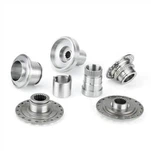
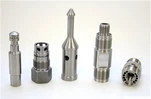
Part machining tolerance refers to the allowable deviation from the specified dimensions, features, or characteristics of a manufactured part. Tolerances are an essential aspect of precision machining, as they define the acceptable variances in the manufacturing process, ensuring that parts function correctly within their intended systems or assemblies.
Tolerances are typically specified in engineering drawings or design documents and are given in terms of a numerical value followed by a unit of measurement (e.g., ±0.01 inches or ±0.25 millimeters). The tolerance value indicates the range within which the actual dimension of the part can vary without compromising the part's functionality or fit within a larger assembly.
Here are several key components of part machining tolerance:
1. Dimensional Tolerance
This type of tolerance relates to the linear dimensions of the part, such as length, width, height, diameter, or distance between two points. Dimensional tolerance ensures that the part's size is within the specified limits, accounting for factors like material expansion or contraction due to temperature changes.
2. Geometric Tolerance
Geometric tolerances control the shape and positional characteristics of the part. These include flatness, parallelism, perpendicularity, and roundness. Geometric tolerances ensure that the part maintains its intended form and orientation, which is critical for proper fit and function.
3. Surface Roughness Tolerance
Surface roughness tolerance specifies the acceptable texture or finish of the machined surface. It is typically measured using a parameter such as Ra (average roughness) or Rz (maximum peak-to-valley height). A smooth surface finish can reduce wear, improve aesthetics, and prevent corrosion.
4. Positional Tolerance
Positional tolerance is used to control the location of features such as holes, slots, or other elements relative to other features on the part. This type of tolerance ensures that the features are placed correctly with respect to each other, which is essential for assembly and function.
Factors Affecting Machining Tolerance:
Machine Accuracy: The precision of the machining equipment can affect the achievable tolerances. High-precision machines can produce parts with tighter tolerances.
Tool Wear: As cutting tools wear down during the machining process, they can introduce variations in the part dimensions, affecting the tolerance.
Material Properties: The workpiece material can influence the machining process and the resulting tolerances. Some materials are more prone to deformation or movement during machining.
Cutting Parameters: The selection of cutting speed, feed rate, and depth of cut can impact the tolerances. Optimizing these parameters can help achieve the desired tolerances.
Measurement and Inspection: The accuracy of the measurement tools and techniques used to verify the part dimensions directly affects the assessment of whether the part meets its tolerance requirements.
Conclusion
Understanding and applying part machining tolerances is crucial for ensuring that manufactured parts meet the design specifications and perform reliably in their intended applications. Tolerances must be carefully considered during the design and manufacturing stages to balance the need for precision with the practicalities of manufacturing processes and costs. By setting appropriate tolerances and using precise machining techniques, manufacturers can produce high-quality parts that function effectively and reliably in complex systems and assemblies.