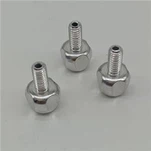
Introduction to Precision Parts Processing with High-Level Surface Treatment
Precision parts processing with a focus on high-level surface treatment is a specialized manufacturing approach that combines the accuracy of machining with the aesthetics and functionality of advanced surface finishing techniques. This process is essential for industries where both the performance and appearance of parts are critical, such as automotive, aerospace, electronics, and consumer goods.
Key Aspects of Precision Parts Processing:
High Tolerance Machining: Utilizing CNC machines and other precision tools to achieve tight tolerances and exact dimensions.
Material Selection: Choosing high-quality materials that can withstand the machining process and meet the performance requirements.
Advanced Machining Techniques: Employing techniques such as milling, turning, drilling, and grinding to shape the parts with precision.
Quality Control: Implementing stringent quality control measures at every stage of the machining process to ensure precision and consistency.
High-Level Surface Treatment:
Polishing: Smoothing the surface of the parts to achieve a mirror-like finish or a specific texture, enhancing both appearance and functionality.
Anodizing: An electrochemical process used to increase the thickness of the natural oxide layer on metals like aluminum, providing a decorative finish and improved corrosion resistance.
Plating: Applying a thin layer of metal to the surface of the part to improve its appearance, corrosion resistance, or wear properties.
Powder Coating: Applying a dry powder that is electrostatically charged and then cured under heat to provide a durable and attractive finish.
Vapor Deposition: A process where a thin film of material is deposited on the surface of the part to enhance its properties, such as hardness or conductivity.
Laser Etching: Using lasers to engrave or mark the surface of the part with precision, adding a custom touch or branding.
Benefits of High-Level Surface Treatment:
Enhanced Aesthetics: Parts with high-level surface treatments have a visually appealing finish that can be tailored to meet specific design requirements.
Improved Durability: Surface treatments can increase the wear resistance, corrosion resistance, and longevity of the parts.
Customization: A wide range of surface treatments allows for extensive customization to match the brand identity or product design.
Functional Improvement: Certain treatments can improve the functional properties of the parts, such as reducing friction or increasing reflectivity.
Market Differentiation: High-quality surface treatments can help products stand out in the market and be perceived as premium.
Applications of Precision Parts with High-Level Surface Treatment:
Automotive Industry: High-precision parts with polished or anodized finishes for engine components, body panels, and interior trim.
Aerospace: Precision-engineered parts with specialized coatings to withstand extreme conditions and reduce weight.
Medical Devices: Parts with smooth, polished surfaces and biocompatible coatings for implants and surgical instruments.
Electronics: Precision components with high-quality finishes for consumer electronics, ensuring durability and a premium look.
Jewelry and Fashion: Precision metal parts with intricate designs and luxurious surface treatments for high-end accessories.
Conclusion:
Precision parts processing with a focus on high-level surface treatment represents the convergence of engineering excellence and design sophistication. By combining meticulous machining with advanced surface finishing techniques, manufacturers can produce parts that not only meet the highest standards of precision and performance but also offer exceptional visual appeal and enhanced functionality. This approach is increasingly important in today's competitive market, where consumers demand products that are both high-performing and aesthetically pleasing.