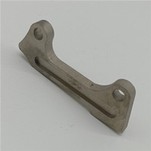
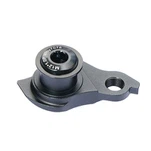
Definition
Precision forging is a closed-die forming process carried out at near-net-shape accuracy: the work-piece is plastically deformed under high pressure in dies whose cavity already contains the final geometry, so that post-forge machining is either eliminated or limited to a few finishing passes (≤ 0.5 mm stock).
Key Characteristics
Tolerances: IT 7–9 (±0.05–0.2 mm) and 0.3–0.8 mm die-parting-line mismatch.
Surface finish: Ra 0.8–3.2 µm as-forged; suitable for direct hard-coating or micro-finishing.
Material utilisation: 70–95 %, compared with 40–60 % for conventional forge + machine route.
Energy efficiency: 20–40 % less than machine-from-solid because only selective grinding/honing follows.
Process Variants
Warm precision forging (600–950 °C for steels) – balances low flow stress with minimal scale.
Cold precision forging (room temperature) – gives best accuracy and work-hardening, ideal for non-ferrous and low-carbon steels.
Isothermal / hot-die forging (950–1100 °C) – maintains die and part at equal temperature to avoid die chilling, used for Ti- and Ni-super-alloys.
Net-shape flashless forging – completely enclosed die, no flash land, material savings up to 30 %.
Equipment & Tooling
CNC servo-screw or hydraulic presses with capacities 1–25 MN, stroke repeatability ±0.02 mm.
Dies machined from H13, TZM or nickel-based super-alloys, vacuum-hardened to 48–54 HRC, coated with PVD AlCrN or CVD diamond-like carbon for wear resistance.
Multistation transfer units integrated with induction heaters and robotic spray cooling for 5–7 s cycle times.
Applications
Automotive: bevel & helical gears, constant-velocity joints, connecting rods, turbocharger impellers.
Aerospace: Ti-6Al-4V blades, Al-Li bulkheads, Mg gearbox housings.
Industrial: stainless valve bodies, hydraulic pump flanges, power-tool anvils.
Benefits
Part-to-part repeatability ≤ 0.1 %, enabling automatic downstream assembly.
Fibre flow lines follow the contour, raising fatigue life 20–40 % over machined equivalents.
Reduced carbon footprint: lower chip generation, shorter supply chain, lighter components for vehicles and aircraft.
Current Trends
Integration of closed-loop forging with in-die strain measurement, AI-driven press setting, and hybrid additive–forging cells that print local preforms and finish-forge them in one setup, pushing tolerances toward IT 5–6 and near-optical surface quality.