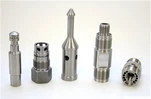
Custom Parts Processing and Service Center
Overview: A custom parts processing and service center is a specialized facility that offers tailored manufacturing solutions for a wide range of industries. These centers are equipped to handle everything from design and prototyping to full-scale production of custom mechanical components.
Customization: The core service of such a center is the ability to customize parts according to specific customer requirements. This includes working with clients to understand their unique needs and designing parts that meet those specifications precisely.
Materials and Technologies: These centers work with a variety of materials, including metals, plastics, and composites, and employ advanced technologies such as Computer Numerical Control (CNC) machining, 3D printing, and laser cutting to fabricate parts with high precision.
Prototyping: Rapid prototyping is a critical service offered by custom parts centers, allowing clients to visualize and test their designs before committing to mass production. This helps in reducing development time and costs.
Quality Assurance: Rigorous quality assurance processes are in place to ensure that every part meets the highest standards. This includes thorough inspections, testing, and documentation to guarantee reliability and performance.
Engineering Support: Professional engineering support is provided to assist clients with complex design challenges. This can include material selection, stress analysis, and manufacturability reviews.
Just-in-Time (JIT) Delivery: Custom parts centers often offer just-in-time delivery to minimize inventory costs for clients and ensure parts are available precisely when needed.
After-sales Service: Post-delivery services include technical support, maintenance, and repair. Some centers also provide training to help clients get the most out of their custom parts.
Industry Applications: Custom parts are used across various sectors, including automotive, aerospace, medical devices, industrial machinery, and consumer goods, each with its own set of regulatory and performance requirements.
Sustainability: Environmental sustainability is becoming increasingly important, with custom parts centers adopting practices to reduce waste, recycle materials, and implement energy-efficient processes.
Digital Integration: The integration of digital technologies, such as CAD/CAM software and Enterprise Resource Planning (ERP) systems, streamlines operations and improves communication between the center and its clients.
Flexibility and Scalability: Custom parts centers are designed to be flexible and scalable, capable of producing anything from a single complex part to large quantities of components to meet varying market demands.
Regulatory Compliance: Adherence to industry-specific regulations and standards is a priority. This ensures that all parts are not only custom-designed but also compliant with safety and quality standards.
In conclusion, a custom parts processing and service center is an integral part of the modern manufacturing landscape, providing tailored solutions that drive innovation and efficiency for clients across different industries.
This introduction outlines the services and capabilities of a custom parts processing and service center, emphasizing customization, quality, and the ability to meet specific industry needs.