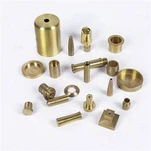
What is Metal Milling?
Metal milling is a subtractive manufacturing process that uses a rotating multi-toothed cutter to remove material from a solid metal workpiece. The cutter, known as a milling tool, is moved parallel to its axis, and this relative motion between the tool and the workpiece results in the desired shape being milled into the metal.
Key Services in Metal Milling:
CNC Milling: Computer Numerical Control (CNC) milling is the most common type of metal milling service. It uses computer programs to control the milling machine's movements, ensuring high precision and repeatability.
Prototype Milling: This service is used to create the first samples of a part for testing and design verification before full-scale production.
Production Milling: High-volume production of metal parts with consistent quality and precision is a standard service in metal milling.
Custom Milling: Tailored milling services to create parts with unique specifications or complex geometries according to customer requirements.
Rapid Prototyping: Quick turnaround of part designs, often using advanced CNC milling machines to produce prototypes in a short time frame.
Multi-Axis Milling: More advanced milling services that can handle parts requiring movement along multiple axes for complex shapes.
Surface Finishing: Milling services often include operations to achieve a desired surface finish, such as polishing or grinding.
Tooling and Fixtures: Design and milling of custom tooling and fixtures necessary for the production of specific parts.
Benefits of Metal Milling Services:
Precision: Metal milling services can produce parts with very tight tolerances, essential for components that require a high degree of accuracy.
Material Efficiency: The milling process can be programmed to remove only the necessary material, reducing waste.
Speed: With automated CNC control, milling operations can be completed quickly, reducing lead times.
Complex Shapes: The process is capable of producing complex shapes that are difficult or impossible to achieve with other manufacturing methods.
Material Variety: A wide range of metals, from aluminum to titanium, can be milled, offering versatility in material selection.
Surface Quality: Metal milling can produce excellent surface finishes on parts, reducing the need for additional finishing processes.
Applications of Metal Milling Services:
Aerospace Industry: For the production of complex and precise components such as turbine blades and aircraft structural parts.
Automotive Industry: For manufacturing engine components, brake calipers, and suspension parts.
Medical Industry: For creating precise instruments, implants, and diagnostic equipment.
Defense and Security: For the production of high-precision components for military and security applications.
Electronics: For the manufacturing of heat sinks, chassis, and other metal components for electronic devices.
Considerations in Metal Milling Services:
Material Selection: The choice of metal will affect the milling process, tool life, and the final part properties.
Machine Selection: The type of milling machine (vertical, horizontal, or five-axis) should be chosen based on the part's geometry.
Tooling: The choice of milling tools, including their material and geometry, is crucial for the efficiency and quality of the milling process.
Cutting Parameters: Optimal selection of cutting speed, feed rate, and depth of cut is essential for achieving the desired part quality and tool life.
Coolant Use: The application of cutting fluids can improve tool life and the quality of the machined surface.
Metal milling services are an integral part of modern precision machining, providing manufacturers with the ability to create complex, high-quality metal components that are essential for a wide range of industries and applications.