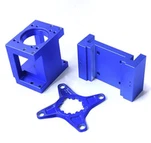
Understanding the machining process design diagram is crucial for anyone involved in the manufacturing industry, as it outlines the steps and considerations necessary for efficient and accurate production of mechanical parts. Here's a breakdown of the key elements and tasks involved in machining process design:
Workpiece Material Analysis: The machinability of the material determines the type of tools, speeds, and feeds to be used. Different materials require different machining strategies to ensure efficiency and part integrity.
Selection of Machining Operations: Based on the part's design, the process planner identifies the necessary operations such as turning, milling, drilling, or grinding.
Tooling Selection: The choice of cutting tools is critical and depends on the workpiece material, operation, and desired surface finish. Tool geometry, material, and coatings are all considered to optimize performance and寿命 .
Machine Tool Selection: The appropriate machine tool must be selected based on the part's geometry and the required operations. This selection affects setup time, production rate, and cost.
Sequence of Operations: The order in which operations are performed affects the overall efficiency and quality of the part. It's essential to minimize the number of setups and to合理安排工序以减少加工时间和成本.
Setup Planning: This involves determining how the workpiece will be held and positioned on the machine tool. Fixtures and clamps are selected to securely hold the workpiece in the required orientation.
Cutting Parameters: Decisions on cutting speed, feed rate, and depth of cut are made based on the tooling, machine capabilities, and material properties to optimize productivity and part quality.
Process Documentation: A process flow diagram or similar documentation is created to outline the machining sequence, tool changes, and any special instructions for the machinist.
Quality Control: Inspection plans are developed to ensure that parts meet design specifications and tolerances. This may include in-process gauging and final inspection using various measurement tools.
Production Planning: This involves scheduling the machining operations within the production environment, considering factors like machine availability, operator skills, and material supply.
Maintenance and Tool Management: Regular maintenance of machine tools and management of cutting tools are essential to ensure consistent part quality and to prevent machine downtime .
Sustainability and Energy Efficiency: Modern machining process design also considers the environmental impact and energy consumption of the operations, aiming for sustainable manufacturing practices.
By understanding and applying these elements, manufacturers can design efficient machining processes that produce high-quality parts while minimizing costs and maximizing productivity. The machining process design diagram is a valuable tool for visualizing and organizing these complex tasks and ensuring that all aspects of the production process are considered and optimized.