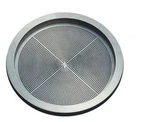
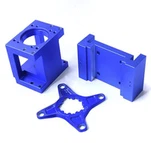
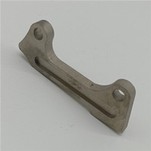
Precision machining is a manufacturing process that involves the removal of material from a workpiece to create parts with extremely tight tolerances and high accuracy. This process is essential in producing components that require precise dimensions and intricate designs, commonly used in industries such as aerospace, automotive, medical devices, and electronics.
Key Features of Precision Machining:
High Accuracy: Precision machining is characterized by its ability to produce parts with tolerances often within ±0.0001 inches (±0.0025 mm) or tighter. This level of accuracy is critical for applications where even minor deviations can lead to significant issues.
Complex Geometries: The process allows for the creation of intricate shapes and features that may be difficult or impossible to achieve with traditional machining methods. This includes multi-axis machining, which enables the production of complex contours and internal features.
Versatile Material Handling: Precision machining can work with a wide range of materials, including metals (such as aluminum, stainless steel, and titanium), plastics, and composites. This versatility makes it suitable for various applications across different industries.
Advanced Technology: The use of Computer Numerical Control (CNC) technology is central to precision machining. CNC machines are programmed with detailed specifications to automate the machining process, ensuring consistent quality and repeatability.
Surface Finish: Precision machining can achieve superior surface finishes, which are essential for both functional and aesthetic purposes. Techniques such as micro-milling and grinding are often employed to enhance the surface quality of machined parts.
Efficiency: The automation of precision machining processes allows for high-speed production, reducing lead times and increasing overall productivity. CNC machines can operate continuously, making them ideal for high-volume manufacturing.
Common Precision Machining Processes:
CNC Milling: Involves the use of rotating multi-toothed cutters to remove material from a workpiece, creating flat surfaces, slots, and complex shapes.
CNC Turning: Utilizes a lathe to rotate the workpiece against a stationary cutting tool, producing cylindrical parts with high precision.
Drilling: Creates holes in a workpiece using a rotating drill bit, which can be programmed for various sizes and depths.
Grinding: Employs abrasive wheels to achieve high precision and smooth finishes on machined parts.
Electrical Discharge Machining (EDM): Uses electrical discharges to remove material from a workpiece, particularly effective for hard materials and complex shapes.
Applications of Precision Machining:
Precision machining is vital in various industries, including:
Aerospace: Producing components that must meet strict safety and performance standards.
Medical Devices: Manufacturing intricate parts for surgical instruments and implants that require high reliability.
Automotive: Creating engine components, transmission parts, and other critical elements that demand precision.
Electronics: Fabricating small, complex parts for devices such as smartphones and computers.
Conclusion:
In summary, precision machining is a sophisticated manufacturing process that enables the production of high-quality, accurate components. Its ability to work with various materials and produce complex geometries makes it an essential technique in modern manufacturing, driving innovation and efficiency across multiple industries.