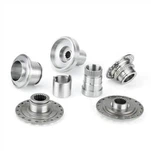
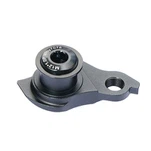
CNC Precision Machining vs. 3D Printing: A Comparative Overview
Fundamental Principle
表格
| Aspect | CNC Precision Machining | 3D Printing (Additive Manufacturing) |
|---|---|---|
| Core concept | Subtractive manufacturing: material removed from a solid blank | Additive manufacturing: material built layer by layer from digital model |
| Starting material | Solid bar stock, plate, billet, or casting | Powder, filament, liquid resin, or wire feedstock |
| Material transformation | Cutting, shearing, grinding away excess | Fusing, curing, sintering, or melting to consolidate |
| Waste generation | Chips, swarf, coolant residue (typically 50–90% of starting material) | Minimal waste (support structures, occasional failed builds) |
These fundamentally opposing approaches create distinct advantages, limitations, and optimal application domains for each technology.
Process Characteristics Comparison
1. Geometric Freedom
表格
| Capability | CNC Machining | 3D Printing |
|---|---|---|
| Internal cavities | Limited by tool access; undercuts require specialized cutters | Excellent; complex internal channels and lattices routine |
| Overhanging features | Generally unrestricted (5-axis) | Requires support structures in most processes; limited overhang angles (typically 45°) |
| Thin walls | Achievable down to 0.2–0.5 mm depending on material | Process-dependent; 0.3–1.0 mm typical |
| Minimum feature size | 0.1–0.3 mm (micro-machining capable) | 0.05–0.2 mm (laser/pixel resolution limited) |
| Surface complexity | High with 5-axis; free-form surfaces require sophisticated programming | Native capability for arbitrary complexity; complexity does not increase cost |
2. Material Properties and Performance
表格
| Property | CNC Machining | 3D Printing |
|---|---|---|
| Material range | Virtually all engineering materials: metals, plastics, composites, ceramics | Expanding but constrained; metal powders, thermoplastics, photopolymers, limited ceramics |
| Mechanical properties | Isotropic; fully dense; equivalent to wrought or cast specifications | Often anisotropic (layer-dependent); porosity in metal powder bed fusion; heat treatment often required |
| Fatigue performance | Well-characterized; predictable lifespan | Variable; surface roughness and internal defects can initiate fatigue cracks |
| Heat resistance | Full bulk material capability | Often limited by polymer binder content or layer adhesion |
| Surface hardness | Achievable through material selection and heat treatment | Dependent on base material; limited surface modification options |
3. Dimensional Accuracy and Surface Finish
表格
| Parameter | CNC Machining | 3D Printing |
|---|---|---|
| Typical tolerance | ±0.01–0.05 mm (standard); ±0.005 mm (precision); ±0.001 mm (ultra-precision) | ±0.1–0.3 mm (standard); ±0.05 mm (calibrated systems) |
| Best achievable tolerance | ±0.001 mm (diamond turning, jig grinding) | ±0.02 mm (selective laser sintering with optimization) |
| Surface roughness (as-built) | Ra 0.4–3.2 μm (depending on operation) | Ra 5–25 μm (metal PBF); Ra 0.5–5 μm (polymer SLA/DLP) |
| Post-processing for finish | Polishing, grinding, honing | CNC machining, chemical polishing, media blasting (often required for functional surfaces) |
Critical distinction: CNC machining delivers finished functional dimensions directly; 3D printing typically requires post-machining for precision fits and sealing surfaces.
Production Economics
表格
| Factor | CNC Machining | 3D Printing |
|---|---|---|
| Setup cost | Moderate to high (programming, fixtures, tooling) | Low to moderate (build plate preparation, support generation) |
| Per-part cost trend | Decreases with volume; economies of scale strong | Relatively flat; material and build time dominate regardless of quantity |
| Break-even quantity | Typically favorable beyond 10–100 units (part-dependent) | Favorable for 1–10 units; competitive for complex low-volume production |
| Material utilization | 10–50% (significant waste in chips) | 90–99% (powder recyclability varies by process) |
| Lead time for first part | Days to weeks (procurement, programming, setup) | Hours to days (direct from digital file) |
| Design change cost | Moderate (reprogramming, possibly new fixtures) | Minimal (update digital model, re-slice) |
Application Suitability
表格
| Scenario | Preferred Technology | Rationale |
|---|---|---|
| Prototype validation (form/fit) | 3D Printing | Rapid turnaround, low cost, complex geometry freedom |
| Prototype validation (functional load) | CNC Machining | Representative material properties, accurate performance prediction |
| Low-volume production (1–100 units) | 3D Printing or CNC | Depends on geometry complexity and material requirements |
| Medium-volume production (100–10,000 units) | CNC Machining | Economies of scale, consistent quality, established supply chain |
| High-volume production (>10,000 units) | CNC Machining or molding | CNC for flexibility; molding for minimum piece cost |
| Complex internal cooling channels | 3D Printing | Conformal cooling impossible to machine conventionally |
| Precision bearing seats, sealing surfaces | CNC Machining | Tolerance and finish requirements directly achievable |
| Lightweight topology-optimized structures | 3D Printing | Lattice and generative designs natively manufacturable |
| Large structural components (>500 mm) | CNC Machining or casting + CNC | Build envelope and deposition rate limitations in additive |
| Repair and remanufacturing | Hybrid (both) | 3D printing for material addition; CNC for finish machining |
Specific Process Technologies
CNC Precision Machining Variants:
表格
| Process | Characteristics | Typical Application |
|---|---|---|
| 3-axis milling | Prismatic parts, simple contours | General machining, plates, brackets |
| 5-axis simultaneous | Complex free-form surfaces | Turbine blades, impellers, molds |
| CNC turning | Rotational symmetry | Shafts, pins, threaded fasteners |
| Swiss-type turning | Long, slender precision parts | Medical implants, connectors, watch components |
| Precision grinding | Highest accuracy and surface quality | Bearings, gauges, optical components |
| EDM (wire and sinker) | Hardened materials, intricate details | Punches, dies, mold cavities |
3D Printing Variants:
表格
| Process | Material | Characteristics | Application |
|---|---|---|---|
| SLA/DLP (Stereolithography) | Photopolymers | Finest resolution, smooth surfaces | Prototypes, dental models, investment casting patterns |
| SLS/MLS (Selective Laser Sintering/Melting) | Polymers, metals | Good mechanical properties, no supports needed | Functional prototypes, low-volume end-use parts |
| SLM/DMLS (Selective Laser Melting / Direct Metal Laser Sintering) | Metal powders | Fully dense metal parts, excellent detail | Aerospace, medical implants, tooling inserts |
| EBM (Electron Beam Melting) | Metal powders (titanium favored) | Vacuum environment, stress-relieved as-built | Aerospace, orthopedic implants |
| FDM/FFF (Fused Deposition Modeling) | Thermoplastic filaments | Lowest cost, widest accessibility | Concept models, jigs, fixtures, low-strength parts |
| DED (Directed Energy Deposition) | Metal wire/powder | Large builds, repair capability, multi-material | Turbine blade repair, large structural features |
Hybrid Manufacturing: Convergence of Both Worlds
Modern manufacturing increasingly integrates both approaches:
表格
| Hybrid Approach | Description | Benefit |
|---|---|---|
| Near-net-shape additive + CNC finish | 3D printed preform machined to final dimensions | Reduces material waste and machining time for complex parts |
| In-situ hybrid machines | Additive head mounted on CNC machining center | Single-setup production; additive for features, subtractive for precision |
| Repair and remanufacturing | DED welding onto worn component, then CNC to original dimensions | Extends component life; sustainable manufacturing |
| Conformal cooling molds | 3D printed mold inserts with internal channels, CNC finished parting surfaces | Reduced cycle times, improved part quality in injection molding |
Decision Framework
表格
| Consideration | Choose CNC Machining When... | Choose 3D Printing When... |
|---|---|---|
| Quantity | >50–100 units; mass production | 1–10 units; bridge production |
| Tolerance | ±0.05 mm or tighter required | ±0.1 mm acceptable or post-machinable |
| Material | Specific alloy grade required; certified aerospace/medical material | Standard materials acceptable; material flexibility valued |
| Surface finish | As-machined finish sufficient; polishing/grinding budgeted | Post-processing acceptable; texture or porosity functional |
| Geometry | Externally accessible features; machinable from solid | Internal complexity; lattice structures; organic forms |
| Speed | Production schedule allows setup and programming time | Immediate turnaround critical |
| Mechanical loading | Fatigue-critical; full material properties required | Static or low-cycle loading; anisotropy manageable |
| Certification | Established material certifications and process qualifications required | Rapid iteration prioritized; formal qualification later |
Conclusion
CNC precision machining and 3D printing represent complementary rather than competing manufacturing paradigms. CNC machining excels in delivering precision, material integrity, and economic efficiency for established designs and higher volumes. 3D printing dominates in geometric complexity, rapid iteration, and low-volume customization. The most sophisticated manufacturing strategies leverage both: additive processes for shape complexity and material efficiency in preforms, followed by CNC precision finishing for critical functional surfaces. As additive technologies mature in material diversity, build speed, and dimensional accuracy, and as CNC systems integrate additive capabilities, the boundary between these approaches continues to blur-creating an increasingly capable and flexible manufacturing ecosystem.