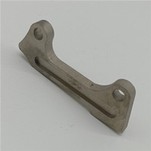
CNC (Computer Numerical Control) precision machining is a highly advanced manufacturing process that utilizes computer-controlled machines to fabricate parts with exceptional accuracy and repeatability. Here's an introduction to CNC precision machining manufacturing:
Introduction to CNC Precision Machining Manufacturing
Technology Overview: CNC precision machining is a process where a computer program dictates the movement of machine tools to remove material from a workpiece. The process is highly automated and capable of producing complex parts with tight tolerances.
Equipment: The core of CNC machining is the CNC machine tool, which can be a milling machine, lathe, grinder, or other specialized machines. These machines are equipped with advanced motion control systems that follow the programmed instructions.
Programming: Before machining begins, engineers or machinists write a program using a specialized computer-aided manufacturing (CAM) software. The program includes the tool paths, feed rates, speeds, and other operational parameters.
Material Selection: A wide range of materials can be machined using CNC, including metals, plastics, and composites. The choice of material depends on the part's application and the required mechanical properties.
Setup: The workpiece is securely clamped in a fixture or on a pallet to ensure stability during machining. Tooling is set up according to the program, with the correct tools selected for the material and operations to be performed.
Precision: One of the key advantages of CNC machining is its precision. The use of high-quality machine tools, accurate motion control systems, and fine-resolution control of the cutting process results in parts with very close tolerances.
Repeatability: CNC machines are designed to produce parts with consistent dimensions and quality. This repeatability is essential for mass production and ensures that each part meets the required specifications.
Complexity: CNC machining is well-suited for complex geometries that would be difficult or impossible to produce using traditional manual machining methods. It allows for the creation of intricate features and contours.
Efficiency: The automation of the CNC process reduces the time and labor required for part production. Once programmed, the machine can run unattended, producing parts at a high rate.
Flexibility: CNC machines can be quickly reprogrammed to produce different parts or variations of a part, making them highly flexible for small batch production or prototyping.
Quality Control: After machining, parts are inspected using various methods such as gauging, optical inspection, or coordinate measuring machines (CMMs) to ensure they meet the required specifications.
Applications: CNC precision machining is widely used across industries such as aerospace, automotive, medical, and consumer electronics for the production of high-precision components.
Future Trends: Advancements in CNC technology continue to push the boundaries of precision and efficiency. Developments in multi-axis machining, high-speed machining, and integration with other manufacturing technologies such as 3D printing are expanding the capabilities of CNC machining.
CNC precision machining is a cornerstone of modern manufacturing, providing a reliable and efficient method for producing parts with high levels of accuracy and quality. Its versatility and precision make it an essential technique in the production of a wide range of products.