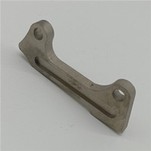
Part Deformation in CNC Machining of Robotic Components
Overview
CNC machining is a critical manufacturing process for robotic parts, producing components such as robotic arms, joints, end-effector mounts, frames, and structural links. However, these parts frequently experience deformation during or after machining, compromising dimensional accuracy, assembly fit, and functional performance. Understanding the underlying causes of this deformation is essential for process optimization and quality assurance in robotic manufacturing.
Material Characteristics and Residual Stress
Robotic components are commonly machined from lightweight materials such as aluminum alloys, titanium alloys, and engineered plastics. These materials often arrive with internal residual stresses introduced during casting, extrusion, forging, or rolling processes. When CNC machining removes material layers, the equilibrium of these locked-in stresses is disrupted. The remaining material relaxes and redistributes, causing the part to warp, twist, or bow. Thin-walled robotic structures are particularly vulnerable because they offer limited resistance to these stress-driven distortions.
Thermal Effects During Machining
The machining process generates substantial heat through tool-workpiece friction and chip deformation. Robotic parts typically feature thin walls, deep pockets, and slender profiles that dissipate heat poorly due to low thermal mass. Localized thermal expansion occurs during cutting, creating temporary dimensional shifts. As the part cools unevenly after machining, differential contraction produces permanent warping. Areas with thin cross-sections or complex internal cavities experience the most severe thermal gradients and subsequent distortion.
Mechanical Forces and Deflection
Cutting forces exerted by the milling tool or turning insert can elastically deflect compliant sections of robotic parts. Long robotic links, thin-walled housings, and intricate joint components possess relatively low stiffness compared to bulkier mechanical parts. During machining, these sections bend away from the cutting tool under load and spring back once the force is removed. This elastic recovery results in dimensional deviations and can induce internal stresses that manifest as deformation when fixturing constraints are released.
Fixturing and Clamping Impact
The way a robotic part is held during machining significantly influences its final geometry. Excessive clamping force pre-loads thin-walled components, storing elastic energy in the material. When clamps are released after machining, this energy dissipates through shape change. Insufficient or poorly distributed clamping allows the part to shift or vibrate under cutting forces, creating asymmetric stress patterns. Both scenarios contribute to post-machining distortion, particularly in precision robotic joints where tight tolerances are required for smooth motion.
Unbalanced Material Removal
Robotic components often require asymmetric machining operations where material is removed predominantly from specific regions. This unbalanced material removal shifts the neutral axis and alters the moment of inertia of the remaining structure. Progressive machining without strategic sequencing causes continuous redistribution of internal stresses. The part gradually deforms as each machining operation alters the stress equilibrium, leading to cumulative distortion that may only become apparent upon completion or unclamping.
Vibration and Dynamic Instability
The slender geometries and thin walls common in robotic parts result in low natural frequencies and reduced dynamic stiffness. During CNC machining, these structures are prone to regenerative chatter and forced vibrations. This dynamic instability produces variable cutting forces, intermittent tool engagement, and localized heating. The resulting surface and subsurface damage creates non-uniform residual stress distributions. These stresses drive post-machining deformation and can also compromise fatigue life in dynamically loaded robotic applications.
Metallurgical Considerations
Certain robotic-grade materials exhibit metallurgical sensitivity to machining conditions. Precipitation-hardened aluminum alloys such as 6061-T6 or 7075 can experience overaging if machining temperatures exceed critical thresholds, altering local strength and dimensional stability. Similarly, some titanium alloys and stainless steels may undergo localized phase transformation under extreme thermal or mechanical conditions. These microstructural changes create property mismatches between machined and unmachined regions, generating internal stresses that promote distortion.
Design-Related Factors
The inherent design philosophy of robotic parts contributes to machining deformation susceptibility. Weight reduction requirements drive designers toward thin walls, deep ribs, lattice structures, and material cutouts. While these features optimize robot dynamics and payload capacity, they reduce workpiece rigidity during machining. Complex internal geometries for cable routing, sensor integration, and actuator mounting create stress concentration points and complicate fixturing strategies, further increasing deformation risk.
Mitigation Approaches
Effective strategies to minimize deformation include stress-relief treatments of raw material before machining, such as cryogenic stabilization or thermal aging. Symmetrical machining sequences balance material removal to maintain uniform stress states. Optimized cutting parameters reduce heat generation and mechanical loading. Advanced fixture designs with conformable supports, vacuum clamping, or adaptive damping distribute holding forces more evenly. Rough machining followed by intermediate stress relief and finish machining is a proven workflow for precision robotic components. In-process monitoring and real-time tool path compensation using touch probes or vision systems can also correct for emerging distortion during the machining cycle.
Conclusion
Part deformation in CNC machining of robotic components stems from the interaction of residual material stresses, thermal effects, mechanical cutting forces, fixturing conditions, dynamic behavior, and material metallurgy. The lightweight, thin-walled, and geometrically complex nature of robotic parts inherently amplifies these challenges. Achieving precision in robotic component manufacturing requires comprehensive process planning that addresses these factors holistically - from material preparation through machining strategy to post-process stabilization - ensuring that finished parts meet the stringent accuracy and reliability demands of modern robotic systems.