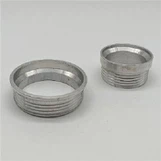
Hey there, fellow bike enthusiasts! As a stem parts supplier, I've spent years diving deep into the fascinating world of how stem parts interact with the leaves – well, in the context of bikes, of course, not actual plant leaves. In this blog, I'm gonna break down this interaction for you in a way that's easy to understand.
Let's start with the basics. The stem of a bike is a crucial component that connects the handlebars to the fork. It plays a vital role in determining the bike's handling, comfort, and overall performance. And when it comes to how it interacts with the other parts of the bike, especially those related to the "front end" where the action happens, it's like a well - choreographed dance.
First off, the stem length affects the bike's handling. A shorter stem gives you a more responsive and agile ride. It allows you to quickly turn the handlebars and change direction, which is great for tight corners and technical trails. Imagine you're riding a mountain bike on a narrow, winding trail. A shorter stem lets you easily navigate through the twists and turns, almost like you're dancing through the forest. On the other hand, a longer stem provides more stability at high speeds. It's like having a steady hand on the wheel. If you're into road racing and need to maintain a straight line at breakneck speeds, a longer stem can be your best friend.
Now, let's talk about the angle of the stem. The stem angle determines the height and position of the handlebars relative to the saddle. This has a huge impact on your riding comfort. If you have a stem with a positive angle (tilted upwards), it raises the handlebars. This is great for riders who want a more upright riding position, reducing strain on the back and neck. It's like sitting in a comfortable armchair while riding your bike. I've had customers who used to suffer from back pain during long rides, but after switching to a stem with a positive angle, they noticed a significant improvement.
Conversely, a stem with a negative angle (tilted downwards) lowers the handlebars. This is often preferred by more aggressive riders, like those in competitive road cycling or downhill mountain biking. A lower handlebar position allows for a more aerodynamic stance, which can shave off precious seconds in a race. It's like a sprinter getting into a low - lying starting position to gain an edge.
But how does all this interact with the rest of the bike, specifically the parts that connect to the front wheel and the fork? Well, the stem is directly attached to the fork steerer tube. This connection needs to be strong and secure. If the stem isn't properly tightened or is of poor quality, it can lead to a wobbly or unstable front end. You don't want to be out on the road or trail and suddenly feel your handlebars shaking uncontrollably. That's why at our supply, we only offer high - quality stem parts that are built to last.
For instance, our Titanium Stem Parts are made from top - grade titanium. Titanium is known for its strength, lightness, and corrosion resistance. It can withstand the rigors of all types of riding, whether it's a smooth road ride or a rough mountain biking adventure. The light weight of titanium also helps to reduce the overall weight of the bike, which can improve acceleration and handling.
Another great product we have is the Bike Stem Riser Bike Fork Stem Extender Bicycle Handlebar Raiser Head Up Adapter Suitable For Mountain Bike, Road Bike, MTB, BMX, Fixie (Aluminium Alloy, Adjustable). This nifty little device allows you to adjust the height of your handlebars easily. It's like having a magic wand that can transform your riding position. Whether you want to raise the handlebars for a more comfortable cruise or lower them for a more aggressive ride, this stem riser can do it all.
The interaction between the stem and the fork also affects the bike's steering geometry. The steering axis angle, also known as the head tube angle, is influenced by the stem's position and length. A steeper head tube angle makes the bike more responsive to steering inputs, while a shallower angle provides more stability. The stem can be used to fine - tune this geometry. For example, if you want to make your bike more agile, you can choose a shorter stem and a steeper head tube angle. But if you're looking for more stability, a longer stem and a shallower head tube angle might be the way to go.
In addition to handling and steering, the stem also plays a role in the bike's overall aesthetics. A stylish stem can really make your bike stand out from the crowd. Whether it's a sleek and modern design or a classic and retro look, there's a stem out there to match your personal style. And at our supply, we offer a wide range of stem designs to suit every taste.


Now, I know what you're thinking. With so many options available, how do you choose the right stem for your bike? Well, it all depends on your riding style, preferences, and the type of bike you have. If you're a casual rider who just wants to enjoy a leisurely ride around the neighborhood, a comfortable and adjustable stem might be the best choice. But if you're a serious cyclist who's into racing or extreme sports, you'll need a high - performance stem that can handle the demands of your riding.
We're here to help you make the right decision. Our team of experts has years of experience in the bike industry, and we can provide you with personalized advice based on your needs. Whether you're a beginner or a seasoned pro, we have the knowledge and products to help you get the most out of your bike.
If you're interested in learning more about our stem parts or have any questions about how they interact with the rest of your bike, don't hesitate to reach out. We're always happy to have a chat and help you find the perfect stem for your ride. Whether you're looking to upgrade your current bike or build a new one from scratch, we've got you covered. So, let's start this journey together and take your cycling experience to the next level!
References
- Wilson, J. D. (2018). Bicycle Engineering: Principles and Practice. CRC Press.
- Herlihy, D. V. (2004). Bicycle: The History. Yale University Press.