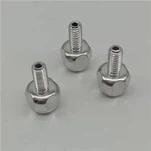
Sheet metal fabrication is a comprehensive process that involves transforming flat metal sheets into various shapes and structures through a series of specialized techniques and operations. Understanding the working principles of sheet metal fabrication requires an overview of the key processes and technologies involved. Here's a detailed introduction to how sheet metal fabrication works:
1. Material Selection
The first step in sheet metal fabrication is choosing the appropriate material. Common materials include steel (carbon steel and stainless steel), aluminum, copper, brass, and various alloys. The choice of material depends on factors such as strength, weight, corrosion resistance, cost, and the specific requirements of the final product.
2. Design and Planning
Before actual fabrication begins, detailed design and planning are essential. Engineers and designers use Computer-Aided Design (CAD) software to create precise blueprints and models of the desired parts. These designs specify dimensions, tolerances, and other critical features. The design phase also involves determining the most efficient way to cut and form the metal sheets to minimize waste and ensure structural integrity.
3. Cutting and Shearing
Cutting is the process of removing excess material from the metal sheet to create the desired shape. There are several methods used in sheet metal fabrication:
Shearing: This involves using large cutting machines to slice through the metal sheet along a straight line. Shearing is often used for creating rectangular or square blanks.
Laser Cutting: A laser beam is used to cut precise shapes and patterns into the metal sheet. Laser cutting is highly accurate and can handle complex designs.
Water Jet Cutting: A high-pressure stream of water mixed with abrasive particles is used to cut through the metal. This method is suitable for cutting thick sheets and offers a smooth edge finish.
Plasma Cutting: A plasma torch melts and cuts through the metal using a high-temperature jet of ionized gas. It is commonly used for cutting thick steel sheets.
4. Bending and Forming
After cutting, the metal sheets are shaped into the desired form through bending and forming processes:
Press Brakes: These machines use hydraulic or mechanical force to bend the metal sheet into specific angles. The bend radius and angle are carefully controlled to avoid deformation or cracking.
Roll Forming: Metal sheets are passed through a series of rollers to gradually bend them into curved shapes. This method is often used for creating cylindrical or tubular structures.
Stretch Forming: The metal sheet is stretched over a die to form complex curved shapes. This process is commonly used in the aerospace industry for creating aircraft components.
5. Punching and Stamping
Punching and stamping are processes used to create holes, notches, or specific shapes in the metal sheet:
Punching: A punch tool is used to create holes or cutouts by pressing the metal sheet against a die. This method is suitable for creating small holes or simple shapes.
Stamping: This involves using a stamping press to create more complex shapes and patterns. The metal sheet is placed between a die and a punch, and the press applies force to form the desired shape.
6. Welding and Joining
To assemble multiple metal parts, welding and joining techniques are employed:
Welding: Common welding methods include MIG (Metal Inert Gas) welding, TIG (Tungsten Inert Gas) welding, and spot welding. These methods use heat to fuse metal parts together, creating strong and durable joints.
Riveting: Rivets are used to join metal parts by inserting them through pre-drilled holes and then deforming the rivet head to secure the parts together.
Fastening: Screws, bolts, and other fasteners are used to join metal components without melting the metal.
7. Surface Finishing
After the basic fabrication processes, surface finishing is often applied to enhance the appearance, durability, and functionality of the metal parts:
Painting and Coating: Applying paint, powder coating, or other protective coatings to prevent corrosion and improve appearance.
Polishing and Buffing: These processes create a smooth, shiny surface finish, often used for decorative purposes.
Anodizing: Primarily used for aluminum, anodizing creates a durable, corrosion-resistant oxide layer on the metal surface.
8. Quality Control and Inspection
Quality control is a critical aspect of sheet metal fabrication. Fabricated parts are inspected using tools such as calipers, micrometers, and Coordinate Measuring Machines (CMM) to ensure they meet the specified dimensions and tolerances. Any defects or deviations are corrected to ensure the final product meets the required standards.
Conclusion
Sheet metal fabrication is a complex yet highly efficient process that combines advanced technology with skilled craftsmanship. By understanding the working principles of cutting, bending, forming, welding, and finishing, manufacturers can create a wide range of high-quality metal products with precision and reliability. This versatility makes sheet metal fabrication an essential technique in industries such as automotive, aerospace, electronics, and construction.