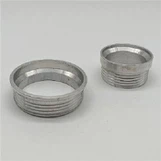
As a custom titanium parts supplier, I understand the critical role that quality certifications play in establishing trust and credibility in the industry. Titanium is a remarkable material known for its high strength-to-weight ratio, corrosion resistance, and biocompatibility, making it a popular choice for a wide range of applications, from aerospace and medical to automotive and marine. However, working with titanium requires specialized knowledge, skills, and equipment, and customers need to ensure that the parts they receive meet the highest standards of quality and safety. In this blog post, I will discuss the key quality certifications that a custom titanium parts manufacturer should have and why they are important.
ISO 9001:2015 Quality Management System
ISO 9001:2015 is an internationally recognized standard for quality management systems (QMS). It provides a framework for organizations to establish, implement, maintain, and continually improve their quality management processes. By obtaining ISO 9001:2015 certification, a custom titanium parts manufacturer demonstrates its commitment to delivering high-quality products and services that meet or exceed customer expectations.
The ISO 9001:2015 standard focuses on several key principles, including customer focus, leadership, engagement of people, process approach, improvement, evidence-based decision making, and relationship management. A manufacturer with ISO 9001:2015 certification has a documented QMS that covers all aspects of its operations, from design and development to production, inspection, and delivery. This ensures that every step of the manufacturing process is carefully controlled and monitored to minimize errors and defects.
For customers, working with an ISO 9001:2015-certified manufacturer provides several benefits. First, it gives them confidence that the manufacturer has a systematic approach to quality management and is committed to continuous improvement. Second, it reduces the risk of receiving defective parts, which can lead to costly delays and rework. Third, it helps to ensure that the parts meet the required specifications and standards, which is especially important in industries with strict quality requirements, such as aerospace and medical.
AS9100D Aerospace Quality Management System
The AS9100D standard is specifically designed for the aerospace industry and is an extension of the ISO 9001:2015 standard. It includes additional requirements related to aerospace design, development, production, installation, and servicing. A custom titanium parts manufacturer that holds AS9100D certification has demonstrated its ability to meet the stringent quality and safety requirements of the aerospace industry.
The aerospace industry has extremely high standards for quality and reliability, as any failure or defect in a component can have catastrophic consequences. AS9100D certification ensures that a manufacturer has implemented a comprehensive quality management system that addresses the unique challenges and risks associated with aerospace manufacturing. This includes requirements for risk management, configuration management, traceability, and product safety.
For customers in the aerospace industry, working with an AS9100D-certified manufacturer is essential. It provides assurance that the parts they receive are of the highest quality and have been manufactured in accordance with strict aerospace standards. This helps to ensure the safety and reliability of aircraft and other aerospace vehicles, which is of utmost importance.
ISO 13485:2016 Medical Device Quality Management System
ISO 13485:2016 is a standard for quality management systems specifically for medical device manufacturers. It provides requirements for the design, development, production, installation, and servicing of medical devices to ensure their safety and effectiveness. A custom titanium parts manufacturer that is ISO 13485:2016 certified has demonstrated its ability to meet the strict regulatory requirements of the medical device industry.
The medical device industry is highly regulated, and manufacturers must comply with a variety of national and international standards and regulations to ensure the safety and efficacy of their products. ISO 13485:2016 certification helps manufacturers to establish and maintain a quality management system that meets these requirements. It includes requirements for risk management, product realization, validation, and post-market surveillance.
For customers in the medical device industry, working with an ISO 13485:2016-certified manufacturer is crucial. It provides assurance that the titanium parts they receive are of the highest quality and have been manufactured in accordance with strict medical device standards. This helps to ensure the safety and well-being of patients who use medical devices containing these parts.
NADCAP Special Process Certification
NADCAP (National Aerospace and Defense Contractors Accreditation Program) is a global cooperative accreditation program for aerospace and defense industries. It focuses on special processes, such as heat treatment, welding, and non-destructive testing, which are critical to the quality and performance of aerospace and defense components. A custom titanium parts manufacturer that holds NADCAP certification has demonstrated its ability to perform these special processes to the highest standards.
Special processes in aerospace and defense manufacturing require specialized knowledge, skills, and equipment. NADCAP certification ensures that a manufacturer has the necessary capabilities and controls in place to perform these processes consistently and reliably. It includes requirements for process control, personnel qualification, equipment calibration, and documentation.
For customers in the aerospace and defense industries, working with a NADCAP-certified manufacturer provides several benefits. It gives them confidence that the special processes used in the manufacturing of their titanium parts are performed to the highest standards. It also helps to ensure the quality and reliability of the parts, which is essential for the safety and performance of aerospace and defense systems.
Other Certifications and Standards
In addition to the certifications mentioned above, there are several other certifications and standards that a custom titanium parts manufacturer may hold, depending on its specific products and markets. For example, the ISO 14001:2015 standard for environmental management systems demonstrates a manufacturer's commitment to environmental sustainability. The OHSAS 18001:2007 standard for occupational health and safety management systems shows that a manufacturer is concerned about the safety and well-being of its employees.
Some manufacturers may also hold certifications related to specific manufacturing processes, such as Titanium CNC Turning Parts or Titanium CNC Milling Parts. These certifications can provide additional assurance to customers that the manufacturer has the expertise and capabilities to produce high-quality titanium parts using these processes.
Conclusion
In conclusion, quality certifications are essential for a custom titanium parts manufacturer. They provide customers with confidence that the manufacturer has the necessary capabilities, processes, and controls in place to produce high-quality titanium parts that meet or exceed their requirements. Whether you are in the aerospace, medical, automotive, or marine industry, working with a certified manufacturer can help you to ensure the safety, reliability, and performance of your products.
If you are looking for a custom titanium parts supplier, I encourage you to consider a manufacturer that holds the relevant quality certifications. These certifications are a testament to the manufacturer's commitment to quality and continuous improvement. By choosing a certified manufacturer, you can minimize the risk of receiving defective parts and ensure that your products are of the highest quality.


If you have any questions or would like to discuss your custom titanium parts requirements, please feel free to contact us. We would be happy to provide you with more information and a quote.
References
- International Organization for Standardization (ISO). (2015). ISO 9001:2015 Quality management systems — Requirements.
- Society of Automotive Engineers (SAE). (2016). AS9100D Quality management systems — Requirements for aviation, space, and defense organizations.
- International Organization for Standardization (ISO). (2016). ISO 13485:2016 Medical devices — Quality management systems — Requirements for regulatory purposes.
- Performance Review Institute (PRI). (n.d.). NADCAP Accreditation Program.