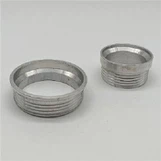
What is the fatigue life of a titanium seat collar?
As a supplier of Titanium Seat Collar, I often get asked about the fatigue life of our products. Fatigue life is a crucial factor when it comes to the durability and safety of bicycle components, especially those that are subjected to repeated stress and loading, such as seat collars. In this blog post, I'll delve into the concept of fatigue life, explain how it applies to titanium seat collars, and provide some insights into what affects their longevity.
Understanding Fatigue Life
Fatigue life refers to the number of cycles of stress or loading that a material or component can withstand before it fails due to fatigue. Fatigue failure occurs when a material is subjected to repeated stress, causing microscopic cracks to form and grow over time. Eventually, these cracks can become large enough to cause the component to break or fail.


The fatigue life of a material depends on several factors, including the type of material, the magnitude and frequency of the stress, the environment in which the component operates, and the design and manufacturing process. Different materials have different fatigue properties, with some being more resistant to fatigue than others.
Titanium: A Material with Excellent Fatigue Resistance
Titanium is a popular choice for bicycle components, including seat collars, due to its excellent combination of strength, light weight, and corrosion resistance. One of the key advantages of titanium is its high fatigue resistance, which makes it well-suited for applications where the component is subjected to repeated stress.
The fatigue resistance of titanium is due to its unique microstructure and mechanical properties. Titanium has a hexagonal close-packed (HCP) crystal structure, which provides good resistance to crack initiation and propagation. Additionally, titanium has a high strength-to-weight ratio, which means that it can withstand high levels of stress without adding excessive weight to the bicycle.
In a study published in the journal Materials and Design, researchers compared the fatigue properties of titanium and aluminum alloys commonly used in bicycle components. The results showed that titanium alloys had significantly higher fatigue strength and longer fatigue life than aluminum alloys under the same loading conditions. This suggests that titanium seat collars are likely to have a longer fatigue life than seat collars made from other materials, such as aluminum.
Factors Affecting the Fatigue Life of Titanium Seat Collars
While titanium has excellent fatigue resistance, the actual fatigue life of a titanium seat collar can still be affected by several factors. Here are some of the key factors to consider:
- Stress Magnitude and Frequency: The magnitude and frequency of the stress applied to the seat collar are important factors that can affect its fatigue life. Higher stress levels and more frequent loading cycles can increase the likelihood of fatigue failure. For example, if a cyclist frequently rides on rough terrain or engages in aggressive riding, the seat collar may be subjected to higher levels of stress, which can reduce its fatigue life.
- Installation and Torque: Proper installation and torque are crucial for ensuring the long-term performance of a titanium seat collar. Over-tightening the seat collar can cause excessive stress on the titanium, leading to premature fatigue failure. On the other hand, under-tightening the seat collar can cause it to loosen, which can also affect its fatigue life and safety. It is important to follow the manufacturer's recommended torque specifications when installing the seat collar.
- Environmental Conditions: The environment in which the bicycle operates can also affect the fatigue life of the seat collar. Exposure to moisture, salt, and other corrosive substances can cause the titanium to corrode, which can reduce its fatigue strength. Additionally, extreme temperatures can affect the mechanical properties of the titanium, potentially reducing its fatigue resistance. It is important to keep the seat collar clean and dry and to avoid exposing it to harsh environmental conditions whenever possible.
- Design and Manufacturing Quality: The design and manufacturing quality of the seat collar can also have a significant impact on its fatigue life. A well-designed seat collar with a proper geometry and smooth surface finish can reduce stress concentrations and improve its fatigue resistance. Additionally, high-quality manufacturing processes, such as precision machining and heat treatment, can ensure that the titanium has the desired mechanical properties and microstructure, further enhancing its fatigue life.
Comparing Titanium Seat Collars with Other Materials
To better understand the fatigue life of titanium seat collars, it's helpful to compare them with seat collars made from other materials, such as aluminum. Aluminum Seat Post Collar are a popular choice due to their lightweight and affordability. However, aluminum has lower fatigue resistance than titanium, which means that it may have a shorter fatigue life under the same loading conditions.
In addition to aluminum, there are also Bicycle Seatpost Clamp made from other materials, such as steel and carbon fiber. Steel seat collars are strong and durable but are also heavier than titanium and aluminum. Carbon fiber seat collars are lightweight and have high strength, but they can be more expensive and may be more susceptible to damage from impact.
Overall, titanium seat collars offer a good balance of strength, light weight, and fatigue resistance, making them a popular choice for cyclists who demand high performance and durability from their bicycle components.
Maximizing the Fatigue Life of Titanium Seat Collars
To maximize the fatigue life of your titanium seat collar, here are some tips to keep in mind:
- Proper Installation: Follow the manufacturer's recommended torque specifications when installing the seat collar. Use a torque wrench to ensure that the seat collar is tightened to the correct level.
- Regular Inspection: Periodically inspect the seat collar for signs of damage, such as cracks, corrosion, or deformation. If you notice any issues, replace the seat collar immediately.
- Clean and Maintain: Keep the seat collar clean and dry to prevent corrosion. Use a mild detergent and a soft cloth to clean the seat collar, and avoid using abrasive cleaners or tools.
- Avoid Overloading: Do not exceed the recommended weight limit or loading capacity of the seat collar. Overloading the seat collar can increase the stress on the titanium, reducing its fatigue life.
Conclusion
The fatigue life of a titanium seat collar is an important consideration for cyclists who want a durable and reliable bicycle component. Titanium has excellent fatigue resistance, which makes it well-suited for applications where the component is subjected to repeated stress. However, the actual fatigue life of a titanium seat collar can be affected by several factors, including the stress magnitude and frequency, installation and torque, environmental conditions, and design and manufacturing quality.
By understanding these factors and taking steps to maximize the fatigue life of your titanium seat collar, you can ensure that your bicycle performs at its best and remains safe to ride for years to come. If you have any questions about our Titanium Seat Collar or would like to discuss your specific requirements, please don't hesitate to contact us. We'd be happy to help you find the right seat collar for your bicycle.
References
- "Effect of stress ratio on the fatigue behavior of a Ti-6Al-4V alloy" by M. A. El-Magd, et al., Materials and Design, 2013.