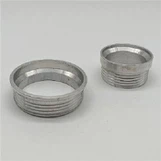
In the highly competitive market of bicycle frame building parts, optimizing the design of other parts is crucial for enhancing overall efficiency. As a reliable supplier of other parts, I've witnessed firsthand how well - designed components can revolutionize the performance and productivity of the entire system. In this blog, I'll share some key strategies and insights on how to optimize the design of these parts for better efficiency.
1. Material Selection
The choice of material is the foundation of any part design. Different materials have distinct properties that can significantly impact the efficiency of the part. For instance, titanium is a remarkable material for bicycle frame building parts. Titanium fasteners Titanium Fasteners offer high strength - to - weight ratio, excellent corrosion resistance, and good fatigue performance. These properties make them ideal for applications where weight reduction and durability are essential.
When compared to traditional steel fasteners, titanium fasteners can reduce the overall weight of the bicycle frame without sacrificing strength. This weight reduction directly translates into better energy efficiency during cycling, as less energy is required to move the lighter frame. Moreover, the corrosion resistance of titanium ensures a longer lifespan of the fasteners, reducing the need for frequent replacements and maintenance.
In addition to fasteners, other titanium bicycle frame parts Other Titanium Bicycle Frame Parts also contribute to improved efficiency. Titanium has a low modulus of elasticity, which means it can absorb and dissipate vibrations more effectively than some other materials. This property enhances the riding comfort and reduces the energy loss caused by vibrations, allowing cyclists to ride more efficiently.
2. Geometric Design Optimization
The geometric shape of a part plays a vital role in its efficiency. Through advanced design techniques such as computer - aided design (CAD) and finite element analysis (FEA), we can optimize the geometry of other parts to minimize stress concentrations and improve load - bearing capacity.
For example, in the design of brackets or connectors, we can use fillets and rounded edges instead of sharp corners. Sharp corners tend to create stress concentrations, which can lead to premature failure of the part. By using fillets, the stress is more evenly distributed across the part, increasing its strength and durability.
Another aspect of geometric design optimization is the reduction of unnecessary material. By analyzing the load paths and stress distribution in a part, we can identify areas where material can be removed without compromising the part's performance. This not only reduces the weight of the part but also saves on material costs. For instance, in the design of a bicycle frame component, we can use a lattice or honeycomb structure in non - critical areas to achieve a significant weight reduction while maintaining the necessary stiffness.
3. Standardization and Modularity
Standardization and modularity are important strategies for improving efficiency in the design and production of other parts. By standardizing the dimensions, interfaces, and manufacturing processes of parts, we can reduce the complexity of the supply chain and increase the interchangeability of components.
Standardized parts are easier to manufacture, as the production processes can be optimized and streamlined. This leads to higher production volumes, lower costs, and shorter lead times. For example, if all the fasteners used in a bicycle frame follow a standard size and thread pitch, it becomes easier for manufacturers to source and assemble these parts.
Modularity, on the other hand, allows for greater flexibility in the design and customization of bicycle frames. By designing parts as modular units, different combinations can be easily assembled to meet the specific requirements of different customers. This not only enhances the efficiency of the production process but also provides more options for cyclists to customize their bicycles.
4. Manufacturing Process Improvement
The manufacturing process has a direct impact on the efficiency and quality of other parts. By adopting advanced manufacturing technologies and process optimization, we can reduce production time, improve product quality, and lower costs.
One such technology is additive manufacturing, also known as 3D printing. 3D printing allows for the production of complex geometries that are difficult or impossible to achieve with traditional manufacturing methods. This technology enables the rapid prototyping of parts, which can significantly reduce the design and development cycle. Moreover, 3D printing can produce parts with a high level of precision, reducing the need for post - processing operations.
In addition to additive manufacturing, other advanced manufacturing processes such as precision machining and surface treatment can also improve the efficiency of part production. Precision machining ensures that the parts are manufactured to the exact specifications, reducing the number of rejects and rework. Surface treatment processes such as coating and plating can enhance the corrosion resistance and wear resistance of parts, increasing their lifespan and reducing maintenance requirements.
5. Testing and Validation
Testing and validation are essential steps in the design optimization process. By conducting rigorous testing on the parts, we can ensure that they meet the required performance standards and identify any potential issues or areas for improvement.
Physical testing methods such as tensile testing, fatigue testing, and vibration testing can provide valuable data on the mechanical properties and performance of the parts. These tests can help us verify the design assumptions and make necessary adjustments to the part design.


In addition to physical testing, computer - based simulation and modeling can also be used to predict the performance of parts under different conditions. This allows us to optimize the design before the actual production, saving time and costs.
6. Collaboration with Customers and Partners
Collaboration with customers and partners is crucial for optimizing the design of other parts. By understanding the specific needs and requirements of customers, we can design parts that are tailored to their applications.
Customers can provide valuable feedback on the performance and usability of the parts, which can be used to improve the design. For example, cyclists may have specific preferences regarding the weight, stiffness, and comfort of the bicycle frame parts. By incorporating this feedback into the design process, we can create parts that better meet their needs.
Partnerships with other suppliers and manufacturers can also bring in new ideas and technologies. By sharing knowledge and resources, we can jointly develop innovative solutions for optimizing the design of other parts.
Conclusion
Optimizing the design of other parts for better efficiency is a multi - faceted process that involves material selection, geometric design optimization, standardization, manufacturing process improvement, testing, and collaboration. As a supplier of other parts, I'm committed to continuously improving the design and performance of our products to meet the evolving needs of the bicycle industry.
If you're interested in learning more about our other parts or have specific requirements for your bicycle frame building projects, I encourage you to reach out to us for a detailed discussion. We're always ready to work with you to find the best solutions for your efficiency needs.
References
- Ashby, M. F. (2011). Materials selection in mechanical design. Butterworth - Heinemann.
- Dieter, G. E., & Schmidt, L. C. (2008). Engineering design: A materials and processing approach. McGraw - Hill.
- ISO 4210 - 1:2015, Cycles -- Safety requirements for bicycles -- Part 1: Bicycles for riders aged 14 years and over.