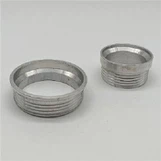
Yo, what's up everyone! I'm a supplier of stem parts, and today I wanna talk about how stem parts adapt to saline environments. It's a topic that might not be on everyone's radar, but it's super important, especially for those bikes that are used in coastal areas or places with high salt content in the air or water.
First off, let's understand what a saline environment is. Saline environments are basically places where there's a high concentration of salt. This could be near the ocean, in salt marshes, or even in some industrial areas where salt is used for de - icing roads. Salt is a pretty corrosive substance, and it can do a real number on bike parts, including stem parts.
Now, you might be wondering, why should we care about how stem parts adapt to these environments? Well, if you're a bike enthusiast who loves riding near the beach or in areas with salt in the air, you know that corrosion can quickly turn your shiny new bike into a rusty mess. And stem parts are crucial for the proper functioning of your bike. They connect the handlebars to the fork, and any damage to them can affect your bike's handling and safety.
So, how do stem parts adapt? One of the most common ways is through the choice of materials. For instance, Titanium Stem Parts are a great option. Titanium is known for its high corrosion resistance. It forms a thin, protective oxide layer on its surface when exposed to oxygen. This layer acts as a barrier, preventing the salt from reaching the metal underneath and causing corrosion. Titanium stem parts can withstand the harsh conditions of saline environments for a long time, making them a top choice for riders in coastal areas.
Another material that's often used is aluminium alloy. Aluminium also forms an oxide layer, but it's a bit different from titanium. The oxide layer on aluminium is more porous, but it still provides a certain level of protection. Bike Stem Riser Bike Fork Stem Extender Bicycle Handlebar Raiser Head Up Adapter Suitable For Mountain Bike, Road Bike, MTB, BMX, Fixie (Aluminium Alloy, Adjustable) are made from aluminium alloy, and they're designed to be durable even in tough conditions. The adjustable feature is also a plus, as it allows riders to customize their bike's setup according to their preferences.
Surface treatments are also an important part of making stem parts adapt to saline environments. One common surface treatment is anodizing. Anodizing is a process that thickens the natural oxide layer on the metal surface. For aluminium stem parts, anodizing can significantly increase their corrosion resistance. It creates a hard, protective coating that not only protects against salt but also against scratches and wear.
Powder coating is another option. Powder coating involves applying a dry powder to the stem part and then baking it to form a hard, smooth finish. This finish acts as a barrier between the metal and the salt in the environment. It can also come in a variety of colors, so you can make your bike look cool while protecting it.
In addition to material and surface treatment, the design of the stem parts also plays a role in their adaptation to saline environments. For example, stem parts with smooth surfaces are less likely to trap salt and moisture. Sharp edges and crevices can collect salt, which can then lead to corrosion. So, many modern stem parts are designed with rounded edges and smooth contours to minimize the risk of salt accumulation.
Now, let's talk about maintenance. Even with all these adaptations, proper maintenance is still key to keeping your stem parts in good condition in a saline environment. After riding in a salty area, it's important to clean your bike thoroughly. Use fresh water to rinse off all the salt from the stem parts and other components. You can also use a mild soap to remove any stubborn dirt or grime.
After cleaning, make sure to dry the stem parts completely. Moisture left on the surface can speed up the corrosion process. You can use a clean, dry cloth to wipe them down, and if possible, let them air - dry in a well - ventilated area.
It's also a good idea to apply a protective lubricant or wax to the stem parts. This can provide an extra layer of protection against salt and moisture. There are many products available on the market specifically designed for bike maintenance in saline environments.
As a stem parts supplier, I've seen firsthand the importance of these adaptations. I've worked with riders and bike shops in coastal areas, and I know how quickly corrosion can set in if the right precautions aren't taken. That's why I'm so passionate about providing high - quality stem parts that are designed to withstand harsh saline conditions.
If you're in the market for stem parts that can handle saline environments, I'd love to talk to you. Whether you're a professional cyclist, a weekend warrior, or a bike shop owner, I can help you find the right stem parts for your needs. Just reach out, and we can start a conversation about your requirements.


In conclusion, stem parts can adapt to saline environments through a combination of material choice, surface treatments, design, and proper maintenance. By understanding these factors, you can ensure that your bike's stem parts stay in good condition, even in the toughest of conditions. So, don't let the salt stop you from enjoying your bike rides. Invest in quality stem parts and take good care of them, and you'll be riding smoothly for years to come.
References
- "Corrosion Resistance of Metals in Saline Environments" - Journal of Materials Science
- "Bicycle Component Design and Durability" - Cycling Engineering Magazine