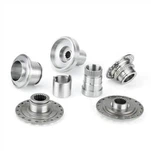
Part machining tolerance refers to the permissible variation in the dimensions of a machined part from its theoretical or nominal size. It is a critical aspect of precision manufacturing, ensuring that parts meet the required specifications for fit, function, and interchangeability. Here's an introduction to the concept of part machining tolerance in English:
Part Machining Tolerance: An Overview
Definition: Machining tolerance is the difference between the actual size of a machined part and its specified size. It accounts for the inevitable variations that occur during the manufacturing process.
Importance: Tolerances are crucial for ensuring that parts can be assembled correctly and function as intended. They also allow for manufacturing flexibility and control costs by balancing precision with production efficiency.
Factors Influencing Tolerance: Several factors can affect the level of tolerance required, including the material being machined, the type of machining process used, the capabilities of the machine tools, and the desired quality level of the final product.
Types of Tolerances: There are various types of tolerances, such as linear (for length, diameter), angular (for holes and slots), and geometric tolerances (for form and orientation).
Setting Tolerances: Tolerances are set based on the functional requirements of the part and the manufacturing process. They must be strict enough to ensure quality but generous enough to be achievable within cost and time constraints.
Machining Processes and Tolerance: Different machining processes have different inherent capabilities in terms of the tolerances they can achieve. For example, grinding can achieve tighter tolerances than milling or turning.
Tolerance Stacking: In assembly, the tolerances of individual parts can stack up, affecting the overall fit and function. This must be carefully managed through good design practices.
Quality Control: Tolerances are checked during quality control using various inspection methods, such as gauging, optical inspection, and coordinate measuring machines (CMMs).
Specification Standards: Tolerances are often specified according to international standards, such as ISO or ANSI, which provide guidelines for setting tolerances based on the level of precision required.
Understanding and correctly applying machining tolerances is essential for any manufacturing process. It ensures that the parts produced are not only within the acceptable range of size but also fit together properly in the final assembly.