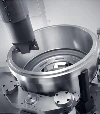
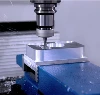
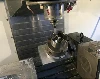
Precision machining is a manufacturing process that involves the use of computer-controlled machines to produce parts with high dimensional accuracy and fine surface finish. It is critical in industries where components must meet stringent tolerances, such as aerospace, automotive, medical, and electronics. Here's an introduction to precision machining techniques and the steps involved:
Techniques:
Computer Numerical Control (CNC) Machining: This is a common precision machining technique where a computer program dictates the movement of cutting tools to remove material from a workpiece.
Electrical Discharge Machining (EDM): EDM uses an electrical current to erode material from the workpiece, useful for hard materials and complex shapes.
Laser Beam Machining: This technique uses a high-energy laser to cut, engrave, or mark materials with extreme precision.
Ultrasonic Machining: Involves the use of ultrasonic vibrations to remove material from a workpiece, often used for brittle or hard materials.
Water Jet Cutting: A high-pressure stream of water, possibly with an abrasive additive, is used to cut through various materials.
Grinding: An abrasive wheel is used to achieve a high level of surface finish and accuracy, often as a finishing process.
Turning: A single-point cutting tool is used to remove material from the surface of a rotating workpiece, suitable for producing cylindrical parts.
Milling: Multiple cutting edges are used to remove material from the workpiece, suitable for a variety of shapes and sizes.
Drilling: A rotating cutting tool with a pointed tip is used to create holes in a workpiece.
Threading: This process creates internal or external threads on a workpiece, typically for fastening purposes.
Steps:
Design and Specification: The part is designed using CAD software, and detailed drawings are created with specifications including dimensions, tolerances, and material properties.
Material Selection: Choose the appropriate material for the part based on its intended use, strength requirements, and machinability.
Material Preparation: The raw material is prepared, which may involve cutting it to size or pre-heating for certain processes.
Setup: The workpiece is secured in a fixture or on a pallet, ensuring it is correctly positioned for machining.
Programming: For CNC and other computer-controlled processes, a program is written to define the tool paths and machining operations.
Machining: The actual cutting process takes place, where material is removed to achieve the desired shape and dimensions.
Inspection: After machining, the part is inspected to ensure it meets the required specifications. This may involve manual measurement or automated inspection with devices like CMMs.
Finishing: Operations such as deburring, polishing, or heat treatment are performed to refine the part's surface and properties.
Cleaning: The part is cleaned to remove any cutting fluids, chips, or debris.
Final Inspection: A final quality control check is conducted before the part is considered complete.
Post-Processing: Depending on the application, the part may undergo additional processes such as painting, plating, or assembly.
Documentation: All machining details, inspection results, and certifications are documented for quality assurance and traceability.
Packaging and Shipping: The finished parts are packaged to protect them from damage during shipping and are then delivered to the customer.
Precision machining requires a high level of expertise and attention to detail to ensure that parts are produced to exacting standards. The process is highly adaptable and can be used to manufacture a wide range of complex and precise components.