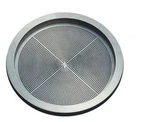
Non-standard parts processing refers to the manufacturing of components that do not conform to standard dimensions, specifications, or designs. These parts are typically custom-made according to specific requirements and are often used in specialized applications where off-the-shelf parts are not suitable. Here's an introduction to non-standard parts processing in English:
Non-standard Parts Processing Overview:
Definition: Non-standard parts are those that are manufactured to meet unique specifications that deviate from established industry standards. They are tailored to fit particular needs or to serve specialized functions.
Reasons for Non-standard Parts:
Specialized Applications: When the function or environment requires parts with specific characteristics not covered by standard designs.
Innovative Design: New inventions or designs that necessitate custom components.
Replacement Parts: For older or discontinued equipment where standard parts are no longer available.
Manufacturing Techniques:
Casting: Producing complex shapes by pouring molten material into a mold.
Forging: Shaping metal by applying localized force, often used for stronger mechanical properties.
Machining: Using tools to remove material from a workpiece, such as turning, milling, or drilling.
Customization Methods:
Material Selection: Choosing from a wide range of materials to meet the required properties.
Dimensioning: Specifying exact measurements that deviate from standard dimensions.
Surface Finishing: Applying specific treatments or coatings to achieve desired surface characteristics.
Design Considerations:
Functionality: Ensuring the part meets the functional requirements of the application.
Compatibility: Making sure the part interfaces correctly with other components in the system.
Safety: Designing the part to operate safely under expected conditions.
Challenges:
Complexity: Non-standard parts often require more complex design and manufacturing processes.
Cost: Custom parts can be more expensive due to the lack of economies of scale.
Lead Time: The production of non-standard parts can take longer than standard parts due to the need for custom tooling and setup.
Quality Control:
Inspection: Close inspection of parts to ensure they meet the unique specifications.
Testing: Subjecting parts to tests to verify their performance under operating conditions.
Applications:
Aerospace: Custom components for aircraft and spacecraft where reliability and performance are critical.
Automotive: Specialized parts for racing cars or unique vehicles.
Medical Devices: Custom parts for prosthetics or specialized surgical instruments.
Future Trends:
Additive Manufacturing: Using 3D printing to produce complex non-standard parts more efficiently.
Simulation: Employing computer simulations to design and test non-standard parts before production.
Modular Design: Creating parts that can be easily adapted or configured for different applications.
Non-standard parts processing is essential for industries and applications that require customization and innovation. While it presents unique challenges, it also opens up possibilities for creating highly specialized components that can meet exacting requirements and drive technological advancements.