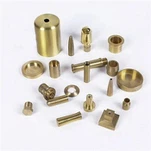
Hardware parts processing refers to the manufacturing and finishing of metal components that are used in various mechanical systems and structures. These parts can include fasteners, connectors, brackets, gears, and other mechanical elements. Here's an introduction to hardware parts processing in English:
Hardware Parts Processing Overview:
Definition: Hardware parts processing involves a range of manufacturing techniques to produce metal components that are integral to the functioning of mechanical and structural assemblies.
Materials:
Steel: Used for its strength and durability, often chosen for high-strength requirements.
Aluminum: Lightweight and corrosion-resistant, making it suitable for many applications.
Brass: Known for its anti-corrosion properties and often used for its electrical conductivity.
Stainless Steel: Resistant to staining and corrosion, used in environments where these properties are critical.
Common Processes:
Casting: Pouring molten metal into a mold and allowing it to solidify.
Forging: Shaping metal by applying force while it is still hot and malleable.
Machining: Using machine tools to cut, drill, or mill the metal into the desired shape.
Stamping: Pressing metal into shape using dies, often used for mass production.
Finishing Techniques:
Polishing: Smoothing and improving the appearance of the metal surface.
Plating: Applying a thin layer of another metal to the surface to improve corrosion resistance or appearance.
Anodizing: An electrochemical process that increases the thickness of the oxide layer on metal surfaces, providing additional protection.
Types of Hardware Parts:
Fasteners: Such as bolts, nuts, screws, and rivets, used to join components together.
Pulleys and Gears: For transmitting motion and force in mechanical systems.
Bearings: To reduce friction between moving parts.
Brackets and Clamps: Used to secure and hold components in place.
Applications:
Automotive: Hardware parts are critical for engine components, body structures, and suspension systems.
Aerospace: High-strength and lightweight hardware parts are essential for aircraft and spacecraft.
Construction: Used extensively in building structures, from nuts and bolts to complex mechanical assemblies.
Consumer Electronics: Small hardware parts are used in the assembly of devices and appliances.
Quality Assurance:
Tolerances: Ensuring that parts meet precise dimensional requirements.
Testing: Conducting strength, durability, and performance tests to validate the parts' integrity.
Certification: Adhering to industry standards and obtaining necessary certifications for safety and reliability.
Challenges:
Material Selection: Choosing the right material to balance strength, weight, and cost.
Precision: Achieving high precision in manufacturing to ensure parts fit and function correctly.
Mass Production: Efficiently producing large quantities of parts while maintaining quality.
Future Trends:
Additive Manufacturing: Using 3D printing to create complex hardware parts with reduced material waste.
Automation: Incorporating robotics and automated systems to increase efficiency and reduce labor costs.
Sustainability: Focusing on the use of recycled materials and environmentally friendly processes.
Hardware parts processing is a critical aspect of manufacturing, underpinning the functionality and reliability of countless mechanical systems. As technology advances, the industry continues to evolve, with a focus on precision, efficiency, and the development of more sustainable practices.