Manufacturing Processes for Titanium Rings
Titanium rings are prized for their exceptional strength-to-weight ratio, corrosion resistance, and biocompatibility. Here are the main manufacturing methods:
1. Machining from Solid Bar (CNC Turning/Milling)
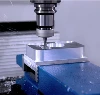
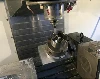
The most common method. A solid titanium rod or bar is cut to size, then machined on a lathe to create the ring blank. This offers excellent precision and is ideal for complex designs, inlays, and custom engravings. However, titanium's low thermal conductivity and tendency to gall make it a challenging material to machine, requiring sharp carbide tools and careful heat control.
2. Ring Rolling / Forging
A titanium billet is heated and pierced to form a preform, then rolled between rotating dies to expand the diameter and reduce wall thickness. Forged rings have superior grain structure, higher strength, and better fatigue resistance compared to machined rings. This method is used for industrial and aerospace-grade rings, as well as premium jewelry.
3. Tube Cutting (Hollow Bar Method)
Titanium tubing is cut into short sections, which are then finished on a lathe. This is efficient and reduces material waste, making it cost-effective for mass production of standard-width bands.
4. Powder Metallurgy (Sintering)
Titanium powder is compacted in a mold and sintered at high temperature. This is useful for producing complex shapes at scale and for titanium alloys that are difficult to machine, though sintered rings typically have lower density and strength than forged or machined ones.
5. Casting
Molten titanium is poured into a mold (often using investment casting with special ceramic molds, since titanium reacts with most mold materials). Casting is less common for rings due to porosity risks and the material's extreme reactivity at high temperatures, but it enables intricate one-piece designs.
6. Additive Manufacturing (3D Printing)
Selective Laser Melting (SLM) or Electron Beam Melting (EBM) builds rings layer by layer from titanium powder. This allows for lattice structures, personalized geometry, and rapid prototyping-though post-processing (machining, polishing, HIP treatment) is usually required.
Finishing Steps (Common to All Methods)
Grinding and polishing – diamond abrasives are typically needed due to titanium's hardness
Anodizing – electrolytic coloring produces interference colors without dyes
Sandblasting/bead blasting – matte finishes
Engraving – laser marking for personalization