Inspecting Robotic Arm Performance in CNC-Machined Component Manufacturing
Overview
The performance of a robotic arm is fundamentally determined by the quality and precision of its machined components. After CNC machining, comprehensive inspection and validation procedures are essential to verify that individual parts and assembled subsystems meet the design specifications required for accurate, repeatable, and reliable robotic motion. This inspection process encompasses dimensional verification, geometric tolerance assessment, surface integrity evaluation, functional testing of joints and actuators, and integrated performance validation of the complete arm assembly.
Dimensional Verification of Machined Components
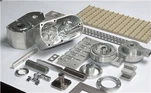
Every robotic arm consists of multiple precision-machined components including base housings, shoulder joints, elbow links, wrist assemblies, and end-effector mounting interfaces. Dimensional inspection begins with coordinate measuring machine (CMM) verification of critical features on each machined part. The CMM probes hundreds or thousands of points on mating surfaces, bearing bores, gear pockets, and mounting faces, comparing measured coordinates against the original CAD model. Deviations from nominal dimensions are analyzed to determine whether parts fall within specified tolerance bands. For robotic components, typical critical tolerances range from ±0.01 mm for bearing seats to ±0.05 mm for structural link lengths, depending on the robot's precision class.
Laser scanning and structured light measurement systems provide rapid full-surface inspection, generating dense point clouds that reveal form deviations, warping, and surface imperfections across complex contoured geometries. These optical methods are particularly valuable for inspecting organic-shaped robotic housings and aerodynamic link profiles that are difficult to probe comprehensively with contact CMM methods.
Geometric Tolerance Assessment
Beyond simple dimensions, robotic arm performance depends critically on geometric relationships between features. Geometric dimensioning and tolerancing (GD&T) inspection verifies:
Position tolerance ensures that bearing bores, actuator mounting holes, and sensor interfaces are located precisely relative to datums. Mispositioned features cause assembly interference or misalignment of motion axes.
Perpendicularity and parallelism of mating surfaces guarantee that assembled joints move smoothly without binding or excessive backlash. Non-perpendicular shoulder joint faces, for example, create uneven load distribution and premature wear.
Concentricity and runout of shaft interfaces and bearing seats determine how cleanly rotating joints operate. Excessive runout in a wrist joint assembly translates to tip positioning errors at the end-effector.
Profile tolerance of contoured surfaces ensures proper fit and motion clearance in complex joint geometries.
These geometric tolerances are verified using CMM with dedicated probing strategies, roundness measurement instruments for rotational features, and specialized gauges for functional fit verification.
Surface Integrity Evaluation
The surface condition of machined robotic components directly impacts friction, wear, sealing, and fatigue performance. Surface roughness measurement using contact profilometers or optical interferometry quantifies Ra, Rz, and Rmax parameters on functional surfaces such as bearing races, sliding interfaces, and seal contact areas. For precision robotic joints, surface roughness typically must achieve Ra 0.4 μm or better to ensure smooth motion and adequate lubricant retention.
Surface defect inspection using dye penetrant testing, eddy current, or visual examination identifies cracks, porosity, tool marks, and other imperfections that could initiate fatigue failure under cyclic loading. Subsurface integrity is assessed through microhardness testing and metallographic examination in critical regions, verifying that machining processes have not introduced detrimental heat-affected zones or work-hardened layers.
Joint and Subassembly Functional Testing
Individual robotic joints are assembled and tested before integration into the complete arm. Each joint undergoes:
Torque and backlash measurement to verify that gear trains, harmonic drives, or belt transmissions exhibit specified stiffness and minimal lost motion. Excessive backlash in a shoulder joint directly degrades absolute positioning accuracy.
Friction and breakaway torque testing characterizes the resistance to motion initiation and steady-state movement. High friction indicates bearing preload issues, contamination, or improper machining fits.
Range of motion verification confirms that joints achieve designed angular travel without mechanical interference. CNC-machined housing clearances and hard stops are validated during this testing.
Stiffness and deflection testing applies known loads to joint outputs while measuring angular deflection. This validates that machined link geometries and bearing supports provide adequate structural rigidity under operational loading.
Arm Assembly Calibration and Kinematic Verification
Once all joints are validated, the complete robotic arm is assembled and subjected to comprehensive kinematic verification. The process begins with geometric calibration, where the actual link lengths, joint offsets, and axis alignments are measured and compared to the nominal kinematic model. Laser trackers and ballbar systems establish precise spatial relationships between joint axes, identifying any assembly errors or component deviations that affect the Denavit-Hartenberg parameters governing arm motion.
Absolute positioning accuracy is tested by commanding the arm to reach defined points in its workspace while a laser tracker or CMM records the actual achieved positions. The difference between commanded and achieved positions constitutes the positioning error. For industrial robots, this error typically must remain below ±0.1 mm for high-precision applications. Error patterns are analyzed to distinguish between geometric causes (link length errors, joint misalignment) and non-geometric effects (compliance, thermal drift, control latency).
Repeatability testing executes hundreds of cycles to the same target point, measuring the statistical dispersion of achieved positions. High repeatability - often specified as ±0.02 mm for quality CNC-machined arms - indicates consistent component fits and stable joint behavior.
Dynamic Performance Characterization
Static dimensional verification is supplemented by dynamic testing that reveals performance under operational conditions. Trajectory tracking tests command the arm to follow defined paths while measuring actual versus commanded position, velocity, and acceleration. Deviations indicate issues with joint servo tuning, structural resonance, or control system limitations.
Vibration testing identifies natural frequencies and damping characteristics of the assembled arm. Poorly machined components with thin walls or inadequate ribbing may exhibit resonant modes within the operational frequency range, causing vibration-induced positioning errors and accelerated fatigue.
Payload testing validates arm performance under rated load conditions. The arm is exercised through its full workspace carrying maximum specified payloads while monitoring deflection, servo loading, and thermal behavior. This confirms that machined structural elements possess adequate strength and stiffness for intended applications.
End-Effector Performance Validation
The distal end of the robotic arm, where the end-effector mounts, requires specific validation. Static deflection under load measures how much the wrist and tool mounting interface deform when forces and moments are applied. This determines effective stiffness at the tool center point, critical for contact operations such as assembly, machining, or inspection.
Tool center point (TCP) calibration precisely establishes the relationship between joint encoder readings and the actual end-effector tip location. Any errors in machined mounting interfaces or assembly alignment propagate directly to TCP inaccuracy, degrading operational precision.
Environmental and Durability Testing
Final validation subjects the assembled arm to environmental conditions simulating service exposure. Thermal cycling tests identify differential expansion effects on machined fits and calibration stability. Dust and contamination ingress testing validates sealing effectiveness of machined joint housings. Extended endurance running accumulates operational cycles to reveal wear progression, lubricant degradation, and gradual performance drift that may originate from subtle machining quality deficiencies.
Data Traceability and Quality Documentation
Throughout the inspection process, comprehensive data collection establishes traceability from raw material through machining, assembly, and testing. Each machined component carries identification linking it to CMM reports, material certifications, and machining process parameters. This documentation enables root cause analysis if field performance issues arise and supports continuous improvement of CNC machining processes.
Conclusion
Inspecting robotic arm performance in CNC-machined component manufacturing requires a multi-layered approach combining precision metrology, functional joint testing, kinematic calibration, dynamic characterization, and environmental validation. The quality of CNC machining directly manifests in every performance metric - dimensional accuracy determines positioning precision, surface integrity affects friction and wear, geometric tolerances govern assembly fit and motion smoothness, and material integrity ensures long-term reliability. Rigorous inspection at component, subassembly, and system levels ensures that machined robotic arms deliver the accuracy, repeatability, and durability demanded by modern automation applications.