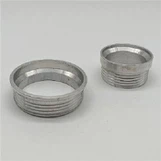
What is the wall thickness of titanium head tubes?
As a supplier of Titanium Head Tubes, I've been deeply involved in the cycling industry for years, and one question that frequently arises among cyclists, bike builders, and enthusiasts is about the wall thickness of titanium head tubes. In this blog post, I'll delve into the details of this crucial aspect, explaining its significance, how it affects performance, and the factors that influence the choice of wall thickness.
Understanding the Basics of Titanium Head Tubes
Titanium head tubes are a critical component in bicycle frames. They house the headset, which is responsible for enabling smooth steering of the bike. The head tube connects the fork to the frame, and its design and construction play a vital role in the overall handling and durability of the bicycle.
Titanium is a popular material for head tubes due to its excellent strength - to - weight ratio, corrosion resistance, and fatigue resistance. These properties make titanium head tubes suitable for a wide range of cycling applications, from high - performance road bikes to rugged mountain bikes.
Significance of Wall Thickness
The wall thickness of a titanium head tube has a direct impact on several key aspects of a bicycle's performance.
Strength and Durability
A thicker wall generally means greater strength. In a head tube, this is important because it has to withstand the forces generated during steering, braking, and impacts. For example, when you're riding over rough terrain or making sharp turns, the head tube experiences significant stress. A thicker - walled head tube can better resist deformation and cracking, ensuring the long - term durability of the frame.
Weight
On the other hand, wall thickness also affects the weight of the head tube. In the cycling world, weight is a crucial factor, especially for competitive cyclists. Thinner - walled head tubes are lighter, which can improve the bike's acceleration and climbing performance. However, there's a trade - off between weight and strength. If the wall is too thin, the head tube may not be able to handle the stresses placed on it, leading to premature failure.
Stiffness
Wall thickness influences the stiffness of the head tube. A stiffer head tube provides more precise steering response. When you turn the handlebars, a stiffer head tube will transfer the force more efficiently to the fork, allowing for more accurate control of the bike. However, an overly stiff head tube can also make the ride feel harsh, as it may transmit more vibrations from the road or trail.
Factors Influencing Wall Thickness Choice
Several factors come into play when determining the appropriate wall thickness for a titanium head tube.
Type of Cycling
The intended use of the bicycle is a major factor. For road racing bikes, where weight and aerodynamics are of utmost importance, a thinner - walled head tube may be preferred. These bikes are typically ridden on smooth roads, and the forces acting on the head tube are relatively lower compared to mountain bikes.
Mountain bikes, on the other hand, need to withstand more severe impacts and rough terrain. A thicker - walled head tube is often necessary to ensure the frame can handle the stresses of downhill descents, jumps, and technical trails.
Frame Geometry
The overall geometry of the bike frame also affects the choice of head tube wall thickness. A frame with a steep head tube angle may place different stresses on the head tube compared to a frame with a more relaxed angle. Bikes with a shorter wheelbase may also require a stiffer head tube to maintain stability.
Rider Weight and Riding Style
Heavier riders or those with an aggressive riding style will put more stress on the head tube. In such cases, a thicker - walled head tube is advisable to prevent damage. Lighter riders or those who ride more conservatively may be able to get away with a thinner - walled head tube.
Common Wall Thickness Ranges
In the market, the wall thickness of titanium head tubes can vary widely. For high - end road bikes, the wall thickness may range from 0.8mm to 1.2mm. These thin - walled head tubes offer a good balance between weight and strength for road cycling.
Mountain bike head tubes usually have a thicker wall, typically ranging from 1.2mm to 2.0mm. This extra thickness provides the necessary strength to withstand the rigors of off - road riding.
Compatibility with Other Components
When choosing the wall thickness of a titanium head tube, it's also important to consider its compatibility with other components. For example, the Head Tube Cups need to fit properly within the head tube. A head tube with an inappropriate wall thickness may not provide a snug fit for the cups, which can lead to headset play and affect steering performance.


Similarly, the BB30 Press Fit Shell and Bottom Bracket Shell are related to the overall frame design, and the head tube's wall thickness can influence the frame's structural integrity in relation to these components.
Our Offerings as a Titanium Head Tubes Supplier
As a supplier, we understand the importance of providing high - quality titanium head tubes with the right wall thickness for different applications. We offer a wide range of head tubes with varying wall thicknesses to meet the diverse needs of our customers.
Our team of experts can assist you in choosing the most suitable head tube for your specific bike design. Whether you're building a custom road bike or a rugged mountain bike, we can provide you with the technical advice and products to ensure your bike performs at its best.
Contact Us for Purchase and Discussion
If you're in the market for titanium head tubes or have questions about wall thickness and its impact on your bike, we'd love to hear from you. Contact us to discuss your requirements, and we'll work with you to find the perfect solution for your cycling project. We're committed to providing top - notch products and excellent customer service to help you build the bike of your dreams.
References
- Bicycle Frame Design and Analysis by John K. Landry
- The Physics of Cycling by David G. Wilson