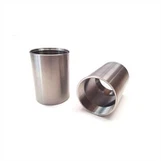
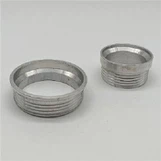
As a supplier of Titanium Brake Studs, one question that frequently arises in technical discussions with cyclists, bike builders, and enthusiasts is about the thermal expansion coefficient of these critical components. Understanding this property is crucial for ensuring the performance, safety, and longevity of a bicycle's braking system.
The Basics of Thermal Expansion
Before delving into the thermal expansion coefficient of titanium brake studs, it's essential to understand what thermal expansion is. Thermal expansion is the tendency of matter to change in shape, area, and volume in response to a change in temperature. When a material is heated, its atoms gain energy and start to vibrate more vigorously. This increased vibration causes the atoms to move further apart, resulting in an expansion of the material. Conversely, when the material is cooled, the atoms lose energy, their vibrations decrease, and the material contracts.
The thermal expansion coefficient (α) is a measure of how much a material expands or contracts per unit length or volume for a given change in temperature. It is typically expressed in units of per degree Celsius (°C⁻¹) or per degree Fahrenheit (°F⁻¹). Different materials have different thermal expansion coefficients, which depend on their atomic structure, bonding, and other factors.
Titanium as a Material for Brake Studs
Titanium is a popular choice for brake studs in high - performance bicycles due to its excellent combination of properties. It is lightweight, strong, and corrosion - resistant. Compared to steel, which is another common material for brake studs, titanium can reduce the overall weight of the bicycle without sacrificing strength. This weight reduction can improve the bike's acceleration, handling, and energy efficiency.
In addition to its mechanical properties, titanium also has a relatively low thermal expansion coefficient. This is an important characteristic for brake studs because the braking system generates a significant amount of heat during operation. If the brake studs expand too much due to the heat, it can lead to problems such as loosening of the brake calipers, misalignment, and reduced braking performance.
The Thermal Expansion Coefficient of Titanium
The thermal expansion coefficient of pure titanium is approximately 8.6 x 10⁻⁶ °C⁻¹. However, most titanium brake studs are made from titanium alloys, which may have slightly different thermal expansion coefficients depending on the specific alloy composition. For example, Ti - 6Al - 4V, a commonly used titanium alloy in the aerospace and bicycle industries, has a thermal expansion coefficient of around 9.4 x 10⁻⁶ °C⁻¹.
This relatively low thermal expansion coefficient means that titanium brake studs will expand less than some other materials, such as aluminum (which has a thermal expansion coefficient of about 23 x 10⁻⁶ °C⁻¹) when exposed to the same temperature increase. As a result, titanium brake studs are more stable under thermal cycling, which is the repeated heating and cooling that occurs during normal braking operation.
Implications for Bicycle Braking Systems
The low thermal expansion coefficient of titanium brake studs offers several advantages for bicycle braking systems. Firstly, it helps to maintain the proper alignment of the brake calipers. When the brake studs expand and contract less, the calipers are less likely to shift out of position, ensuring consistent and reliable braking performance.
Secondly, it reduces the risk of the brake calipers loosening over time. If the brake studs expand too much, they can cause the nuts or bolts that hold the calipers in place to loosen. This can lead to a dangerous situation where the brakes may not work properly. With titanium brake studs, the risk of such loosening is minimized, enhancing the safety of the bicycle.
Finally, the low thermal expansion coefficient of titanium contributes to the overall durability of the braking system. Since the studs are less affected by thermal stress, they are less likely to develop cracks or other forms of damage over time. This means that the brake studs will have a longer service life, reducing the need for frequent replacements.
Other Titanium Brake Components
In addition to brake studs, titanium is also used in other brake components. For example, the Titanium Brake Bridge and Titanium Post Mount - Rear Brake are also available in the market. These components, like the brake studs, benefit from titanium's low thermal expansion coefficient, lightweight, and high strength.
The use of titanium in these components further enhances the performance and reliability of the entire braking system. When all the brake components have similar thermal expansion characteristics, the system is more likely to function smoothly under a wide range of operating conditions.
Conclusion and Call to Action
In conclusion, the thermal expansion coefficient of titanium brake studs is an important factor that contributes to the performance, safety, and durability of a bicycle's braking system. With its relatively low thermal expansion coefficient, titanium helps to maintain proper alignment, prevent loosening of the brake calipers, and increase the service life of the studs.
If you are a bike builder, a cycling enthusiast, or someone in the market for high - quality brake components, our Titanium Brake Studs are an excellent choice. We offer a wide range of titanium brake studs and other brake components to meet your specific needs. Whether you are building a custom bike or upgrading an existing one, our products can help you achieve the best possible braking performance.


If you have any questions or would like to discuss your requirements, please feel free to reach out. We are always happy to assist you in finding the right components for your bicycle.
References
- ASM Handbook, Volume 2: Properties and Selection: Nonferrous Alloys and Special - Purpose Materials. ASM International.
- "Materials Science and Engineering: An Introduction" by William D. Callister, Jr. and David G. Rethwisch.