As a seasoned supplier in the field of titanium machining, I've witnessed firsthand the intricate dance between cutting fluid concentration and the quality of titanium machining. Titanium, with its exceptional strength - to - weight ratio, corrosion resistance, and biocompatibility, is a highly sought - after material in industries such as aerospace, medical, and automotive. However, machining titanium is a challenging task due to its low thermal conductivity and high chemical reactivity, which can lead to rapid tool wear and poor surface finish. This is where cutting fluid comes into play, and its concentration can significantly impact the machining process.
The Basics of Cutting Fluid in Titanium Machining
Cutting fluid serves multiple purposes during titanium machining. Firstly, it acts as a coolant, dissipating the heat generated during the cutting process. Titanium's low thermal conductivity means that heat tends to accumulate at the cutting edge, which can cause the tool to overheat, lose its hardness, and wear out quickly. A well - formulated cutting fluid can carry away this heat, reducing the temperature at the cutting zone and prolonging tool life.
Secondly, cutting fluid acts as a lubricant. It reduces the friction between the tool and the workpiece, minimizing the forces required for cutting. This not only improves the machining efficiency but also helps to achieve a better surface finish on the titanium part. Additionally, cutting fluid can flush away the chips produced during machining, preventing them from interfering with the cutting process and potentially causing damage to the tool or the workpiece.
Impact of Low Cutting Fluid Concentration
When the concentration of cutting fluid is too low, several issues can arise. One of the most prominent problems is insufficient cooling. With a lower concentration of the active cooling agents in the cutting fluid, the heat dissipation capacity is reduced. As a result, the temperature at the cutting edge can rise significantly. High temperatures can cause the titanium to harden around the cutting area, a phenomenon known as work - hardening. Work - hardening makes subsequent machining operations more difficult, as the tool has to cut through a harder material, leading to increased tool wear and potentially poor dimensional accuracy.
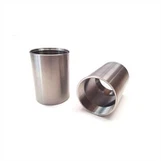
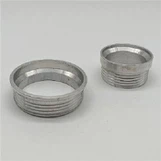
In terms of lubrication, a low - concentration cutting fluid may not be able to form an effective lubricating film between the tool and the workpiece. This increases the friction, which in turn requires higher cutting forces. Higher cutting forces can cause vibrations during machining, resulting in a rough surface finish on the Titanium CNC Turning Parts or Titanium CNC Milling Parts. Moreover, the increased friction can also lead to built - up edge formation. A built - up edge is a mass of material that adheres to the cutting edge of the tool, which can alter the cutting geometry and cause irregularities in the machined surface.
Another consequence of low cutting fluid concentration is poor chip evacuation. The cutting fluid helps to carry the chips away from the cutting zone. When the concentration is low, the fluid may not have enough power to flush out the chips effectively. This can lead to chip clogging, where the chips accumulate around the cutting tool and interfere with the cutting process. Chip clogging can cause the tool to break, damage the workpiece, and reduce the overall machining productivity.
Impact of High Cutting Fluid Concentration
On the other hand, an overly high concentration of cutting fluid also has its drawbacks. From a cost perspective, using a high - concentration cutting fluid can be expensive, as more of the concentrated fluid is required. This can increase the overall production cost, which is a significant concern for any manufacturing operation.
High - concentration cutting fluids can also cause stability issues. Some cutting fluids may become unstable at high concentrations, leading to precipitation or separation of the components. This can result in inconsistent performance of the cutting fluid during machining. For example, if the lubricating agents separate from the coolant agents, the cutting fluid may not be able to provide both effective cooling and lubrication simultaneously.
In addition, high - concentration cutting fluids can be more difficult to manage in terms of waste disposal. Environmental regulations often restrict the disposal of concentrated cutting fluids due to their chemical composition. Therefore, using a high - concentration cutting fluid may require more complex and costly waste - treatment processes.
Optimal Cutting Fluid Concentration
Finding the optimal cutting fluid concentration is crucial for achieving the best results in titanium machining. The optimal concentration depends on several factors, including the type of cutting fluid, the machining operation (such as turning, milling, or drilling), the cutting parameters (such as cutting speed, feed rate, and depth of cut), and the specific grade of titanium being machined.
In general, most cutting fluid manufacturers provide recommended concentration ranges for different applications. These ranges are based on extensive testing and research. For titanium machining, the recommended concentration typically falls between 5% and 10%. However, it is always advisable to conduct small - scale tests to fine - tune the concentration for a particular machining setup.
During the testing process, it is important to monitor several key performance indicators. Tool wear is one of the most important indicators. By measuring the tool wear rate at different cutting fluid concentrations, it is possible to determine the concentration that minimizes tool wear. Surface finish is another crucial indicator. A smooth surface finish is often desired in titanium machining, especially for applications in the aerospace and medical industries. By evaluating the surface roughness of the machined parts, the optimal cutting fluid concentration for achieving the best surface finish can be identified.
Conclusion
As a titanium machining supplier, I understand the critical role that cutting fluid concentration plays in the machining process. The right concentration can enhance tool life, improve surface finish, and increase machining productivity, while the wrong concentration can lead to a host of problems, including excessive tool wear, poor surface quality, and increased production costs.


If you are in the market for high - quality Titanium CNC Turning Parts or Titanium CNC Milling Parts, we are here to provide you with top - notch products. Our expertise in managing cutting fluid concentration, along with our advanced machining technology and skilled workforce, ensures that we can meet your specific requirements. Contact us for a detailed discussion about your procurement needs, and let's work together to achieve the best results in titanium machining.
References
- Boothroyd, G., & Knight, W. A. (2006). Fundamentals of Machining and Machine Tools. Marcel Dekker.
- Kalpakjian, S., & Schmid, S. R. (2010). Manufacturing Engineering and Technology. Pearson.
- König, W., & Aurich, J. C. (2007). Handbook of Machining with Grinding Wheels. Springer.