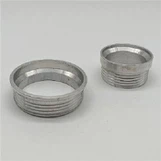
As a supplier of Titanium Dropouts, I am frequently asked about the heat resistance of these essential bicycle components. In this blog post, I will delve into the science behind the heat resistance of titanium dropouts, compare them with other materials, and explain why they are an excellent choice for cyclists and frame builders.
Understanding Titanium Dropouts
Titanium dropouts are crucial parts of a bicycle frame, located at the rear or front ends where the wheels are attached. They play a vital role in ensuring the stability and safety of the bike. Titanium, as a material, has gained popularity in the cycling industry due to its unique properties, including high strength - to - weight ratio, corrosion resistance, and, importantly, its heat resistance.
The Science of Heat Resistance in Titanium
Titanium is a transition metal with a high melting point of approximately 1668°C (3034°F). This high melting point is one of the primary factors contributing to its excellent heat resistance. When a bicycle is in use, especially during intense riding conditions such as long descents or high - speed cycling, the dropouts can be subjected to significant heat. Braking generates friction, which in turn produces heat. If the dropouts are not heat - resistant, they may deform, affecting the alignment of the wheels and the overall performance of the bike.
The heat resistance of titanium dropouts is also related to its thermal conductivity. Titanium has a relatively low thermal conductivity compared to some other metals like aluminum. This means that it does not transfer heat as quickly. When heat is generated near the dropouts, the titanium acts as a barrier, preventing the rapid spread of heat and maintaining its structural integrity.
Comparing Titanium Dropouts with Aluminum Dropouts
To better understand the heat resistance of titanium dropouts, it is useful to compare them with Aluminum Dropouts. Aluminum is another commonly used material for bicycle dropouts. While aluminum is lightweight and has good machinability, it has a lower melting point of around 660°C (1220°F) compared to titanium.
During high - heat situations, aluminum dropouts are more likely to deform. For example, in a long downhill ride with frequent braking, the heat generated can cause the aluminum dropouts to expand and potentially lose their shape. This can lead to wheel misalignment, which affects the handling and safety of the bike. In contrast, titanium dropouts can withstand much higher temperatures without significant deformation, providing a more reliable and durable solution for cyclists.
Applications and Benefits of Titanium Dropouts' Heat Resistance
The heat resistance of titanium dropouts makes them suitable for a wide range of cycling applications. For mountain bikers, who often encounter steep descents and need to rely on their brakes heavily, titanium dropouts offer peace of mind. The ability to withstand high temperatures ensures that the wheels remain properly aligned, allowing for precise handling and control.
Road cyclists also benefit from the heat resistance of titanium dropouts. In races or long - distance rides, where high - speed cycling and frequent braking are common, the dropouts need to be able to handle the heat generated. Titanium dropouts can maintain their shape and performance, contributing to a smoother and more efficient ride.
Another advantage of the heat resistance of titanium dropouts is their longevity. Since they are less likely to deform due to heat, they have a longer service life compared to some other materials. This reduces the need for frequent replacements, saving cyclists and frame builders time and money in the long run.
Our Titanium Dropouts Offerings
As a supplier, we offer a variety of Titanium Dropouts to meet the different needs of our customers. Our dropouts are precision - engineered to ensure the highest quality and performance. We also offer Titanium Slider Dropout, which provides additional adjustability for wheel positioning.
Our manufacturing process involves strict quality control measures to guarantee the heat resistance and other properties of our titanium dropouts. We use advanced techniques to work with titanium, ensuring that the dropouts are strong, lightweight, and able to withstand the rigors of cycling.
Conclusion
In conclusion, the heat resistance of titanium dropouts is a significant advantage that makes them a top choice for cyclists and frame builders. Their high melting point, low thermal conductivity, and ability to maintain structural integrity under high - heat conditions set them apart from other materials like aluminum. Whether you are a mountain biker, road cyclist, or a frame builder, choosing titanium dropouts can enhance the performance, safety, and longevity of your bicycle.
If you are interested in our titanium dropouts or would like to discuss your specific requirements, we invite you to contact us for a procurement discussion. We are committed to providing the best products and services to our customers.


References
- Callister, W. D., & Rethwisch, D. G. (2011). Materials Science and Engineering: An Introduction. Wiley.
- Schmid, F. (2009). Bicycle Frame Building: Mastering the Art. VeloPress.