Elongation rate is a critical mechanical property that reflects the ability of a material to deform plastically before fracture. In the context of custom titanium parts, understanding the elongation rate is essential for both manufacturers and end - users. As a custom titanium parts supplier, I often encounter clients who are curious about this property and its implications for their specific applications.
What is Elongation Rate?
Elongation rate, also known as percent elongation, is a measure of the amount of strain a material can withstand before it breaks during a tensile test. It is calculated as the increase in the length of a specimen after it has been pulled to failure, expressed as a percentage of the original length. The formula for calculating elongation rate is:
[ \text{Elongation Rate}(%)=\frac{L_f - L_0}{L_0}\times100% ]
where (L_0) is the original length of the specimen and (L_f) is the final length at the point of fracture.


This property provides valuable insights into the ductility of a material. A high elongation rate indicates that the material can be stretched significantly before breaking, meaning it is ductile. Conversely, a low elongation rate suggests that the material is brittle and will break with relatively little plastic deformation.
Factors Affecting the Elongation Rate of Custom Titanium Parts
Titanium Alloy Composition
Titanium is often alloyed with other elements such as aluminum, vanadium, molybdenum, and iron to enhance its mechanical properties. Different alloy compositions can have a profound impact on the elongation rate. For example, Ti - 6Al - 4V, one of the most commonly used titanium alloys, has a good balance of strength and ductility. The aluminum provides solid - solution strengthening, while the vanadium improves the alloy's formability. As a result, Ti - 6Al - 4V typically has an elongation rate in the range of 10% - 25%, depending on the heat treatment and processing conditions.
On the other hand, some high - strength titanium alloys with a higher content of alloying elements may have a lower elongation rate. These alloys are designed for applications where high strength is the primary requirement, and ductility may be sacrificed to some extent.
Heat Treatment
Heat treatment is a crucial process in the manufacturing of custom titanium parts. It can significantly alter the microstructure of the titanium alloy, which in turn affects the elongation rate. Annealing is a common heat - treatment process used to relieve internal stresses and improve ductility. During annealing, the titanium alloy is heated to a specific temperature and then slowly cooled. This process allows the grains in the microstructure to grow and become more uniform, resulting in an increase in the elongation rate.
In contrast, aging heat treatment is used to increase the strength of titanium alloys. However, this process can sometimes reduce the elongation rate as it promotes the formation of precipitates in the microstructure, which can act as barriers to plastic deformation.
Manufacturing Process
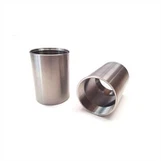
The manufacturing process used to produce custom titanium parts also plays a role in determining the elongation rate. For example, Titanium CNC Milling Parts produced by CNC milling may have different mechanical properties compared to those produced by forging. Machining processes can introduce surface residual stresses and alter the surface microstructure, which can affect the overall ductility of the part.
Forging, on the other hand, can refine the grain structure of the titanium alloy, resulting in improved mechanical properties, including a higher elongation rate. The deformation during forging aligns the grains in a favorable direction, which enhances the material's ability to deform plastically.
Importance of Elongation Rate in Custom Titanium Parts Applications
Aerospace Industry
In the aerospace industry, custom titanium parts are widely used due to their high strength - to - weight ratio and excellent corrosion resistance. The elongation rate is of great importance in this industry because aerospace components often experience complex loading conditions. For example, aircraft wings and fuselage structures need to be able to withstand significant deformation during flight without fracturing. A high elongation rate ensures that the titanium parts can absorb energy and deform plastically under stress, which improves the overall safety and reliability of the aircraft.
Medical Industry
In the medical field, custom titanium parts are used for implants such as bone plates, screws, and dental implants. The elongation rate is crucial in these applications because the implants need to be able to adapt to the natural movement and stress of the human body. A ductile titanium implant can better withstand the cyclic loading and deformation caused by normal bodily functions, reducing the risk of implant failure and improving the long - term success of the treatment.
Automotive Industry
In the automotive industry, custom titanium parts are used in high - performance engines, suspension systems, and exhaust systems. The elongation rate is important in these applications as it affects the durability and performance of the parts. For example, titanium exhaust components need to be able to withstand high temperatures and thermal cycling without cracking. A high elongation rate ensures that the parts can expand and contract without fracturing, which improves their service life.
Measuring the Elongation Rate of Custom Titanium Parts
To accurately measure the elongation rate of custom titanium parts, a tensile test is typically performed. A specimen of the titanium part is prepared according to relevant standards, such as ASTM E8 or ISO 6892 - 1. The specimen is then placed in a tensile testing machine, which applies a gradually increasing tensile force until the specimen breaks.
During the test, the change in length of the specimen is measured using an extensometer. The data obtained from the test is used to calculate the elongation rate using the formula mentioned earlier. It is important to note that the results of the tensile test can be affected by factors such as the specimen geometry, testing speed, and environmental conditions. Therefore, it is crucial to follow the standard test procedures to ensure accurate and reliable results.
How Our Company Ensures the Desired Elongation Rate in Custom Titanium Parts
As a custom titanium parts supplier, we have a comprehensive quality - control system in place to ensure that our parts meet the desired elongation rate requirements. We start by carefully selecting the appropriate titanium alloy based on the client's application and performance requirements. Our experienced metallurgists analyze the alloy composition to ensure that it has the right balance of strength and ductility.
We also pay close attention to the heat - treatment process. Our heat - treatment facilities are equipped with advanced temperature - control systems to ensure precise and consistent heat - treatment parameters. We conduct regular quality checks during the heat - treatment process to monitor the microstructure and mechanical properties of the parts.
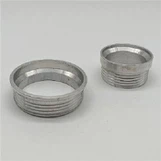
In addition, we use state - of - the - art manufacturing processes, such as Titanium CNC Turning Parts and forging, to produce high - quality custom titanium parts. Our CNC machining centers are programmed to minimize surface residual stresses and ensure a smooth surface finish. Our forging process is carefully controlled to refine the grain structure and improve the mechanical properties of the parts.
Contact Us for Custom Titanium Parts
If you are in need of custom titanium parts with specific elongation rate requirements, we are here to help. Our team of experts can work closely with you to understand your application and provide you with the best - suited titanium parts. Whether you are in the aerospace, medical, automotive, or any other industry, we have the expertise and capabilities to meet your needs.
Contact us today to start a discussion about your custom titanium parts requirements. We look forward to working with you to deliver high - quality, reliable titanium parts that meet your exact specifications.
References
- ASM Handbook Committee. (2000). ASM Handbook Volume 2: Properties and Selection: Nonferrous Alloys and Special - Purpose Materials. ASM International.
- ASTM International. (2019). ASTM E8/E8M - 19a: Standard Test Methods for Tension Testing of Metallic Materials. ASTM International.
- ISO. (2019). ISO 6892 - 1:2019: Metallic materials — Tensile testing — Part 1: Method of test at room temperature. International Organization for Standardization.