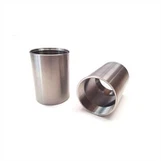
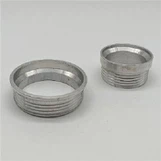
Elasticity is a fundamental mechanical property that describes how a material responds to applied forces and returns to its original shape when the forces are removed. In the context of bicycle frame components, understanding the elasticity of materials is crucial for ensuring optimal performance, comfort, and safety. As a supplier of Titanium Head Tubes, I am often asked about the elasticity of these components and how it impacts the overall performance of a bicycle frame. In this blog post, I will delve into the concept of elasticity, explore the factors that influence the elasticity of titanium head tubes, and discuss the implications of elasticity for bicycle frame design and performance.
Understanding Elasticity
Elasticity is defined as the ability of a material to deform under the application of a force and then return to its original shape when the force is removed. This property is governed by Hooke's Law, which states that the deformation of a material is directly proportional to the applied force within the elastic limit of the material. The elastic limit is the maximum stress that a material can withstand without undergoing permanent deformation.
The elasticity of a material is quantified by its Young's modulus, also known as the modulus of elasticity. Young's modulus is a measure of the stiffness of a material and is defined as the ratio of stress to strain within the elastic limit. Stress is the force applied per unit area, while strain is the resulting deformation per unit length. A higher Young's modulus indicates a stiffer material, while a lower Young's modulus indicates a more flexible material.
Elasticity of Titanium
Titanium is a lightweight and strong metal that is widely used in the aerospace, automotive, and medical industries, as well as in bicycle frame construction. Titanium has a relatively high Young's modulus compared to other common bicycle frame materials, such as aluminum and steel. The Young's modulus of titanium typically ranges from 100 to 120 GPa (gigapascals), depending on the specific alloy and heat treatment.
The high Young's modulus of titanium means that it is a stiff material, which is beneficial for maintaining the structural integrity of a bicycle frame under load. However, stiffness is not the only factor to consider when evaluating the performance of a bicycle frame. A frame that is too stiff can transmit excessive vibrations and shocks to the rider, resulting in a harsh and uncomfortable ride. On the other hand, a frame that is too flexible may lack the necessary rigidity for efficient power transfer and handling.
Factors Affecting the Elasticity of Titanium Head Tubes
The elasticity of titanium head tubes is influenced by several factors, including the geometry, wall thickness, and alloy composition of the tubes.
- Geometry: The shape and dimensions of the head tube can have a significant impact on its elasticity. For example, a head tube with a larger diameter and thinner wall thickness will generally be more flexible than a head tube with a smaller diameter and thicker wall thickness. The angle of the head tube also affects its elasticity, as a steeper head tube angle will result in a stiffer frame.
- Wall Thickness: The wall thickness of the head tube is another important factor that affects its elasticity. A thicker walled head tube will be stiffer and less flexible than a thinner walled head tube. However, increasing the wall thickness also adds weight to the frame, which can negatively impact performance.
- Alloy Composition: The specific alloy composition of the titanium used in the head tube can also affect its elasticity. Different titanium alloys have different mechanical properties, including Young's modulus. For example, titanium alloys with a higher percentage of aluminum and vanadium tend to have a higher Young's modulus and are therefore stiffer than alloys with a lower percentage of these elements.
Implications of Elasticity for Bicycle Frame Design and Performance
The elasticity of titanium head tubes has several implications for bicycle frame design and performance.


- Ride Comfort: A more flexible head tube can help to absorb vibrations and shocks from the road, resulting in a smoother and more comfortable ride. This is particularly important for long-distance cycling and off-road riding, where the rider is exposed to rough terrain and uneven surfaces.
- Power Transfer: A stiffer head tube can improve power transfer from the rider to the wheels, resulting in more efficient pedaling and faster acceleration. This is important for racing and high-performance cycling, where every watt of power counts.
- Handling: The elasticity of the head tube can also affect the handling characteristics of the bicycle. A more flexible head tube can provide more steering responsiveness and agility, while a stiffer head tube can provide more stability and control at high speeds.
Conclusion
In conclusion, the elasticity of titanium head tubes is an important factor to consider when designing and building a bicycle frame. The high Young's modulus of titanium makes it a stiff and strong material, which is beneficial for maintaining the structural integrity of the frame under load. However, the elasticity of the head tube can also be adjusted by varying the geometry, wall thickness, and alloy composition of the tubes to achieve the desired balance of ride comfort, power transfer, and handling.
As a supplier of Titanium Head Tubes, I am committed to providing high-quality products that meet the needs of our customers. Our titanium head tubes are available in a variety of sizes, wall thicknesses, and alloy compositions to ensure that you can find the perfect tube for your bicycle frame. We also offer Titanium Headset Spacer and Bottom Bracket Shell to complement our titanium head tubes and provide a complete solution for bicycle frame building.
If you are interested in learning more about our titanium head tubes or have any questions about the elasticity of these components, please do not hesitate to contact us. We would be happy to discuss your specific requirements and help you find the right products for your project.
References
- Callister, W. D., & Rethwisch, D. G. (2018). Materials Science and Engineering: An Introduction. Wiley.
- Gordon, J. E. (1978). Structures or Why Things Don't Fall Down. Da Capo Press.
- Schmidt, F. O. (2004). Bicycle Frame Design and Construction. VeloPress.