What is the creep resistance of custom titanium parts? Well, let me break it down for you. I'm a supplier of custom titanium parts, and I've seen firsthand how important creep resistance is in various applications.
First off, what's creep? Creep is the slow, permanent deformation of a material under a constant load over time. It happens when you've got a part that's under stress for a long period, especially at high temperatures. This can be a real problem in industries like aerospace, automotive, and energy, where parts need to hold up under tough conditions for a long time.
Titanium is a pretty amazing metal, and one of its superpowers is its creep resistance. When we're talking about custom titanium parts, this property is a game - changer. Titanium has a high melting point and a strong atomic structure. The atoms in titanium are tightly packed, which makes it harder for them to move around and cause deformation when the part is under stress.
Let's dig a bit deeper into the science. The creep resistance of titanium is influenced by a few key factors. One is the alloy composition. Different alloys of titanium have different levels of creep resistance. For example, some titanium alloys are specifically designed to have better high - temperature performance. These alloys might have elements like aluminum, vanadium, or molybdenum added to them. Aluminum can strengthen the titanium matrix, while vanadium can improve the alloy's ductility and toughness. Molybdenum, on the other hand, can enhance the high - temperature strength and creep resistance.
Another factor is the heat treatment of the titanium parts. Heat treatment can change the microstructure of the titanium. By carefully controlling the heating and cooling processes, we can create a microstructure that's more resistant to creep. For instance, a process called solution treatment followed by aging can result in a precipitation - hardened structure. This structure has tiny particles dispersed throughout the titanium matrix, which act as barriers to the movement of dislocations (defects in the atomic structure). When dislocations can't move easily, the material is less likely to deform under stress, and thus has better creep resistance.
Now, in the real world, why does creep resistance matter so much for custom titanium parts? Take the aerospace industry as an example. Jet engines operate at extremely high temperatures. The components in a jet engine, like turbine blades and discs, are under constant stress from the high - speed rotation and the hot gases flowing through the engine. If these parts don't have good creep resistance, they'll start to deform over time. This deformation can lead to a loss of efficiency in the engine, and in the worst - case scenario, it can cause a catastrophic failure.
In the automotive industry, custom titanium parts are sometimes used in high - performance engines. These engines can generate a lot of heat, and the parts need to maintain their shape and strength. A piston made from a titanium alloy with good creep resistance can withstand the high pressures and temperatures inside the engine cylinder for a longer time, improving the engine's reliability and performance.
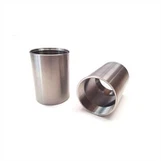
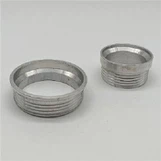
As a supplier of custom titanium parts, we offer a wide range of products, including Titanium CNC Turning Parts and Titanium CNC Milling Parts. Our CNC machining processes ensure that the parts are made to precise specifications. We can use different titanium alloys depending on the specific requirements of the application. Whether you need parts with high creep resistance for a high - temperature environment or parts with other properties, we've got you covered.
When we're making custom titanium parts, we pay close attention to every step of the process. From selecting the right alloy to the machining and heat treatment, we make sure that the final product meets the highest standards of quality. We also conduct thorough testing on the parts. We use techniques like creep testing, where we apply a constant load to the part at a specific temperature for a set period of time and measure the amount of deformation. This helps us ensure that the parts have the desired level of creep resistance.
If you're in an industry that requires custom titanium parts with good creep resistance, you should definitely consider working with us. We've got the expertise and the facilities to produce high - quality parts that meet your needs. Whether you're in the aerospace, automotive, or any other industry that demands reliable and high - performance titanium parts, we can provide you with the solutions you're looking for.
In conclusion, the creep resistance of custom titanium parts is a crucial property that can make or break the performance of the parts in many applications. Titanium's natural characteristics, combined with the right alloying and processing techniques, allow us to create parts that can withstand long - term stress and high temperatures. If you're interested in learning more about our custom titanium parts or have a specific project in mind, don't hesitate to get in touch with us. We're here to help you find the best titanium solutions for your business.


References
- "Titanium: A Technical Guide" by John R. Davis
- "Materials Science and Engineering: An Introduction" by William D. Callister Jr. and David G. Rethwisch