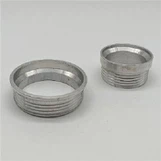
Hey there! I'm a supplier of Tubings & Tubing Parts, and I've been in this industry for quite some time. One thing that I've noticed is that temperature changes can have a significant impact on tubings. In this blog post, I'm going to share with you what those impacts are and why it's important to consider them when you're working with tubings.
Thermal Expansion and Contraction
The most obvious impact of temperature changes on tubings is thermal expansion and contraction. When the temperature rises, the tubing expands, and when it drops, the tubing contracts. This might sound like a minor thing, but it can actually cause a lot of problems.
Let's say you're building a bicycle frame using Titanium Head Tubes. If the frame is assembled at a certain temperature and then exposed to a much higher temperature later, the titanium head tubes will expand. This expansion can lead to misalignments in the frame. The joints might become loose, or the frame might even warp. On the other hand, if the temperature drops significantly, the tubes will contract. This contraction can put a lot of stress on the joints, potentially causing them to crack or break over time.
Different materials have different coefficients of thermal expansion. For example, aluminum has a relatively high coefficient of thermal expansion compared to steel. This means that aluminum tubings will expand and contract more than steel tubings when exposed to the same temperature changes. As a supplier, I always make sure to inform my customers about these differences so they can choose the right material for their specific applications.
Material Properties Changes
Temperature changes can also affect the material properties of tubings. When the temperature is too high, some materials can lose their strength. For instance, plastic tubings can become soft and pliable at high temperatures. This makes them less suitable for applications where they need to maintain a certain shape or withstand a certain amount of pressure.
Even metals can be affected. At extremely high temperatures, metals like steel can start to lose their hardness and toughness. This can be a big problem in applications where the tubings are used in high-stress environments. For example, if you're using Bottom Bracket Shell in a high-performance bicycle, and the temperature gets too high, the bottom bracket shell might deform, affecting the performance of the bike.
Conversely, at very low temperatures, some materials can become brittle. This is especially true for polymers. A plastic tubing that is flexible at room temperature might become so brittle at low temperatures that it can shatter easily. This is why it's crucial to choose materials that can withstand the temperature range of the intended application.
Corrosion and Oxidation
Temperature changes can also accelerate corrosion and oxidation processes. In general, higher temperatures can speed up chemical reactions. When it comes to tubings, this means that the rate of corrosion can increase with rising temperatures.
For example, if you have steel tubings that are exposed to a humid environment, the combination of high temperature and moisture can cause the steel to rust much faster. The rust can weaken the tubing over time, reducing its lifespan and structural integrity.
On the other hand, some materials are more resistant to corrosion and oxidation at certain temperatures. Titanium is known for its excellent corrosion resistance, even at relatively high temperatures. This makes Titanium Headset Spacer a great choice for applications where corrosion might be a concern, especially in outdoor or high-moisture environments.


Impact on Seals and Gaskets
Tubings often use seals and gaskets to prevent leaks. Temperature changes can have a big impact on these seals and gaskets. Just like the tubings themselves, seals and gaskets can expand and contract with temperature changes.
If a seal is installed at a certain temperature and then the temperature rises, the seal might expand and lose its tight fit. This can lead to leaks. Similarly, if the temperature drops, the seal might contract and become too tight, causing it to crack or break.
As a supplier, I always recommend using seals and gaskets that are made from materials with similar coefficients of thermal expansion to the tubings. This helps to ensure that the seals and gaskets will maintain their integrity over a wide range of temperatures.
Considerations for Design and Installation
When designing products that use tubings, it's important to take temperature changes into account. Engineers need to consider the maximum and minimum temperatures that the tubings will be exposed to during their lifespan. They should also choose materials that can withstand these temperature variations.
During installation, it's also crucial to pay attention to temperature. For example, if you're joining two tubings together, it's best to do it at a temperature that is close to the average temperature that the tubings will experience in use. This helps to minimize the stress caused by thermal expansion and contraction later on.
Why Choose Our Tubings & Tubing Parts
As a supplier, I understand the importance of providing high-quality tubings and tubing parts that can withstand temperature changes. We source our materials from reliable suppliers and conduct strict quality control checks. Our Titanium Head Tubes, Titanium Headset Spacer, and Bottom Bracket Shell are all made from high-grade materials that have excellent thermal stability.
We also offer a wide range of materials to choose from, so you can select the one that best suits your specific temperature requirements. Whether you need something that can withstand extreme heat or cold, we've got you covered.
If you're in the market for tubings and tubing parts, I encourage you to get in touch with us. We can provide you with detailed information about our products and help you make the right choice for your application. Let's work together to ensure that your projects are successful, even in the face of temperature changes.
References
- Callister, W. D., & Rethwisch, D. G. (2012). Materials Science and Engineering: An Introduction. Wiley.
- Ashby, M. F., & Jones, D. R. H. (2005). Engineering Materials 1: An Introduction to Properties, Applications and Design. Butterworth-Heinemann.