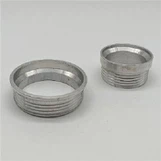
Hey there! As a supplier of Other Parts, I've seen firsthand the significant differences between parts used in industrial and domestic settings. In this blog, I'm gonna break down these differences and give you a better understanding of what sets them apart.
Material Quality and Durability
When it comes to industrial use, the materials used for other parts need to be tough as nails. Industrial environments are often harsh, with extreme temperatures, high pressures, and heavy machinery. For instance, in a manufacturing plant, parts are constantly exposed to wear and tear. That's why industrial parts are usually made from high - grade materials like titanium.
Take Other Titanium Bicycle Frame Parts as an example. In an industrial context, titanium parts are favored because of their high strength - to - weight ratio, corrosion resistance, and ability to withstand high stress. These parts can last for a long time even under the most demanding conditions.
On the other hand, domestic parts don't need to be as rugged. In our homes, the environment is much more forgiving. For example, the parts in a household appliance like a blender or a toaster don't need to handle the same level of stress as industrial parts. They can be made from less expensive materials such as plastic or low - grade metals. These materials are sufficient for the relatively light - duty tasks they perform in a domestic setting.
Precision and Tolerance
Precision is a big deal in industrial applications. Industrial machinery often requires parts to be manufactured with extremely tight tolerances. A small deviation in the size or shape of a part can lead to major malfunctions in the entire system. For example, in the aerospace industry, even the slightest error in the dimensions of an other part can have catastrophic consequences.
Industrial parts are usually produced using advanced manufacturing techniques like CNC machining. This ensures that the parts are made to exact specifications. In contrast, domestic parts generally have more lenient tolerance requirements. A small variation in the size of a part in a home tool or a piece of furniture won't usually cause any major problems. The focus in domestic products is more on functionality and cost - effectiveness rather than extreme precision.
Design and Complexity
Industrial parts tend to be more complex in design. They are often custom - made to fit specific industrial processes. For example, in the automotive industry, parts like engine components or transmission parts have intricate designs that are optimized for maximum performance. These parts may have multiple functions and need to work in harmony with other components in the system.
Domestic parts, however, are usually simpler in design. They are designed to be user - friendly and easy to install. For example, a domestic door hinge is a relatively simple part with a straightforward design. It only needs to perform one basic function: allowing the door to open and close smoothly.
Quantity and Production Volume
Industrial use often requires large quantities of parts. Manufacturing plants produce products in bulk, so they need a continuous supply of other parts. This means that industrial parts are usually produced in high volumes. Mass production techniques are used to keep the cost per unit low.
In the domestic market, the demand for parts is usually much lower. Consumers typically buy products one at a time, and the replacement of parts is also on an individual basis. As a result, domestic parts are often produced in smaller quantities. This can lead to higher per - unit costs compared to industrial parts, but it also allows for more flexibility in terms of customization for individual consumers.
Cost Considerations
Cost is a major factor in both industrial and domestic use, but in different ways. In the industrial sector, while the initial cost of parts is important, the long - term cost of operation and maintenance is also a significant consideration. High - quality industrial parts may be more expensive upfront, but they can save money in the long run by reducing downtime and maintenance costs.
For domestic consumers, cost is often the primary concern. People are looking for affordable parts that can get the job done. That's why many domestic products are designed to use inexpensive materials and simple manufacturing processes to keep the price down.
Safety and Regulations
Industrial parts are subject to strict safety regulations. In industries like mining, construction, and chemical processing, the safety of workers depends on the proper functioning of parts. There are standards and regulations in place to ensure that industrial parts are designed, manufactured, and installed safely.
Domestic parts also have safety requirements, but they are generally less stringent. For example, household electrical appliances need to meet basic safety standards to prevent electrical shocks or fires. However, these standards are not as comprehensive as those for industrial parts.


Application - Specific Requirements
Industrial applications have very specific requirements. For example, in the food processing industry, parts need to be made from materials that are food - grade and easy to clean to prevent contamination. In the medical industry, parts need to be sterile and biocompatible.
Domestic applications also have their own specific requirements, but they are more focused on the comfort and convenience of the user. For example, a domestic kitchen utensil needs to be easy to hold and use, and it should be dishwasher - safe for easy cleaning.
Availability and Lead Time
In the industrial world, having parts available when needed is crucial. Downtime in an industrial plant can result in significant financial losses. That's why industrial suppliers often maintain large inventories of parts and offer quick delivery times. They understand the importance of keeping industrial operations running smoothly.
For domestic consumers, the availability of parts is also important, but the lead time is usually not as critical. If a part in a home appliance breaks, consumers can usually wait a few days or even weeks for a replacement part to arrive. This is because the disruption to daily life is not as severe as in an industrial setting.
Customization
Industrial users often require customized parts to meet their specific needs. For example, a unique manufacturing process may require a custom - designed other part. Suppliers in the industrial market are often equipped to provide customized solutions. They can work closely with industrial clients to develop parts that are tailored to their specific requirements.
Domestic consumers also have some demand for customization, but it is usually on a smaller scale. For example, a homeowner may want a custom - sized cabinet hinge or a unique - shaped drawer handle. However, the level of customization in the domestic market is generally more limited compared to the industrial market.
Maintenance and Lifespan
Industrial parts usually require more frequent and comprehensive maintenance. Due to the high - stress environment in which they operate, they are more likely to wear out or break down. Regular maintenance schedules are established to ensure the continued performance of industrial machinery. The lifespan of industrial parts can vary depending on the application, but they are often designed to last for a long time with proper maintenance.
Domestic parts generally have a shorter lifespan. Since they are used less intensively, they may not require as much maintenance. However, when they do break down, they are often easier and less expensive to replace compared to industrial parts.
If you're in the market for Other Parts, whether it's for industrial or domestic use, I'm here to help. I have a wide range of products, including Other Titanium Bicycle Frame Parts and Titanium Fasteners. If you have any questions or need to discuss your specific requirements, feel free to reach out. Let's start a conversation about how I can meet your needs and provide you with the best parts for your application.
References
- "Engineering Materials and Their Applications" by Donald Askeland and Pradeep Fulay.
- "Manufacturing Engineering and Technology" by S. Kalpakjian and S. Schmid.