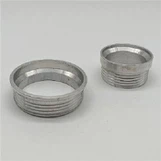
Hey there! As a supplier of CNC machining parts, I've got a ton of experience when it comes to quality control. In this blog, I'm gonna share some of the common quality control methods we use in the CNC machining industry.
First off, let's talk about why quality control is so important. When you're making parts through CNC machining, precision is key. A small error can lead to big problems down the line, whether it's a part not fitting properly in an assembly or failing under stress. So, we need to make sure that every single part meets the required specifications.
One of the most basic quality control methods is visual inspection. It might sound simple, but it's super effective. We look at the parts carefully to check for any obvious defects like scratches, cracks, or burrs. This is usually the first step in the quality control process. You'd be surprised how many issues can be caught just by giving the part a good once - over. For example, if a part is supposed to have a smooth finish and we see rough spots, that's a red flag.
Another important method is dimensional inspection. In CNC machining, the dimensions of the part need to be spot - on. We use tools like calipers, micrometers, and coordinate measuring machines (CMMs). Calipers are handy for quick and basic measurements. You can measure the length, width, and thickness of a part in just a few seconds. Micrometers, on the other hand, offer more precise measurements. They're great for measuring small and precise dimensions, like the diameter of a hole.
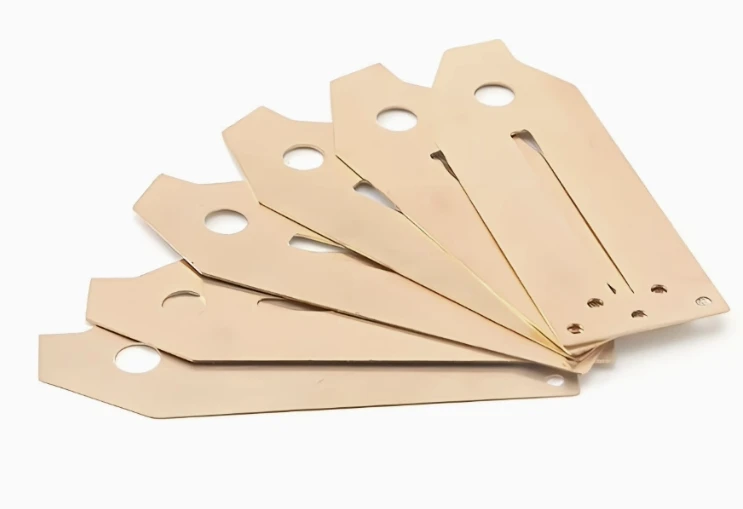
CMMs are the real heavy - hitters in dimensional inspection. These machines use a probe to measure the part's surface at multiple points. They can create a 3D model of the part and compare it to the CAD design. If there are any deviations from the design, the CMM can detect them. This is especially important for complex parts with intricate geometries. For instance, when we're making Beryllium Copper Part, Beryllium Copper Machined Part, Beryllium Copper Washer, Beryllium Copper Plate, which often have specific dimensional requirements, CMMs are indispensable.

Material testing is also a crucial part of quality control. We need to make sure that the material used in the part is of the right quality and composition. There are several ways to do this. One common method is hardness testing. We use a hardness tester to determine how hard the material is. Different applications require different levels of hardness. For example, a part that will be subjected to high stress needs to have a certain hardness to prevent deformation.
Another aspect of material testing is chemical analysis. We can use techniques like spectroscopy to analyze the chemical composition of the material. This helps us ensure that the material meets the required standards. If we're making parts for Home Appliances Tend To Be Intelligent, we need to make sure that the materials used are safe and suitable for those applications.
Functional testing is another great way to ensure quality. Instead of just looking at the part's appearance or dimensions, we test how it actually works. For example, if we're making Custom Lock Cylinder Parts, Lock Cylinder Accessories, Key Plug, Key Cylinder, Key Housing, we'll test if the key can turn smoothly in the lock cylinder and if the locking mechanism works as intended. This gives us a real - world understanding of how the part will perform in its actual application.
Statistical process control (SPC) is a method that looks at the overall manufacturing process. We collect data on various process parameters, like cutting speed, feed rate, and tool wear. By analyzing this data, we can identify trends and patterns. If we notice that the dimensions of the parts are gradually going out of spec over time, we can adjust the process before it becomes a big problem. SPC helps us keep the manufacturing process stable and consistent.
In addition to these methods, we also have in - process inspection. This means that we inspect the parts at different stages of the machining process. For example, after rough machining, we'll check the part to make sure that the general shape and size are correct. Then, after finishing operations, we'll do a more detailed inspection. This way, if there are any issues, we can catch them early and make corrections before it's too late.
Now, let's talk about documentation. Quality control isn't just about the physical inspection of parts; it's also about keeping good records. We document every step of the quality control process, including the inspection results, the tools used, and any corrective actions taken. This documentation is important for traceability. If there's ever a problem with a part down the line, we can go back and see exactly what happened during the manufacturing and quality control process.
To sum it up, quality control in CNC machining is a multi - faceted process. It involves visual inspection, dimensional inspection, material testing, functional testing, SPC, in - process inspection, and proper documentation. By using these methods, we can ensure that the parts we produce are of the highest quality.
If you're in the market for high - quality CNC machining parts, I'd love to have a chat with you. Whether you need parts for home appliances, lock cylinders, or any other application, we've got the expertise and the quality control measures in place to meet your needs. Reach out to start a conversation about your specific requirements.
References
- "CNC Machining Handbook"
- "Quality Control in Manufacturing"
- Industry - specific standards and guidelines for CNC machining