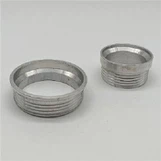
When it comes to high - performance cycling components, the choice of brake studs can significantly impact a bike's overall performance and durability. As a supplier of Titanium Brake Stud, I often get asked about how titanium brake studs compare to magnesium brake studs. In this blog post, I'll delve into the key differences between these two materials, exploring their properties, advantages, and disadvantages to help cyclists and bike manufacturers make informed decisions.
Material Properties
Titanium Brake Studs
Titanium is a remarkable metal known for its high strength - to - weight ratio. It is incredibly strong, yet lightweight, which makes it an ideal material for various high - performance applications, including brake studs. Titanium has excellent corrosion resistance, meaning it can withstand harsh environmental conditions without rusting or deteriorating. This is particularly important for cyclists who ride in wet or salty conditions, as corrosion can weaken the brake studs over time and compromise safety.
Another advantage of titanium is its biocompatibility. While this may not seem directly relevant to bike components, it is a testament to the material's inertness and stability. Titanium brake studs are less likely to react with other materials in the bike's braking system, reducing the risk of chemical degradation.
Magnesium Brake Studs
Magnesium is one of the lightest structural metals available. It offers significant weight savings compared to many other metals, which can be a major advantage for cyclists looking to reduce the overall weight of their bikes. However, magnesium has some drawbacks. It is relatively soft and has lower strength compared to titanium. This means that magnesium brake studs may be more prone to deformation under high stress, such as during hard braking or when subjected to impacts.
Magnesium also has poor corrosion resistance. It reacts readily with moisture and oxygen in the environment, forming a layer of magnesium oxide. If not properly protected, this oxidation can lead to the deterioration of the brake studs, reducing their lifespan and potentially compromising the safety of the braking system.
Performance in Braking Systems
Titanium Brake Studs
In a braking system, the strength of titanium brake studs is a major asset. They can withstand the high forces generated during braking without deforming. This ensures that the brake caliper remains properly aligned and the braking force is evenly distributed, resulting in more consistent and reliable braking performance.
The corrosion resistance of titanium also means that the brake studs maintain their integrity over time. There is no need for frequent replacements due to rust or other forms of corrosion, which can save cyclists both time and money in the long run.
Magnesium Brake Studs
The lightweight nature of magnesium brake studs can contribute to a more responsive braking system. Since there is less mass to move, the brake caliper can react more quickly to the cyclist's input. However, the lower strength of magnesium can be a limiting factor. Under heavy braking, the studs may bend or deform, causing the brake caliper to become misaligned. This can lead to uneven braking, reduced braking power, and increased wear on the brake pads.
Durability and Longevity
Titanium Brake Studs
Titanium brake studs are built to last. Their high strength and corrosion resistance mean that they can endure years of use in a variety of conditions. Whether it's a daily commuter bike or a high - end racing bike, titanium brake studs can provide reliable performance over an extended period.
The stability of titanium also means that the brake studs are less likely to require maintenance. They do not need to be coated or treated as frequently as magnesium studs to prevent corrosion, which simplifies the upkeep of the braking system.
Magnesium Brake Studs
The durability of magnesium brake studs is a concern. Due to their susceptibility to corrosion and deformation, they may need to be replaced more frequently than titanium brake studs. This not only adds to the cost of ownership but also requires more time and effort to maintain the braking system.
Cost Considerations
Titanium Brake Studs
Titanium is generally more expensive than magnesium. The cost of extracting, processing, and manufacturing titanium components is relatively high. However, when considering the long - term benefits of durability, performance, and reduced maintenance, the higher upfront cost of titanium brake studs can be justified.
Magnesium Brake Studs
Magnesium is less expensive to produce than titanium, which makes magnesium brake studs more affordable in the short term. However, the need for more frequent replacements and additional corrosion protection measures can increase the overall cost of ownership over time.
Applications
Titanium Brake Studs
Titanium brake studs are well - suited for high - performance bicycles, including road racing bikes, mountain bikes, and track bikes. These bikes often require components that can withstand extreme conditions and high - stress situations. Titanium brake studs provide the strength and reliability needed for these demanding applications.
For example, Titanium Post Mount - Rear Brake systems often use titanium brake studs to ensure optimal performance. The post - mount design requires precise alignment and strong support, which titanium can provide.
Magnesium Brake Studs
Magnesium brake studs may be more suitable for entry - level or budget - conscious cyclists. They can offer some weight savings at a lower cost, making them an attractive option for those who are not as concerned about the long - term durability and performance of the braking system.
However, for more serious cyclists or those who ride in challenging conditions, the limitations of magnesium brake studs may outweigh the cost savings.
Conclusion
In conclusion, titanium brake studs and magnesium brake studs have distinct characteristics that make them suitable for different applications. Titanium offers superior strength, corrosion resistance, and durability, making it the preferred choice for high - performance and long - lasting braking systems. Magnesium, on the other hand, provides weight savings and a lower upfront cost but comes with limitations in terms of strength and corrosion resistance.
As a supplier of Titanium Brake Stud, I believe that titanium is the better option for most cyclists and bike manufacturers. It offers a combination of performance, reliability, and longevity that is hard to beat.


If you are interested in learning more about our titanium brake studs or are considering a purchase, I encourage you to reach out. We are happy to discuss your specific needs and provide you with detailed information about our products. Whether you are building a custom bike or looking to upgrade your existing braking system, our titanium brake studs can offer the performance and durability you need.
References
- ASM Handbook, Volume 2: Properties and Selection: Nonferrous Alloys and Special - Purpose Materials
- Bicycle Design and Technology textbooks