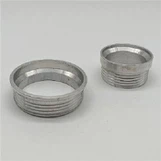
Galling is a common and frustrating issue when it comes to titanium fasteners. As a supplier of Titanium Fasteners, I've encountered numerous customers who have faced this problem. In this blog post, I'll share some effective strategies to prevent galling of titanium fasteners based on my industry experience and scientific knowledge.
Understanding Galling
Before we delve into prevention methods, it's crucial to understand what galling is. Galling is a form of adhesive wear that occurs when two metal surfaces in contact with each other experience high pressure and relative motion. In the case of titanium fasteners, the soft and reactive nature of titanium makes it particularly prone to galling. When the fasteners are tightened, the friction between the threads can cause the titanium to stick and transfer from one surface to another, leading to galling. This not only damages the fasteners but also makes it difficult to disassemble them in the future.
Surface Treatment
One of the most effective ways to prevent galling is through proper surface treatment. There are several surface treatment options available for titanium fasteners, each with its own advantages.
Anodizing
Anodizing is an electrochemical process that creates a protective oxide layer on the surface of the titanium. This oxide layer acts as a barrier between the metal surfaces, reducing friction and preventing direct contact. Anodized titanium fasteners are more resistant to galling and corrosion. The thickness and properties of the anodized layer can be controlled, allowing for customization based on specific application requirements.
Nitriding
Nitriding is a heat treatment process that introduces nitrogen into the surface of the titanium. This forms a hard nitride layer that improves the wear resistance and hardness of the fasteners. Nitrided titanium fasteners have a lower coefficient of friction, which helps to prevent galling. However, nitriding can be a more expensive process compared to anodizing, and it may require careful control of the process parameters to ensure consistent results.
PTFE Coating
Polytetrafluoroethylene (PTFE) coating, also known as Teflon coating, is another popular option for preventing galling. PTFE has a very low coefficient of friction, which reduces the likelihood of metal-to-metal contact and galling. The coating can be applied to the fasteners using various methods, such as spraying or dipping. PTFE-coated titanium fasteners are easy to install and disassemble, and they provide excellent lubrication properties.
Lubrication
Proper lubrication is essential for preventing galling of titanium fasteners. Lubricants reduce friction between the threads, allowing the fasteners to be tightened smoothly without causing damage. There are several types of lubricants that can be used for titanium fasteners, including:
Anti-seize Compounds
Anti-seize compounds are specially formulated to prevent galling and corrosion. They typically contain a combination of lubricants, such as graphite or molybdenum disulfide, and corrosion inhibitors. Anti-seize compounds are applied to the threads of the fasteners before installation. They provide a protective barrier between the metal surfaces, reducing friction and preventing galling.
High-Temperature Greases
High-temperature greases are suitable for applications where the fasteners are exposed to elevated temperatures. These greases have a high melting point and excellent lubrication properties. They can withstand the high pressures and temperatures generated during tightening, preventing galling and ensuring smooth operation.
Dry Film Lubricants
Dry film lubricants are thin coatings that provide lubrication without the need for a liquid lubricant. They are typically made of polymers or ceramics and can be applied to the fasteners using a spray or brush. Dry film lubricants offer long-lasting lubrication and are resistant to wear and corrosion. They are particularly useful in applications where cleanliness is a concern.
Installation Techniques
The way titanium fasteners are installed can also have a significant impact on the likelihood of galling. Here are some important installation techniques to follow:
Clean the Threads
Before installing the fasteners, it's important to clean the threads thoroughly to remove any dirt, debris, or contaminants. Even small particles can cause galling by increasing friction between the threads. Use a clean cloth or a brush to clean the threads, and make sure they are dry before applying lubricant.


Use the Right Tools
Using the correct tools is essential for proper installation of titanium fasteners. Use a torque wrench to ensure that the fasteners are tightened to the recommended torque specification. Over-tightening can increase the risk of galling, while under-tightening can result in loose fasteners. Additionally, use tools that are specifically designed for titanium fasteners to avoid damaging the threads.
Avoid Cross-Threading
Cross-threading occurs when the threads of the fastener and the mating part are not aligned properly during installation. This can cause the threads to become damaged and increase the risk of galling. To avoid cross-threading, make sure the fastener is aligned correctly with the mating part before starting to tighten it. Use your fingers to start the threads, and then use a tool to finish tightening.
Tighten in Stages
When tightening titanium fasteners, it's recommended to tighten them in stages. Start by tightening the fastener to a low torque value, and then gradually increase the torque in small increments. This allows the lubricant to distribute evenly and reduces the stress on the threads. Tightening in stages also helps to prevent over-tightening and galling.
Material Selection
In some cases, the choice of mating materials can also affect the likelihood of galling. When selecting mating parts for titanium fasteners, consider using materials that are less likely to gall with titanium. For example, stainless steel or aluminum can be good choices as mating materials. These materials have different surface properties compared to titanium, which can reduce the risk of galling.
Regular Inspection and Maintenance
Regular inspection and maintenance of titanium fasteners are important to ensure their long-term performance. Check the fasteners periodically for signs of galling, such as damage to the threads or difficulty in tightening or loosening. If galling is detected, take appropriate measures to address the issue, such as replacing the fasteners or applying additional lubrication.
Conclusion
Preventing galling of titanium fasteners requires a combination of proper surface treatment, lubrication, installation techniques, material selection, and regular maintenance. By following these strategies, you can significantly reduce the risk of galling and ensure the reliable performance of your titanium fasteners. As a supplier of Titanium Fasteners, I'm committed to providing high-quality products and expert advice to help you solve your fastener-related problems. If you have any questions or need further assistance, please don't hesitate to contact me for procurement and negotiation. We also offer a wide range of Other Titanium Bicycle Frame Parts to meet your specific needs.
References
- ASM Handbook Volume 11: Failure Analysis and Prevention. ASM International.
- Metals Handbook Desk Edition, Third Edition. ASM International.
- "Titanium: A Technical Guide," Second Edition. John R. Davis, Ed. ASM International.