An over-tightened seatpost clamp can be a real headache for cyclists. As a supplier of Bicycle Seatpost Clamp, I've seen this issue crop up quite frequently. In this blog post, I'll share some practical steps on how to fix an over-tightened seatpost clamp, along with some insights into preventing this problem in the future.
Understanding the Problem
Before we dive into the solutions, it's important to understand why an over-tightened seatpost clamp can be a problem. When you tighten the seatpost clamp too much, you risk damaging the seatpost, the frame, or both. Excessive pressure can cause the seatpost to become stuck in the frame, making it difficult or impossible to adjust the seat height. In some cases, it can even lead to cracks in the frame or the seatpost, which can compromise the safety of the bike.
Tools You'll Need
To fix an over-tightened seatpost clamp, you'll need a few basic tools:
- Allen wrench set: Most seatpost clamps use Allen bolts, so having a set of different sizes is essential.
- Lubricant: A good lubricant, such as WD-40 or a specialized bike lubricant, can help loosen the clamp.
- Hammer and block of wood: In some cases, you may need to gently tap the seatpost to loosen it.
- Rag or cloth: To clean up any excess lubricant or debris.
Step-by-Step Guide
Step 1: Assess the Situation
Before you start trying to loosen the seatpost clamp, take a close look at the clamp and the seatpost. Check for any signs of damage, such as cracks or dents. If you notice any damage, it's best to take your bike to a professional bike mechanic for further inspection and repair.
Step 2: Loosen the Clamp Bolt
Using the appropriate Allen wrench, try to loosen the clamp bolt. If the bolt is very tight, you may need to apply some extra force. However, be careful not to use too much force, as this could strip the threads or damage the bolt. If the bolt won't budge, you can try applying some lubricant to the threads and letting it sit for a few minutes. This can help loosen the bolt and make it easier to turn.
Step 3: Tap the Seatpost
If the clamp bolt is loose but the seatpost is still stuck, you can try gently tapping the seatpost with a hammer and a block of wood. Place the block of wood on top of the seatpost and tap it gently with the hammer. This can help loosen the seatpost and break the bond between the seatpost and the frame. Be careful not to tap too hard, as this could damage the seatpost or the frame.
Step 4: Apply More Lubricant
If tapping the seatpost doesn't work, you can try applying more lubricant to the seatpost and the inside of the frame. Use a rag or cloth to apply the lubricant evenly around the seatpost. Let the lubricant sit for a few minutes to penetrate the bond between the seatpost and the frame.
Step 5: Try to Remove the Seatpost
After applying the lubricant, try to remove the seatpost again. You may need to use some force, but be careful not to use too much force. If the seatpost still won't come out, you can try repeating steps 3 and 4 until it does.
Step 6: Clean and Lubricate the Seatpost and Clamp
Once you've removed the seatpost, clean it and the inside of the frame with a rag or cloth. Remove any dirt, debris, or excess lubricant. Then, apply a thin layer of lubricant to the seatpost and the inside of the frame. This can help prevent the seatpost from getting stuck again in the future.

Step 7: Reinstall the Seatpost
Carefully reinstall the seatpost into the frame. Make sure the seatpost is inserted straight and that the clamp is properly aligned. Tighten the clamp bolt to the recommended torque specification. You can usually find the torque specification in your bike's owner's manual or on the manufacturer's website.
Preventing Over-Tightening
To prevent over-tightening the seatpost clamp in the future, it's important to follow these tips:
- Use a torque wrench: A torque wrench can help you tighten the clamp bolt to the correct torque specification, which can prevent over-tightening.
- Read the manufacturer's instructions: Make sure you read the manufacturer's instructions for your seatpost clamp and follow them carefully.
- Don't over-tighten: It's better to have a slightly loose seatpost clamp than an over-tightened one. If the seatpost is a little loose, you can always tighten it a little more.
- Check the clamp regularly: Check the seatpost clamp regularly to make sure it's not too tight or too loose. If you notice any problems, such as the seatpost slipping or the clamp being difficult to tighten, have it checked by a professional bike mechanic.
Our Product Offerings
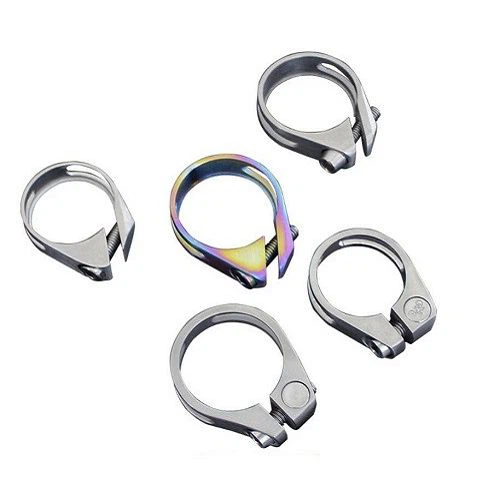
As a supplier of Bicycle Seatpost Clamp, we offer a wide range of high-quality seatpost clamps to suit different needs and budgets. Our seatpost clamps are made from durable materials, such as aluminum and titanium, and are designed to provide a secure and reliable hold for your seatpost.
- Titanium Seat Collar: Our titanium seat collars are lightweight, strong, and corrosion-resistant. They are a great choice for cyclists who want a high-performance seatpost clamp.
- Aluminum Seat Post Collar: Our aluminum seat post collars are affordable, durable, and easy to install. They are a popular choice for cyclists of all levels.
Contact Us for Procurement
If you're interested in purchasing our Bicycle Seatpost Clamp products, we'd love to hear from you. Whether you're a bike shop owner, a distributor, or an individual cyclist, we can provide you with the high-quality seatpost clamps you need. Please visit our website to learn more about our products and to get in touch with our sales team for further procurement discussions.
References
- "Bicycle Maintenance Manual" - A comprehensive guide to bike maintenance and repair.
- "The Bicycle Repair Book" - Another useful resource for bike repair and maintenance.