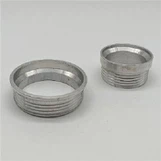
Hey there, cycling enthusiasts and fellow bike builders! I'm a supplier of BB30 Press Fit Shells, and today I wanna chat about how I measure the press fit tolerance of a BB30 Press Fit Shell. It's a crucial aspect that can make or break the performance and durability of a bike, so let's dive right in.
First off, let's understand what a BB30 Press Fit Shell is. If you're not familiar, you can check out this link BB30 Press Fit Shell. It's an essential part of a bicycle frame that houses the bottom bracket, which connects the crankset to the frame. The press fit design means it's installed by pressing it into the frame without the need for threading.
Now, why is measuring the press fit tolerance so important? Well, if the tolerance is too loose, the shell might move around in the frame, causing noise, premature wear, and even potential damage to the frame. On the other hand, if it's too tight, it can be extremely difficult to install, and it might crack the frame or damage the shell itself. So, getting that perfect tolerance is key.
There are a few different methods I use to measure the press fit tolerance of a BB30 Press Fit Shell. One of the most common and reliable ways is using a bore gauge. A bore gauge is a precision measuring tool that can accurately measure the internal diameter of the shell.
To start with the bore gauge method, I first make sure the shell is clean and free of any debris or burrs. Even the tiniest piece of dirt can affect the measurement. I then insert the bore gauge into the shell at multiple points along its length. This is important because the shell might not be perfectly round, and there could be variations in diameter at different spots.


I usually take at least three measurements at different angles and positions inside the shell. For example, I'll measure near the ends and in the middle. This gives me a comprehensive view of the shell's internal dimensions. Once I have these measurements, I compare them to the specified tolerance range for a BB30 Press Fit Shell.
The standard tolerance range for a BB30 Press Fit Shell typically falls between a certain minimum and maximum diameter. For instance, the ideal diameter might be around 42mm, but there could be a tolerance of plus or minus a few hundredths of a millimeter. If my measurements fall within this range, then the shell is considered to have an acceptable press fit tolerance.
Another method I sometimes use is the feeler gauge method. This is a bit more of a hands - on approach. I use feeler gauges, which are thin strips of metal with different thicknesses. I insert the feeler gauge between the shell and a reference part, like a test mandrel that represents the bottom bracket component that will be pressed into the shell.
If the feeler gauge can slide in easily at certain points but is a bit tight in others, it gives me an idea of how the shell will fit in the frame. If it slides in too easily all around, the tolerance is probably too loose. If it's extremely difficult or impossible to insert the feeler gauge, then the tolerance is too tight.
It's also important to consider the material of the shell when measuring the press fit tolerance. BB30 Press Fit Shells can be made from different materials, such as aluminum, steel, or carbon fiber. Each material has its own properties that can affect the fit. For example, aluminum is more malleable than steel, so it might deform slightly during the press - fit process. This means I need to be more careful when measuring and adjusting the tolerance for aluminum shells.
Carbon fiber shells, on the other hand, are lightweight but can be more brittle. A tight press fit could cause the carbon fiber to crack, so I need to make sure the tolerance is just right. I always take these material - specific factors into account when measuring and evaluating the press fit tolerance.
In addition to measuring the internal diameter of the shell, I also pay attention to the surface finish. A rough surface can make the press fit more difficult and can also affect the long - term performance of the shell. I use a surface roughness tester to check the smoothness of the inner surface of the shell. A smooth surface allows for a more consistent and reliable press fit.
When it comes to quality control, I don't just rely on my own measurements. I also have a set of samples that I send to an independent testing laboratory. They use high - precision equipment to measure the press fit tolerance and other important parameters. This provides an extra layer of assurance that the shells I supply meet the highest standards.
As a BB30 Press Fit Shell supplier, I know that my customers rely on me to provide high - quality products. That's why I'm so meticulous about measuring the press fit tolerance. Whether you're a professional bike builder or a DIY enthusiast, you need a shell that fits perfectly and performs well.
If you're in the market for BB30 Press Fit Shells or other related parts like Bottom Bracket Shell and Head Tube Cups, I'd love to hear from you. I can provide you with detailed information about the press fit tolerance of my shells and how they can benefit your bike building projects. Don't hesitate to reach out if you have any questions or want to start a procurement discussion.
References
- Bicycle Frame Building Handbook
- Precision Measuring Tools Manual