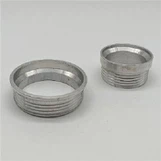
Hey there, cycling enthusiasts! As a supplier of Titanium Brake Stud, I've been getting a lot of questions lately about whether titanium brake studs require a specific type of brake pad. Well, let's dive right into it and clear up any confusion.
First off, let's talk about what titanium brake studs are and why they're so popular. Titanium is an incredibly strong and lightweight metal, making it ideal for use in high-performance cycling components. Titanium brake studs offer several advantages over traditional steel studs. They're corrosion-resistant, which means they'll last longer and perform better in all kinds of weather conditions. Plus, their lightweight nature helps to reduce the overall weight of the bike, which can improve acceleration and handling.
Now, onto the big question: do titanium brake studs require a specific type of brake pad? The short answer is no, they don't. In general, titanium brake studs are compatible with most standard brake pads. The key factor in brake pad compatibility is the brake caliper and the mounting system, not the material of the brake studs.
Brake pads are designed to work with specific types of brake calipers, such as rim brakes, disc brakes, or hydraulic brakes. As long as your brake pads are compatible with your brake caliper, they should work just fine with titanium brake studs. However, there are a few things to keep in mind when choosing brake pads for use with titanium brake studs.
One important consideration is the friction coefficient of the brake pads. The friction coefficient determines how well the brake pads grip the braking surface, whether it's a rim or a disc. Different brake pads have different friction coefficients, and the right choice depends on your riding style and the conditions you'll be riding in.
For example, if you're a downhill rider who needs maximum stopping power, you might want to choose brake pads with a high friction coefficient. These pads will provide strong braking performance, but they may also wear out more quickly. On the other hand, if you're a commuter or a casual rider, you might prefer brake pads with a lower friction coefficient. These pads will offer smoother braking and longer pad life.
Another factor to consider is the material of the brake pads. Brake pads can be made from a variety of materials, including organic, semi-metallic, and ceramic. Each material has its own advantages and disadvantages.
Organic brake pads are made from natural materials, such as rubber and resin. They're quiet, gentle on the braking surface, and offer good braking performance in a wide range of conditions. However, they may not perform as well in wet or muddy conditions.
Semi-metallic brake pads contain metal fibers, which provide increased heat dissipation and better braking performance under heavy use. They're more durable than organic pads and can handle higher temperatures, but they may be noisier and more abrasive to the braking surface.
Ceramic brake pads are made from ceramic materials and are known for their excellent heat resistance, low noise, and long pad life. They offer consistent braking performance in all conditions, but they can be more expensive than other types of brake pads.
When choosing brake pads for use with titanium brake studs, it's also important to consider the quality of the pads. High-quality brake pads are made from better materials and are designed to provide consistent braking performance over a long period of time. They may cost a little more upfront, but they'll save you money in the long run by lasting longer and requiring fewer replacements.
In addition to choosing the right brake pads, it's also important to install them correctly. Make sure the brake pads are properly aligned with the braking surface and that they're tightened securely. Improper installation can lead to poor braking performance, uneven pad wear, and even safety issues.
If you're not sure how to install your brake pads, it's a good idea to consult a professional bike mechanic. They have the experience and tools necessary to install the pads correctly and ensure that your brakes are working properly.
Now, let's talk about some of the different types of brake mounts that are commonly used with titanium brake studs. One popular option is the Dropout Flat Mount. This type of mount is designed to be used with flat-mount disc brakes and offers a clean, sleek look. It's also a very strong and reliable mounting system, making it a great choice for high-performance bikes.
Another option is the Titanium Post Mount - Rear Brake. This type of mount is used with post-mount disc brakes and is commonly found on mountain bikes and other off-road bikes. It provides a secure and stable mounting point for the brake caliper and allows for easy adjustment of the brake pads.


Whether you choose a Dropout Flat Mount or a Titanium Post Mount, make sure the brake pads you choose are compatible with the mounting system. This will ensure that the brake pads fit properly and that your brakes work as intended.
In conclusion, titanium brake studs do not require a specific type of brake pad. As long as your brake pads are compatible with your brake caliper and the mounting system, they should work just fine with titanium brake studs. When choosing brake pads, consider factors such as the friction coefficient, the material, and the quality of the pads. And don't forget to install the pads correctly to ensure optimal braking performance.
If you're in the market for high-quality titanium brake studs or have any questions about brake pad compatibility, feel free to reach out to us. We're here to help you find the right products for your bike and your riding style. Let's get you stopping on a dime and enjoying the ride!
References
- Cycling industry knowledge and experience
- Brake pad manufacturer specifications and guidelines