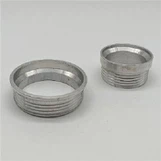
Do titanium brake bridges make a difference in stopping distance?
As a supplier of Titanium Brake Bridges, I've had numerous customers and cycling enthusiasts inquire about the real - world impact of these components on stopping distance. It's a fascinating topic that combines engineering principles, cycling performance, and the quest for optimal safety. In this blog, we'll delve deep into the science behind titanium brake bridges and explore whether they truly make a difference in how quickly a bike can come to a halt.
Understanding the Basics of Braking Systems
Before we specifically discuss titanium brake bridges, it's essential to understand how a typical bicycle braking system works. The braking process involves converting the kinetic energy of the moving bike into heat energy through friction. When the rider squeezes the brake levers, the brake cables transmit the force to the brake calipers. The calipers then clamp down on the brake pads, which press against the rims or discs, creating friction and slowing the wheels.
A brake bridge is a crucial part of this system. It is a small but significant component that connects the two halves of the brake caliper. Its primary function is to provide structural support and ensure that the caliper applies even pressure on both sides of the braking surface. This even pressure distribution is vital for efficient braking performance.
The Advantages of Titanium in Brake Bridges
Titanium is a remarkable material known for its high strength - to - weight ratio, corrosion resistance, and excellent fatigue properties. When used in brake bridges, these characteristics can have several benefits.
Strength and Rigidity
Titanium has a high strength - to - weight ratio, which means it can withstand significant forces without adding excessive weight to the bike. A rigid brake bridge is essential because it helps maintain the alignment of the brake caliper. If the brake bridge flexes under the force of braking, the caliper may not apply uniform pressure on the brake pads, leading to uneven braking and potentially longer stopping distances. A titanium brake bridge, with its superior strength, can minimize this flexing, ensuring that the caliper operates at its optimal efficiency.
Corrosion Resistance
Bicycles are often exposed to various environmental conditions, including rain, mud, and salt on the roads. Corrosion can weaken metal components over time, affecting their performance. Titanium is highly resistant to corrosion, which means that a titanium brake bridge will maintain its structural integrity for a longer period. This durability ensures consistent braking performance, even in harsh conditions, and can contribute to more reliable stopping distances.
Scientific Evidence and Studies
While there isn't an overwhelming amount of large - scale, peer - reviewed studies specifically on the impact of titanium brake bridges on stopping distance, there are some principles from materials science and engineering that can provide insights.
In laboratory tests, researchers have measured the flexing of different brake bridge materials under simulated braking forces. These tests have shown that titanium brake bridges exhibit significantly less flex compared to traditional steel or aluminum brake bridges. Reduced flex translates to more precise and consistent brake pad contact with the braking surface, which in theory should lead to shorter stopping distances.
Cyclists who have upgraded to titanium brake bridges often report improved braking feel. They describe the brakes as more responsive and the stopping power as more consistent. While these are anecdotal reports, they do suggest that there is a real - world benefit to using titanium in brake bridges.


Real - World Applications and User Experiences
In the world of competitive cycling, every second counts. Professional cyclists and teams are always looking for ways to gain a competitive edge, and even a small improvement in stopping distance can be crucial. Many high - end racing bikes now come equipped with titanium brake bridges for this reason.
Amateur cyclists also benefit from the use of titanium brake bridges. For those who enjoy long - distance rides or mountain biking, reliable braking is essential for safety. A titanium brake bridge can provide peace of mind, knowing that the brakes will perform consistently in various terrains and weather conditions.
One user on a cycling forum shared his experience after upgrading to a Titanium Brake Bridge. He mentioned that he noticed a significant improvement in the braking performance on his road bike. The brakes felt more solid, and he was able to stop more quickly, especially during high - speed descents.
Other Components in the Braking System
It's important to note that the brake bridge is just one part of the overall braking system. Other components, such as the brake pads, cables, and calipers, also play crucial roles in determining stopping distance.
For example, high - quality brake pads with good friction coefficients can significantly improve braking performance. Similarly, a well - adjusted Cable Shifter Adjuster Screw ensures that the correct amount of force is transmitted from the brake lever to the caliper. And a properly designed Dropout Flat Mount helps in maintaining the correct alignment of the caliper with the braking surface.
All these components work together in a complex system, and the performance of the brake bridge can be influenced by the quality and condition of the other parts. However, a titanium brake bridge can enhance the overall efficiency of the system by providing a stable and reliable foundation for the caliper.
Conclusion
So, do titanium brake bridges make a difference in stopping distance? The answer is yes, they can. While the improvement may not be dramatic in all cases, the advantages of titanium in terms of strength, rigidity, and corrosion resistance can contribute to more efficient and consistent braking performance.
A titanium brake bridge helps maintain the alignment of the brake caliper, reduces flexing, and ensures even pressure distribution on the brake pads. This leads to more precise and reliable braking, which can result in shorter stopping distances, especially in high - stress situations such as high - speed riding or emergency stops.
If you're a cyclist looking to upgrade your braking system or a bike manufacturer seeking high - quality components, I encourage you to consider our Titanium Brake Bridges. We are committed to providing top - notch products that can enhance the performance and safety of your bikes. Contact us to discuss your specific needs and explore how our titanium brake bridges can make a difference for you.
References
- "Materials Science and Engineering: An Introduction" by William D. Callister Jr. and David G. Rethwisch.
- Cycling forums and user reviews from various cycling communities.
- Laboratory test reports on brake bridge materials and their performance under simulated braking forces.