Hey there, fellow biotech enthusiasts and curious minds! I'm super stoked to be diving into the question that's been buzzing around: "Can stem parts be used in biotechnology?" As a supplier of stem parts, I've seen firsthand the potential these components hold, not just in the mechanical world but also in the exciting realm of biotech.
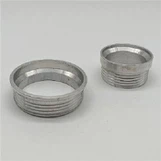
Let's start by getting on the same page about what we mean by "stem parts." In the context of my business, we deal with a wide range of stem parts, from Bike Stem Riser Bike Fork Stem Extender Bicycle Handlebar Raiser Head Up Adapter Suitable For Mountain Bike, Road Bike, MTB, BMX, Fixie (Aluminium Alloy, Adjustable) to Titanium Stem Parts. These parts are typically used in bicycle frame building, but the concept of a "stem" is broader than that. In biology, a stem cell is a special type of cell that can develop into many different cell types. So, is there a connection between the two?


Well, in a way, there is. The idea of a "stem" in both cases represents a starting point, a source of growth and development. In biotechnology, we're always looking for materials and components that can support the growth and manipulation of biological systems. And believe it or not, some of the properties of our stem parts could actually be useful in this field.
One of the key requirements in biotech is the need for materials that are biocompatible. That means they don't cause an immune response or other harmful effects when they come into contact with living cells or tissues. Many of our stem parts, especially those made from titanium, have excellent biocompatibility. Titanium is widely used in medical implants because it can integrate well with the body's tissues. This same property could make it a great candidate for use in biotech applications, such as in the development of tissue engineering scaffolds or biosensors.
Another important aspect is the ability to control the physical and chemical properties of the materials. In biotechnology, we often need to create environments that mimic the natural conditions inside the body. Our stem parts can be engineered to have specific surface properties, such as roughness or porosity, which can influence cell attachment and growth. For example, a rough surface might encourage cells to adhere more strongly, while a porous structure could allow for the diffusion of nutrients and waste products.
Let's take a closer look at some specific examples of how stem parts could be used in biotechnology. One area of research is in the development of 3D cell culture systems. These systems are designed to provide a more realistic environment for growing cells than traditional 2D cultures. Our stem parts could be used to create the structural framework for these 3D cultures. For instance, a titanium stem part could be shaped into a scaffold with a specific geometry that supports the growth of cells in a three-dimensional arrangement. This could be particularly useful in studying the behavior of cells in a more physiological context, such as in cancer research or drug development.
Another potential application is in the field of biosensors. Biosensors are devices that can detect and measure biological molecules, such as proteins or DNA. Our stem parts could be modified to incorporate biological recognition elements, such as antibodies or enzymes. When a target molecule binds to the recognition element, it could cause a change in the electrical or optical properties of the stem part, which could then be detected and measured. This could lead to the development of more sensitive and specific biosensors for a variety of applications, including disease diagnosis and environmental monitoring.
Of course, there are still many challenges and limitations to overcome before we can fully realize the potential of using stem parts in biotechnology. One of the main challenges is the need to ensure that the materials are sterile and free from contaminants. In a biological environment, even a small amount of contamination can have a significant impact on the results. We'll need to develop strict manufacturing processes and quality control measures to ensure the safety and reliability of our products.
Another challenge is the need to optimize the design of the stem parts for specific biotech applications. This will require close collaboration between materials scientists, biologists, and engineers. We'll need to understand the biological requirements of the systems we're working with and then design the stem parts to meet those needs.
Despite these challenges, I'm really excited about the possibilities. The intersection of bicycle frame building and biotechnology is a relatively new area of research, and there's still so much to discover. I believe that by combining our expertise in stem parts manufacturing with the knowledge and skills of the biotech community, we can develop innovative solutions that have the potential to make a real difference in people's lives.
If you're interested in learning more about how our stem parts could be used in your biotech research or applications, I'd love to hear from you. Whether you're a researcher, a startup, or an established biotech company, we're here to work with you. We can provide samples for testing and development, and we're open to collaborating on custom projects. So, don't hesitate to reach out and start a conversation. Let's explore the potential of stem parts in biotechnology together!
In conclusion, while the use of stem parts in biotechnology is still in its early stages, there's a lot of promise. The unique properties of our stem parts, such as biocompatibility and the ability to control their physical and chemical properties, make them attractive candidates for a variety of biotech applications. With further research and development, we could see these parts playing an important role in advancing the field of biotechnology. So, keep an eye on this space, and let's see where this exciting journey takes us!
References
- "Biomaterials Science: An Introduction to Materials in Medicine" by Buddy D. Ratner, Allan S. Hoffman, Frederick J. Schoen, and Jack E. Lemons.
- "Tissue Engineering: Principles and Applications" by Antonios G. Mikos and Jennifer Elisseeff.
- "Biosensors: Fundamentals and Applications" by David R. Walt and Mark R. Lonergan.