Are there any stem parts that can sense gravity?
As a supplier of stem parts, I often encounter various inquiries from customers, ranging from the basic features of our products to more in - depth scientific questions. One question that has piqued my interest lately is whether there are any stem parts that can sense gravity. In this blog, I'll explore this topic from both a scientific and practical perspective.
The Concept of Gravity Sensing in General
Gravity is a fundamental force of nature that affects all objects on Earth. In the biological world, many organisms have evolved mechanisms to sense gravity. For example, plants have specialized cells called statocytes that contain starch - filled organelles called amyloplasts. When the plant is tilted, the amyloplasts sediment due to gravity, triggering a signal that leads to growth responses such as the bending of roots towards the gravitational pull (positive gravitropism) and shoots growing against it (negative gravitropism).
In the realm of engineering and mechanical devices, the idea of gravity sensing is also crucial. In aerospace, for instance, inertial measurement units (IMUs) are used to detect changes in orientation, which are closely related to the effects of gravity. These units typically contain accelerometers and gyroscopes that can measure linear acceleration and angular velocity, respectively.
Stem Parts in Bicycles and Gravity Sensing
When we talk about stem parts in the context of bicycles, we are referring to components that connect the handlebars to the fork steerer tube. These parts play a vital role in controlling the bike's steering and handling. But can they sense gravity?
Traditional Stem Parts
Most traditional stem parts, such as the Bike Stem Riser Bike Fork Stem Extender Bicycle Handlebar Raiser Head Up Adapter Suitable For Mountain Bike, Road Bike, MTB, BMX, Fixie (Aluminium Alloy, Adjustable), are primarily designed for mechanical functions. They are made from materials like aluminum alloy or steel and are engineered to provide a stable connection between the handlebars and the fork. These parts do not have any built - in gravity - sensing capabilities. Their main purpose is to allow riders to adjust the height and angle of the handlebars for comfort and better control.
Advanced Stem Parts and Future Possibilities
However, with the rapid advancement of technology, there is a potential for stem parts to incorporate gravity - sensing features. Imagine a stem part that can detect the bike's orientation relative to the ground. This could provide valuable information to the rider, such as when the bike is on an incline or decline. For example, in mountain biking, a gravity - sensing stem could alert the rider to adjust their position or braking strategy when approaching a steep slope.
Some high - end bicycle components are already starting to integrate sensors. For instance, there are smart pedals that can measure power output, cadence, and even the rider's position on the bike. In the future, we might see stem parts that are equipped with micro - accelerometers similar to those found in smartphones. These accelerometers could detect changes in the bike's acceleration and orientation, which are related to the effects of gravity.
Our Product Range and the Potential for Gravity - Sensing Stem Parts
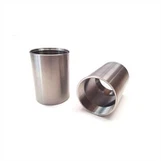
As a stem parts supplier, we offer a wide range of products to meet the diverse needs of our customers. Our Titanium Stem Parts are known for their high strength - to - weight ratio and durability. While currently, these parts do not have gravity - sensing capabilities, we are constantly exploring new technologies and possibilities.
We believe that the integration of gravity - sensing features into stem parts could be a game - changer in the cycling industry. It would not only enhance the safety and performance of bicycles but also provide a new level of user experience for riders. For example, a gravity - sensing stem could be integrated with a bike's electronic shifting system, allowing for automatic gear changes based on the slope of the terrain.
The Challenges of Developing Gravity - Sensing Stem Parts
Developing stem parts with gravity - sensing capabilities is not without its challenges. One of the main challenges is the issue of power consumption. Sensors require a power source, and adding a battery or other power - supply mechanism to a stem part would increase its weight and complexity. Additionally, ensuring the accuracy and reliability of the sensors in different environmental conditions, such as extreme temperatures and vibrations, is also a significant challenge.


Another challenge is the cost. Incorporating advanced sensors and electronics into stem parts would likely increase the production cost, which could make the products less accessible to some consumers. However, as technology continues to evolve and economies of scale come into play, we expect the cost to gradually decrease.
The Future of Stem Parts and Gravity Sensing
Despite the challenges, the future looks promising for stem parts with gravity - sensing capabilities. As the demand for smart and connected bicycles grows, we anticipate that more and more companies will invest in research and development in this area.
We are committed to staying at the forefront of this technological trend. Our R & D team is constantly exploring new materials, sensor technologies, and design concepts to develop stem parts that not only meet the current needs of cyclists but also incorporate innovative features such as gravity sensing.
Conclusion and Call to Action
In conclusion, while there are currently no widely available stem parts that can sense gravity, the potential for such products is exciting. As a stem parts supplier, we are eager to be part of this technological revolution.
If you are interested in our existing range of stem parts or have ideas about future gravity - sensing stem parts, we would love to hear from you. Whether you are a bicycle manufacturer looking for high - quality components or an individual cyclist with a passion for innovation, we invite you to contact us for further discussions and potential procurement. Let's work together to shape the future of cycling!
References
- "Plant Gravitropism: from Mechanistic Understanding to Agricultural Application" - Annual Review of Plant Biology
- "Inertial Measurement Units: Principles and Applications" - Journal of Sensors and Actuators